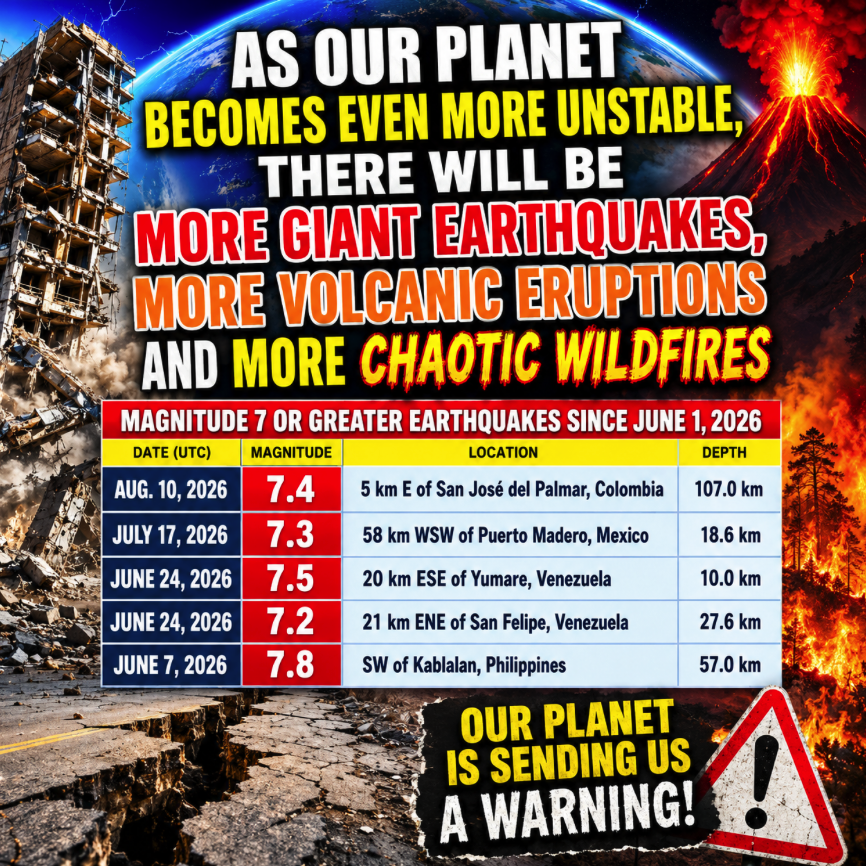
Colombia was hit Monday by a 7.4 magnitude earthquake, the largest recorded in the country, killing at least 111 people and injuring 87, Colombian President Abelardo de la Espriella said. The quake struck at 8:34 a.m. ET, centered in San José del Palmar, a community in the rural Chocó province about 250 miles west of Bogotá, the U.S. Geological Survey and its Colombian counterpart reported. A 5.0 magnitude aftershock followed within an hour.
The shaking was felt as far as Ecuador, Panama and Venezuela. De la Espriella declared an emergency to speed recovery funding. Video from across the country showed building facades collapsing and people unable to stand as the ground rocked. In one clip, a church spire fell and crumbled in front of a crowd.
Less than two months ago, Venezuela suffered its strongest earthquake in more than a century, a 7.4 magnitude tremor. The two events have intensified focus on seismic risk across northern South America. On the U.S. West Coast, residents are watching for signs of similar activity.
Volcanic eruptions are also accelerating. On Saturday, Japan's Mt. Sakurajima erupted, sending an ash plume 2,200 meters into the air. The ash drifted over Kagoshima city, turning the sky dark within minutes, the Japan Meteorological Agency said. In Italy, Mt. Etna continued intense explosive and effusive activity on Aug. 10, with abundant ash from the Voragine crater and multiple active lava flows. Catania Airport suspended arrivals as volcanic ash affected operations, the National Institute of Geophysics and Volcanology reported. Etna's Aviation Color Code remained at Red.
Extreme heat is compounding the pattern. July was the hottest month on record for the contiguous United States, averaging 76.89 degrees Fahrenheit, the National Oceanic and Atmospheric Administration said. That beat the Dust Bowl's July 1936 by an eighth of a degree.
Wildfires are spreading across the Pacific Northwest. In Oregon, the Big Grass fire ballooned overnight to 442,000 acres, making it one of the five largest wildfires in state history. More than 2 million acres have burned across Oregon this season, fire officials said. In Washington, the Spokane Complex Fire has burned over 10,200 acres combined, damaging or destroying about 921 structures and forcing 65,000 evacuations. Authorities called it the worst disaster in Spokane's history. In British Columbia, the Bald Range fire has consumed 53 square miles since it erupted Friday, forcing tens of thousands of Canadians to evacuate. A state of emergency was declared Saturday, with 11 new fires reported across the province.
Wildfire smoke is pouring across much of the continental United States, detected as far south as Florida, the National Weather Service said.
For companies with operations in affected regions, the risks are uneven. Southern Company, with an Alpha Score of 43 (Mixed), runs utilities in the U.S. Southeast, an area less exposed to these fires, but its service territories face drought and heat that can strain power grids. Amazon.com, whose Alpha Score is 68 (Moderate), depends on logistics networks that span fire-prone zones in the West. The company's data centers and warehouses in Oregon and Washington could face disruption if blazes approach key infrastructure.
No major stock moves tied to the disasters have been reported. Traders said the immediate focus remains on insurance and utility sectors as claims and containment costs develop.