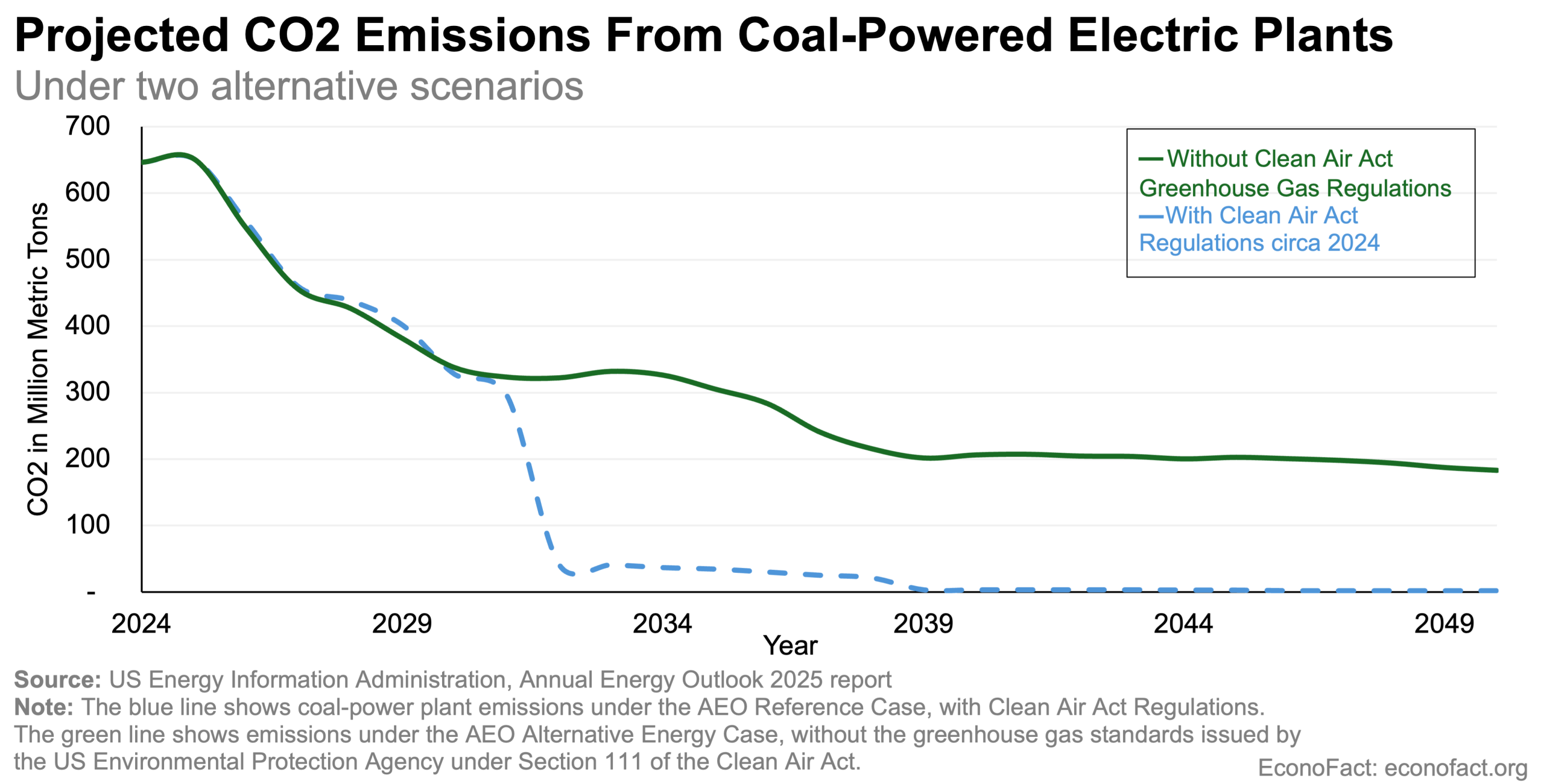
The steady retreat of coal-fired power in the U.S. is losing pace. A new analysis from Resources for the Future finds that surging electricity demand – driven by data centers and climate-driven cooling needs – combined with Trump administration policies aimed at propping up coal plants are slowing or reversing a decline that had been projected to cut carbon emissions sharply by the early 2030s.
Coal generation has fallen for two decades as natural gas, renewables and nuclear plants took market share. The assumption built into most forecasts was that coal would keep shrinking. That assumption no longer holds, the RFF researchers wrote. The Trump administration has taken actions including executive orders and regulatory changes that make it harder for operators to retire aging coal units. At the same time, states like Colorado and Michigan have pushed back against federal orders to keep coal plants open, creating tension between state and federal energy policy.
The slowdown matters for electricity markets. Every year a coal plant stays online, its owners must spend on maintenance and environmental compliance. Those costs do not disappear. Ratepayers will cover most of them through higher electricity bills, the analysis said. Plant operators face a choice: invest in upgrades with uncertain payback, or run the units as long as regulators allow while betting a future administration will not reverse the policy direction. That uncertainty itself raises the risk premium on coal-related investments.
There are knock-on effects for the broader energy economy. Diverting federal resources to sustain coal means less money for renewable generation and grid upgrades. With data-center electricity demand growing fast, underinvesting in new supply pushes wholesale power prices higher. The RFF paper notes that the trajectory for coal is uncertain enough that operators may keep plants running for years simply because the regulatory environment allows it. That prolongs carbon emissions that will persist in the atmosphere for millennia without new removal technology.
The direct costs of delaying coal plant retirements are substantial, the authors concluded. The indirect costs – worsened air quality, higher public health spending, more climate damage – will fall on taxpayers and future generations. The analysis, based on a scenario model called “If/Then,” was written by Bryan Hubbell, Alan Krupnick, Dallas Burtraw, Daniel Raimi, Aaron Bergman, Karen Palmer and Kristen McCormack. It was published Feb. 17 by Resources for the Future.