Commodities● Neutral
Coal India's 168 MT Buffer Reveals Logistics, Not Supply, Risk
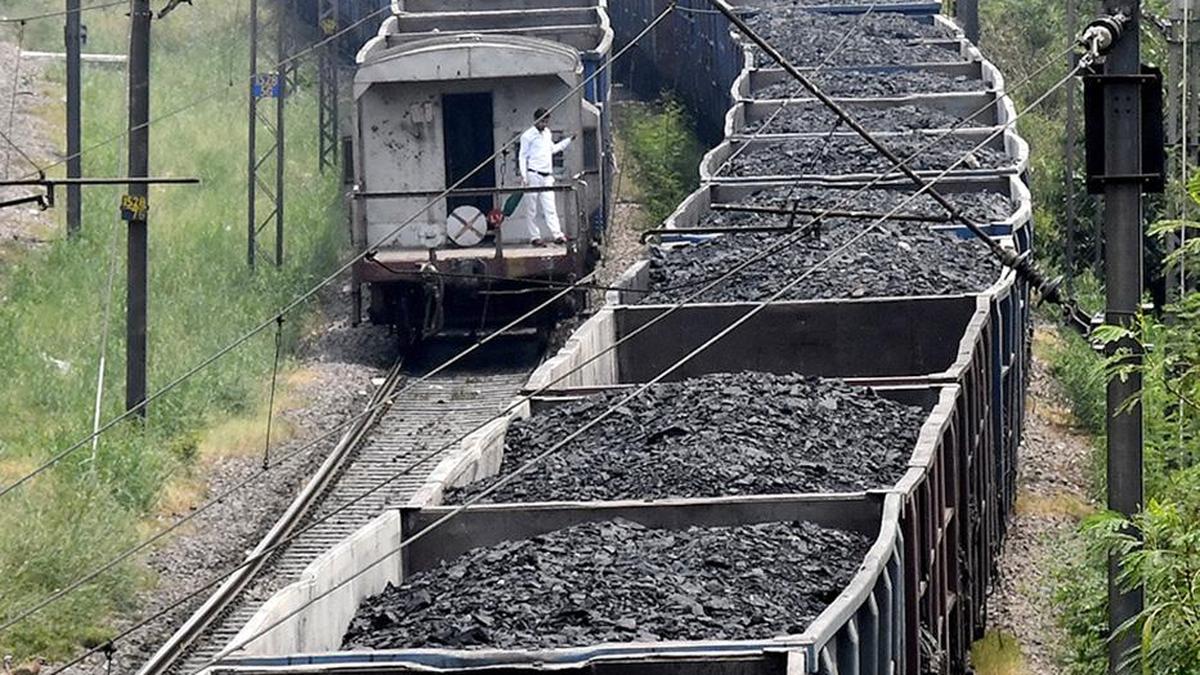
Coal India declares 168 MT buffer covering 19 days of consumption. Seven critical plants face logistics risk as peak demand hits 270.82 GW.
Continue with
Coal India Limited (CIL) on Tuesday said it has built a 168 million tonne (MT) buffer of coal across the system, a statement aimed at preempting summer shortage fears as daily consumption at thermal power plants surges. The state-owned miner, which accounts for over 80% of domestic coal output, broke down the inventory: 47.6 MT at domestic coal-based plants as of May 23, 113.5 MT at mine heads as of May 24, plus roughly 3 MT awaiting transit points and 4 MT in moving rakes.
The announcement came after India’s peak power demand hit a record 270.82 GW on May 21, surpassing the previous day’s 265.44 GW, driven by a heat wave that spiked cooling loads. Last summer’s peak was 242.77 GW in June 2025. The simple read is that Coal India has plenty of fuel. The better market read is that the stress point has already shifted from total coal supply to logistics and distribution timing.
The 168 MT Buffer: Stock Levels and Distribution
CIL’s declared buffer covers 19 days of consumption at current rates. That is comfortable on paper. The distribution is uneven. Of the 21 plants categorised under criticality as of May 20, 11 are domestic coal-based plants, and seven of those source from CIL. The company acknowledged it has been corresponding with plants at “difficult logistic points” to build stocks ahead of peak demand.
How the Inventory Breaks Down
| Metric | Value | Source/Date |
|---|---|---|
| Stock at coal-based power plants | 47.6 MT | May 23, 2026 |
| Stock at mine heads | 113.5 MT | May 24, 2026 |
| Coal awaiting transit (goods sheds, private washeries, ports) | ~3 MT | CIL statement |
| Coal in transit (rakes on run) | ~4 MT | CIL statement |
| Total system buffer | 168 MT | Sum of above |
| Days of consumption covered | 19 | Based on current burn rate |
| In-situ mine coal on tap | ~50 MT | Ready for quicker extraction if needed |
Mine-head inventory is up about 10% from a year ago. CIL also noted that 50 MT of in-situ coal at mine sites can be extracted faster if demand requires it. The stated position is that compression of plant-level stocks during peak summer is “a natural occurrence rather than a supply-side crisis.”
The Seasonal Mechanism and the Logistics Bottleneck
Every summer, coal inventories at power plants fall as generation runs full tilt. The system is designed to replenish during the monsoon and post-monsoon months when hydro output increases and demand eases. CIL’s argument is that the current drawdown is within that normal cycle.
Why the Critical Plants Face a Different Reality
Key insight: The seven CIL-sourced critical plants are at difficult logistic points. Even with 168 MT in the system, coal that cannot reach the boiler in time is ineffective. Rail rake availability, loading cycles, and distance from mines determine actual delivery speed. CIL’s “rakes on run” number of 4 MT is a snapshot, not a flow rate. If daily offtake accelerates faster than rake turnaround, the in-transit buffer can shrink even if mine-head stocks are high.
“Added to this, around three MT of coal is awaiting transit points such as goods sheds, private washeries and ports. Rakes on Run, that is, coal in transit at any point of time is around 4 MT, making a total of 168 MT of coal available in the system,” CIL’s statement said.
Practical rule: The buffer covers 19 days of consumption, the critical factor is not total inventory – it is the rate of drawdown and replenishment at specific plants.
Sector Readthrough: Who Is Exposed and Who Is Covered
The read-through from CIL’s buffer is positive for the broader thermal power ecosystem. The nuance matters for watchlist decisions.