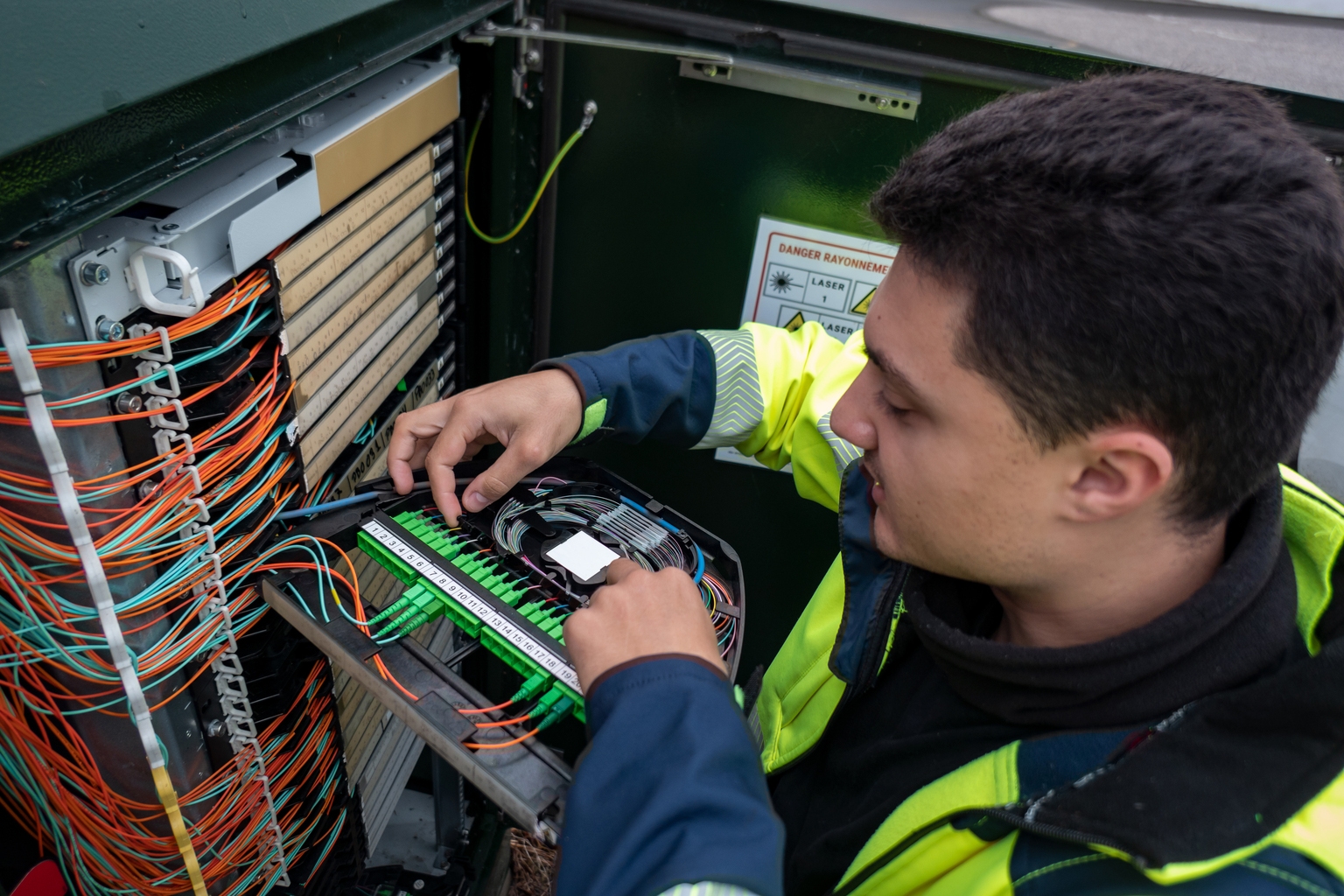
Clearfield (NASDAQ: CLFD) is still widely viewed as a small broadband infrastructure company tied to rural fiber deployments. Management has described its data center products as a longer-term opportunity with more meaningful revenue contribution expected further out. The market may be pricing both narratives simultaneously. The gap between perception and near-term revenue is the central risk event.
The simple read is that Clearfield offers exposure to two growth narratives: government-funded rural broadband and data center connectivity. The better market read acknowledges the timeline mismatch. Rural fiber spending is cyclical and policy-dependent. Data center revenue remains a future catalyst, not a near-term driver. An investor who treats both as simultaneous tailwinds may pay for a story that has not yet arrived.
Clearfield's Revenue Timeline Mismatch
Clearfield's legacy business serves community broadband providers and rural telecoms. That segment benefits from the Broadband Equity, Access, and Deployment (BEAD) program, although fund disbursement has been uneven. The data center pivot adds a second vector: selling fiber management products into hyperscale buildouts. Management has characterized this as a longer-term opportunity, not a near-term driver.
The mismatch is that investors might assign a data center multiple to the entire revenue base. If the rural broadband cycle weakens, the stock lacks a near-term cushion from data centers. The risk event is not that Clearfield has no data center opportunity. The risk event is that the timeline between narrative and revenue is longer than current valuation implies.
Management has not provided a specific date for material data center revenue. The phrase "longer-term opportunity" suggests 12 to 24 months before meaningful contribution, based on typical telecom equipment sales cycles. Hyperscale customers demand rigorous qualification and testing. Clearfield must compete with established players in the data center fiber market. Execution risk includes production capacity, certification delays, and pricing pressure from larger suppliers.
What Would Confirm or Weaken the CLFD Setup
Confirming signals include a specific data center customer win announced in the next earnings call, an upward revision in capital expenditure guidance, or evidence that data center products are moving from pilot to production orders. Any of these would close the perception gap and support a re-rating.
Weakening signals include repeated delays in BEAD fund disbursements that slow rural fiber orders, a shift in hyperscale spending toward incumbents like Corning or OFS, or a miss on overall revenue guidance. If Clearfield pre-announces a revenue shortfall, the stock could gap down on growth disappointments.
In a market that has chased data center exposure across small-cap stocks, CLFD offers a real but unproven angle. The risk is that the narrative outruns the revenue. The opportunity is that the first data center contract could trigger a structural re-rating. Until that contract appears, the stock sits in a gap between perception and reality.
The next decision point comes with the company's quarterly earnings report and management commentary. Investors should watch for any change in language around data center revenue – specifically, whether it moves from "longer-term" to "near-term" or, worse, to "longer than expected."