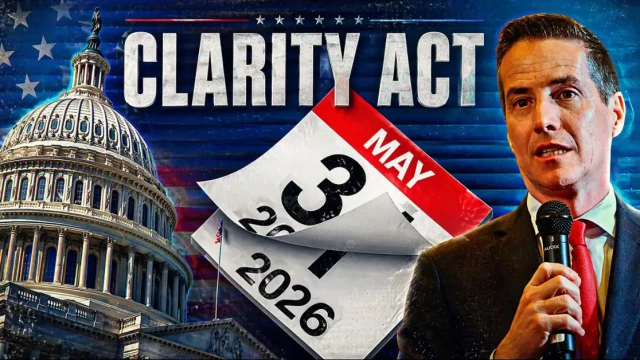
The Clarity Act, a centerpiece of current efforts to establish a regulatory framework for digital assets, has missed its anticipated passage window. Lawmakers previously signaled that the bill was nearing completion, but the legislative timeline has now drifted into May. This delay marks a shift in the momentum that had been building around the proposal, which previously enjoyed high-level support from the executive branch.
Regulatory Uncertainty and Industry Friction
The stall in the Clarity Act creates a period of ambiguity for firms operating within the digital asset space. Industry participants who had aligned their compliance strategies with the expected passage of the bill now face a prolonged period of regulatory limbo. The uncertainty surrounding the bill's final language complicates the ability of exchanges and service providers to prepare for potential changes in reporting requirements and asset classification. Without a clear legislative mandate, firms remain subject to the existing, often fragmented, patchwork of state and federal oversight.
This legislative friction is particularly relevant for institutional entities that require legal certainty before scaling their blockchain-based operations. The delay forces these organizations to pause or recalibrate their internal roadmaps, as the cost of compliance remains tied to shifting interpretations of existing securities law. For those monitoring the crypto market analysis, the lack of a definitive framework serves as a drag on the broader adoption of institutional-grade financial products.
Legislative Hurdles and Political Positioning
The current impasse reflects a broader struggle to reconcile competing interests within the legislative body. While the bill initially garnered significant backing, the transition from draft to law has revealed deep-seated disagreements regarding the oversight roles of the SEC and the CFTC. These jurisdictional disputes are central to the current 50/50 odds of passage, as lawmakers weigh the benefits of a uniform standard against the desire to maintain existing regulatory authorities.
The political environment surrounding the bill has also become more complex as the mid-year deadline approaches. The following factors are contributing to the current legislative bottleneck:
- Persistent disagreements over the definition of decentralized versus centralized governance structures.
- Increased pressure from advocacy groups to prioritize consumer protection over market expansion.
- A narrowing window for floor time as other fiscal priorities begin to dominate the legislative calendar.
AlphaScala data currently reflects a mixed sentiment across various sectors, with ServiceNow (NOW stock page) holding an Alpha Score of 51/100 and Amer Sports (AS stock page) at 47/100. While these scores do not directly track the crypto sector, they highlight the broader market environment where regulatory clarity is a recurring theme for technology and consumer-facing firms alike. News Corp (NWSA stock page) remains unscored at this time.
The next concrete marker for this legislation will be the release of the revised committee report scheduled for early May. Market participants will be looking for specific amendments regarding the treatment of stablecoin issuers and the threshold for decentralization, as these elements will determine whether the bill can secure the necessary votes to move forward or if it will face further rounds of negotiation.