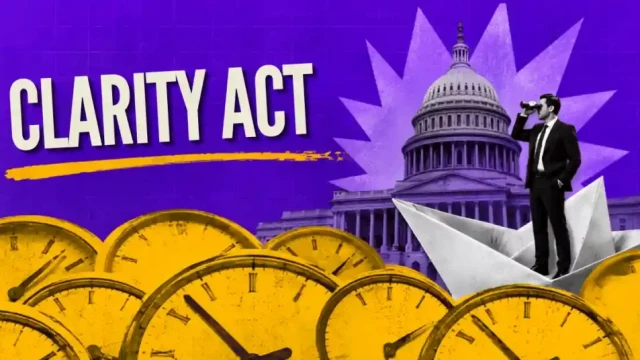
Thune scheduled the CLARITY Act vote for Sept. 15, a cloture motion, not final passage. The bill could clear the Senate in 48-72 hours if ethics is resolved.
Senate Majority Leader John Thune scheduled a September 15 floor vote on the CLARITY Act, the crypto package that includes stablecoin yield rules and the Blockchain Regulatory Certainty Act. Cody Carbone, CEO of The Digital Chamber, said the vote starts a legislative process rather than deciding the bill's fate.
"That vote on September fifteenth, it's very important for people watching, is not the final passage vote," Carbone said. The vote is a procedural cloture motion, not a vote on the bill itself. "We are not going to know when they kickstart that… what the ultimate fate of this bill is."
Carbone said he feels "very confident that we're going to start the process on September fifteenth." Senators would then work through an amendment process and additional votes before a final floor vote. "It's just kickstarting the process," he said. "It is a great first step. It is a required first step."
Lawmakers stay in session for three weeks after September 15 before breaking for the election. Carbone laid out two scenarios. If outstanding issues are resolved beforehand, the bill "could move very, very quickly," clearing the Senate within 48 to 72 hours of the vote and passing the House the following week, with a signing shortly after. The slower path stretches toward the three-week deadline. "We're still up in the air on where this bill sits," he said.
The ethics provisions carry the greatest risk among the bill's open items, Carbone said. "Ethics is the biggest challenge by far. You're not gonna get sixty if you don't have ethics figured out. Ethics is the linchpin here," he said.
Senators Thom Tillis and Ruben Gallego sent new ethics language to the White House before the August recess. That language remains under review. "We have not heard any public comment from the White House," Carbone said. He added that the White House's earlier, more expansive ethics language was rejected by Democrats early on.
BRCA is "in a good place," Carbone said. Recent support from law enforcement groups has helped build bipartisan backing for the provision. "I feel pretty good about the support we have in the Senate," he said. He acknowledged the industry still needs to do more direct education with senators outside the Banking Committee, who are hearing from community bankers with decades-long relationships.
Carbone framed the moment as a narrow window for the US to lead on crypto policy. "If we don't do this now, other countries are going to continue to do this," he said, pointing to how Europe fell behind the US during the dot-com boom. "This crypto needs to be the next frontier where the US leads from the very beginning… We can't squander this chance."
The industry would still have a path forward if the bill fails, Carbone said, pointing to rulemaking at the SEC and CFTC under Paul Atkins and Michael Selig. "But we need the durability of legislation," he said. "Now is the time."
Drafted by a large language model from the source reporting linked above, then screened by automated publishing checks. It is not read by a journalist before publication. Some articles cite our Alpha Score. Verify prices and figures against the original source. Educational coverage, not personalized advice.