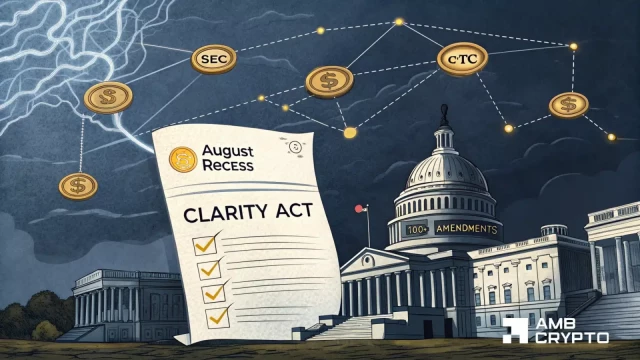
The Digital Asset Market Clarity Act cleared the House and the Senate Banking Committee in July 2025 with a 294-to-134 margin. A year later, the bill is still stuck on the Senate floor.
The legislation has absorbed more than 100 proposed amendments, expanding from 278 pages to 616 pages. Polymarket approval odds have dropped to 35%, down from a peak above 60% in early 2026. The post-election lame‑duck period from November to December now looks like the most likely window for passage, traders on the prediction market said. A delay into 2027 remains possible.
Senator Cynthia Lummis has pushed for a floor vote. Senator Elizabeth Warren opposed the bill, arguing it is unnecessary if it does not curb what she called Trump’s “corruption” in the sector. A revised draft added ethics rules that prohibit senior officials, the president, the vice president, and their spouses from issuing or sponsoring digital assets for compensation while in office.
The Bank Policy Institute criticized the draft, saying it still lacks safeguards against illicit finance and stablecoin yield restrictions.
Reeve Collins, co‑founder of Tether, and Maksym Sakharov, CEO and co‑founder of WeFi, said in a recent email that stablecoins are becoming more important because they match how people and businesses expect digital value to move: continuously, across markets, and without waiting for traditional settlement windows.
Companies including BlackRock, Fidelity, Franklin Templeton, Goldman Sachs, and SoFi have urged Congress to approve the bill over the past week. The argument has shifted from how to implement a crypto framework to whether the United States needs one, multiple industry lobbyists said.
President Trump has said he will “not sign other bills” until the SAVE America Act is passed by Republicans in Congress. Some analysts and traders on Capitol Hill view the CLARITY Act as potential leverage in broader negotiations, though no direct linkage has been confirmed.
A Senate floor vote is possible the week of Aug. 3. Additional procedural hold‑ups could push the 180‑day implementation period into 2027, several Senate aides said.