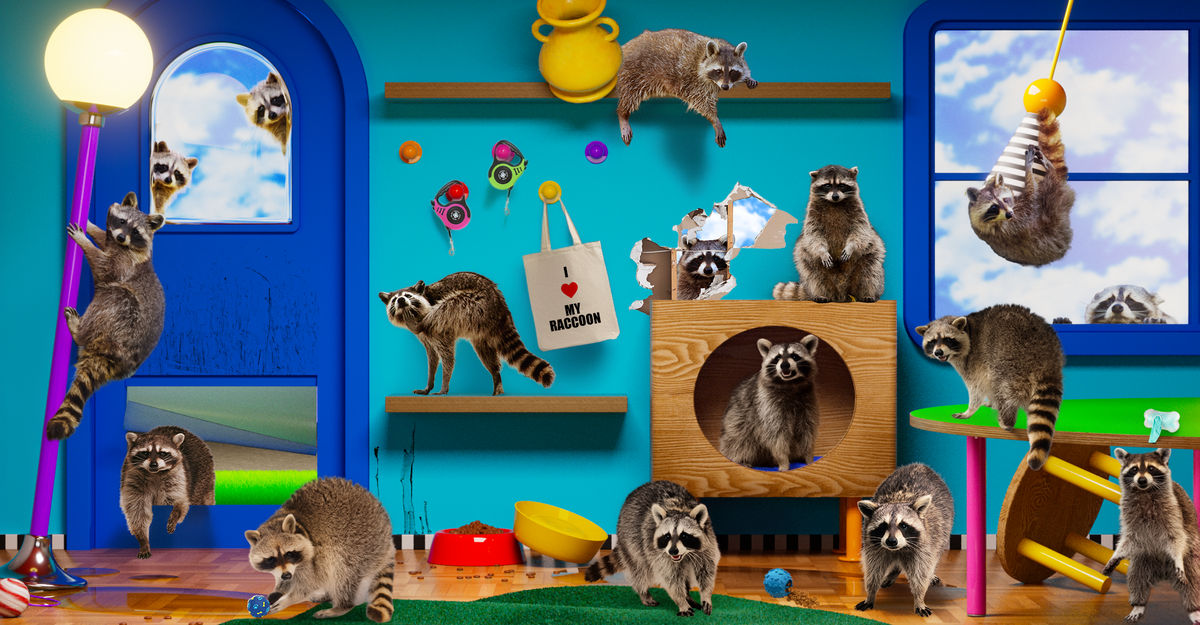
City raccoons have snouts 3.6% shorter than rural ones, an early domestication signal. Experts say pets are unlikely; half-domesticated is the likely end.
City raccoons are carrying an early sign of domestication in their faces. A study published last year in Frontiers in Zoology found that urban raccoons have snouts 3.6 percent shorter than rural raccoons, a physical marker that researchers associate with the neural crest cell changes Darwin first linked to tame animals.
The paper drew broad attention when it came out, and mainstream outlets picked it up. Social media posts celebrated the idea of a “new American pet.” Its method rests on photographs submitted by the public. Several scientists who spoke with this reporter said that limits how much can be concluded.
Raffaela Lesch, the study’s lead author, told CNN the snout gap counts as “still a fairly clear signal” if raccoons are only at the beginning of domestication. Lesch declined to speak with this reporter.
Domestication tends to leave a physical mark. Charles Darwin catalogued the traits that show up across tame species, from floppy ears to curly fur, and argued that selecting for docility drags other features along. The mechanism, identified in 2014, runs through neural crest stem cells that shape facial bone and tissue before they fade. Short snouts are one of the products.
Raccoons have not had much time to travel that path. American suburbs expanded quickly after World War II, and the urban population goes back roughly 100 raccoon generations. The animals brought useful equipment to the city: flexible diets, dexterous paws, long memories and a talent for solving puzzles. Lauren Stanton, a cognitive ecologist at UC Berkeley, said raccoons adapt when the rules of a puzzle change. “If you give them a puzzle and change the rules, they go with it,” she told this reporter.
City life has changed their behavior too. Urban raccoons live at higher densities and on smaller ranges than their rural cousins, and they have become more social and less skittish. Suzanne MacDonald, an animal psychologist at York University, described the shift plainly: “We’ve ended up with animals that don’t run away from us, and instead come sit on our patio furniture.”
The population boom behind that shift was human-driven. Trappers and ranchers removed raccoons’ natural predators, including wolves and coyotes, while suburbs supplied gardens and dependable trash. From the 1930s to the late 1980s, the raccoon population rose about 20-fold, while the fur trade picked back up.
History shows the species has tolerated people for a long time. A Taino fisherman kept raccoons that European explorers mistook for dogs. Colonial naturalists noted their tameability. Calvin Coolidge walked a raccoon named Rebecca around the White House on a leash.
Full domestication still looks unlikely, experts said. Female raccoons are fertile for as few as three days a year, and the animals are solitary by nature. Bonnie Beaver, a veterinarian and animal behaviorist at Texas A&M University, said raccoons “do not have limited agility”; they can get into nearly anything. She also pointed to a missing economic incentive: no one needs raccoons for food or clothing, and very few people need them as companions.
Zeder cautioned against thinking of domestication as a deterministic, one-way process. Melinda Zeder, a zooarcheologist and emeritus curator at the Smithsonian Institution, cited the Soviet silver fox experiment, which produced new coat colors within a dozen generations of selection for tameness, and noted that some species stop halfway. Raccoons, she said, may be at that point.
The pet route demonstrates the problem. Dave, a raccoon owner who asked for a pseudonym, bought a kit from an exotic-pet dealer. Keeping raccoons is legal in a dozen states; his state was not one of them. The raccoon, Blondie, learned tricks and used a litter box at first. When he hit puberty at about 1 year old, he ate through computer cords, shredded books, tore open drywall and destroyed the kitchen. Dave said the animal is “mad” all the time, and Dave is now the only person the raccoon tolerates.
Nessie O’Neil, a raccoon biologist, called the animals “incredibly destructive” and “wildly, wildly intelligent.” The animal’s intelligence is part of the problem. Captive raccoons need large enclosures and constant puzzle-style enrichment to stay occupied. MacDonald put the objection in blunter terms: “Why the hell would you take a crazy little wild animal that is exceedingly bitey.”
Health risks make the case harder. Raccoons carry rabies and leptospirosis. Their roundworm eggs can survive years of cleaning with bleach and detergents, and migrating larvae can reach a human eye before the infection is diagnosed.
The domestication study itself is a single paper built on photos from the public. O’Neil said the danger is in the interpretation: people hear “a scientific justification for having this animal as a pet” and do not dig further.
Marilyn Smith, a Long Island resident who asked for a pseudonym, did not choose this arrangement. She started feeding a stray cat colony, then left her garage and porch doors open for the cats. Raccoons learned the schedule, rejected the cookie flavors they disliked and began coming inside at night. They have ransacked her daughter’s old bedroom, sent her for two rounds of rabies shots and made it impossible for her to travel or sleep.
Scientists have a word for that relationship. It is not domestication.
Zeder described raccoons as potential “commensals,” species that benefit while humans get nothing, or “synanthropes,” species that rely on human settlements without ever being invited. Cockroaches and pigeons belong in the same category. Zeder said the animals may stay half-domesticated forever.
Asked about the chaos at her house, Smith said, “No one would believe this, but I’m really a dog lover.”
Drafted by a large language model from the source reporting linked above, then screened by automated publishing checks. It is not read by a journalist before publication. Some articles cite our Alpha Score. Verify prices and figures against the original source. Educational coverage, not personalized advice.