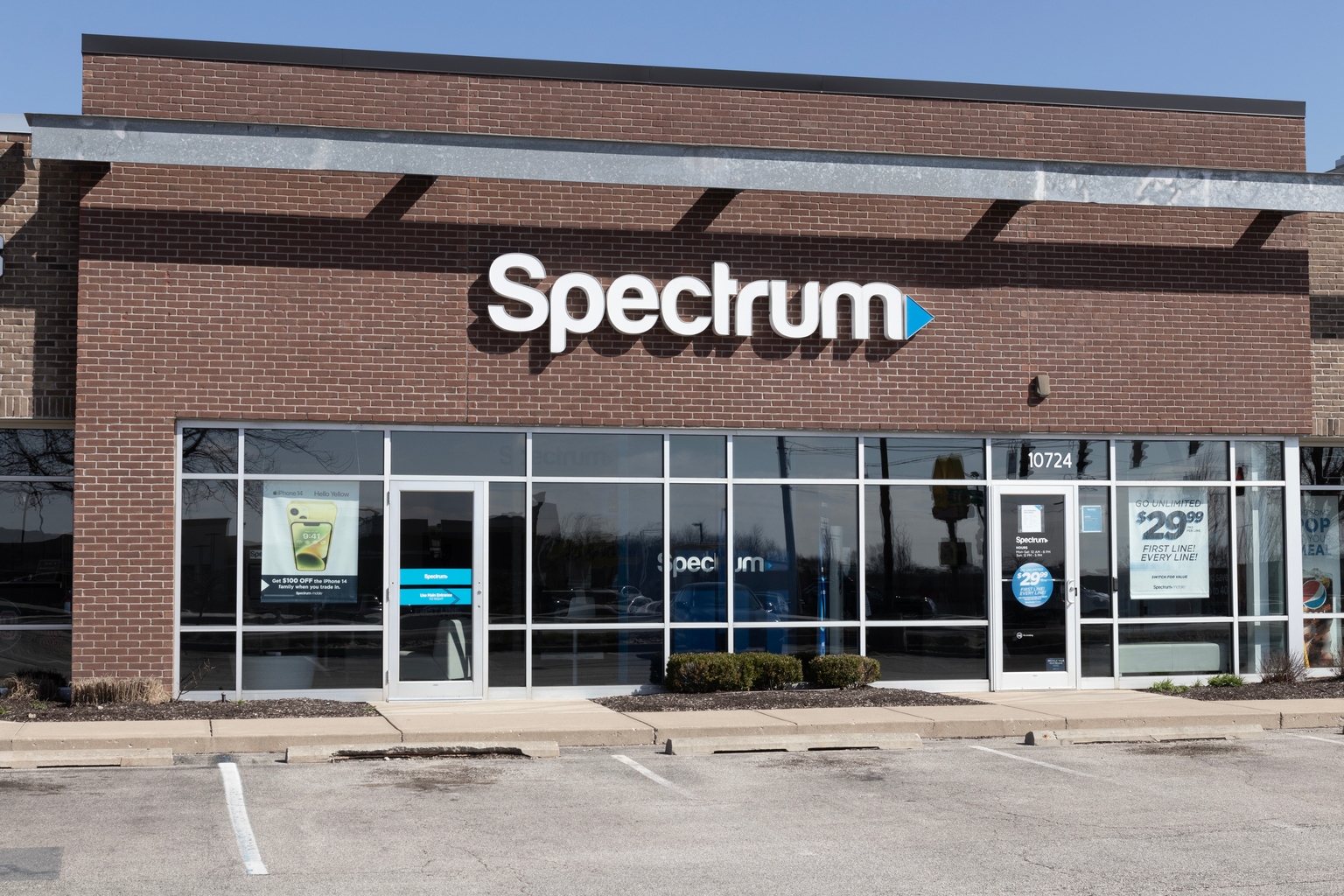
Charter Communications (CHTR) is approaching a free cash flow inflection that the current stock price does not reflect. The cable operator's capital expenditure cycle is peaking as its Rural Digital Opportunity Fund network buildout nears completion. That peak should release several billion dollars in annual free cash flow over the next two to three years. The market has not yet priced this shift. Charter trades at a discount to its historical valuation multiple and to the broader market, a gap that free cash flow generation could close.
The exposure to this event is asymmetric. Longs benefit from a potential re-rating if Charter executes on the capex step-down. Shorts face a positive catalyst that the consensus has dismissed as overshadowed by cord-cutting fears. Passive holders of CHTR are exposed to timing risk: the stock may remain range-bound until the quarterly earnings confirm the trend. The bear case is well known and largely priced. The bull case, centered on cash flow release, is not.
The capex peak is tied to the RDOF buildout. Charter's capital spending has been elevated for several years as it expanded its rural footprint. Once construction is complete, capital expenditures should decline. The timing of this transition is the key variable the market is pricing with skepticism. The next concrete marker is the Q2 earnings report, which will show whether the buildout is on schedule and whether the company maintains its capex guidance for the full year.
The primary affected asset is CHTR stock. A secondary effect could ripple to other cable operators if Charter demonstrates that free cash flow generation can revive even as linear TV subscriptions decline. The sector has been punished for cord-cutting fears. A successful inflection at Charter could force a re-evaluation of peers with similar capital spending profiles. Charter's mobile business, Spectrum Mobile, is a second lever. The company has been adding mobile lines, and those lines carry high incremental margins because they ride on existing cable infrastructure and a wholesale agreement with Verizon. As the mobile base grows, the contribution to free cash flow becomes more meaningful.
What would reduce the risk. A decisive Q2 report is the first step. Specific signals include a reaffirmed or lowered capex outlook, strong mobile line additions, and a clear commitment to shareholder returns. If Charter delivers on the capex step-down, the company could generate free cash flow of $8 billion or more annually within two to three years. That would put the stock at a single-digit free cash flow yield, a level that typically attracts value-oriented buyers. The market needs concrete evidence of the capex decline in quarterly filings before it re-rates.
What would make it worse. Execution risk is the primary downside. If the rural buildout runs over budget or behind schedule, the capex peak slides further into the future. Competition from fixed wireless access could slow subscriber growth in the legacy footprint. A third risk is that Charter uses the freed-up cash for acquisitions rather than buybacks, which would dilute the per-share benefit of the cash flow release. Any of these outcomes would delay or diminish the inflection.
Charter's Alpha Score of 41/100 rates the stock as Mixed within the Communication Services sector. That score weights trailing fundamentals more heavily than the forward capex cycle. An investor relying solely on the current score would miss the structural inflection in cash generation. The score does not capture the multi-year step-down in capital intensity that the buildout completion will bring. The forward cash flow trajectory is the driver that the score leaves unmeasured.
The catalyst path for Charter runs through the Q2 earnings report and the updated capex guidance. If management signals a peak in construction spending and a clear path to higher free cash flow, the narrative shifts. If the guidance disappoints, the stock will remain stuck in its current valuation range. The setup is specific and measurable, defined by one question: is the buildout on track? For investors watching the cable space, that is the only question that matters. See the CHTR stock page for price data and the market analysis for sector context.