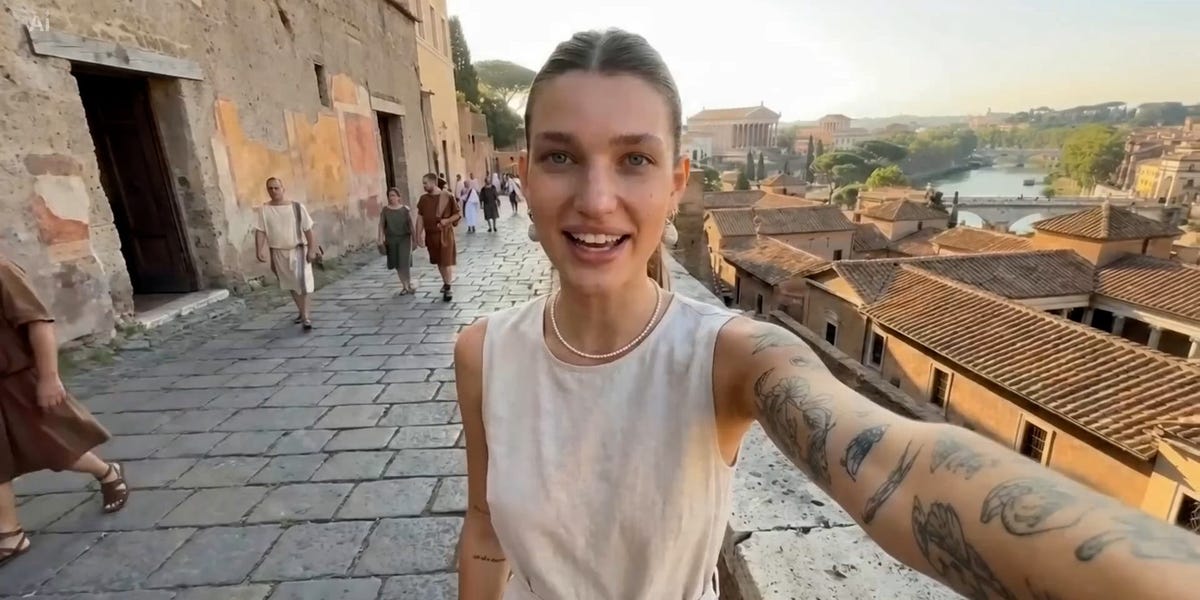
Jonathan Laramy's AI channel Chloe vs. History went viral on short video, the business turned sustainable only after shifting to long-form YouTube documentaries.
Jonathan Laramy runs Chloe vs. History, an AI-powered channel where a generated character named Chloe reports from historical events like Pompeii and the Titanic. The channel pulls millions of views across Instagram and YouTube. Many viewers cannot tell she is not real.
Building that realism comes at a price. Laramy said on a podcast that a single video can cost hundreds of pounds and take weeks to complete. The tools are AI-driven, the labor is not trivial. Creating a convincing face and voice requires iteration.
For a long time the channel generated no meaningful revenue. Short-form content on Instagram and TikTok earned views, not money. The business model broke only when Laramy shifted toward long-form YouTube documentaries. Those videos command higher ad rates and hold viewer attention longer.
The shift changed the economics. A short clip might earn a few dollars in platform payouts. A 15-minute documentary on the Titanic can bring in ad revenue that covers production costs and then some. Laramy said the pivot transformed the business.
Distribution format matters as much as the technology. Short-form builds audience. Long-form pays the bills. The same character and production pipeline serves both, the revenue split is not equal.
Laramy's experience mirrors a broader pattern in creator economics. Many viral channels struggle to monetize until they find the right format. AI reduces the barrier to entry for visuals. It does not solve the business problem of how to earn from attention.
Chloe vs. History now operates as a mixed-format operation. Short clips drive discovery. Long documentaries drive revenue. Laramy declined to share exact earnings. He said the channel turned sustainable only after the format pivot.
Prepared with AlphaScala editorial tooling from the source reporting linked above. Indexable analysis may include a cited Alpha Score value. Publishing checks screen each story before release. Educational coverage, not personalized advice.