Stocks● Neutral
China's Surveillance Exports Reshape Digital Infrastructure
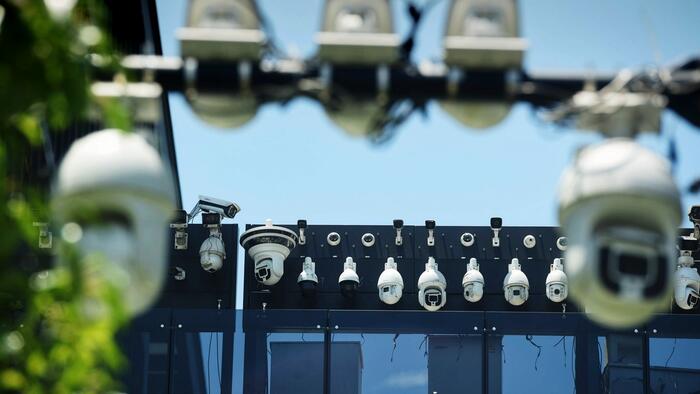
Chinese surveillance firms like Huawei, Hikvision, and Dahua are exporting complete digital infrastructure packages that can transform mid-sized countries into surveillance states, with Turkey a key example.
Continue with
China's rise as the world's leading exporter of surveillance technology is yielding results Beijing's leadership likely welcomes. The export packages comprise an entire technological architecture that can give governments an unprecedented ability to see, identify, and track their populations, according to a report by James Gorrie via The Epoch Times.
Those technologies include cameras, artificial intelligence, telecommunications networks, cloud computing, facial recognition, license-plate recognition, and centralized command systems. Many mid-sized countries are becoming or are already customers, the report said.
Turkey has not yet become a Chinese-style surveillance state. Its political system and institutions remain different from China's. Chinese technology companies have established a significant presence in Turkey's digital infrastructure, and they are not shy about it. Huawei has explicitly marketed its AI-powered CCTV and "Safe City" surveillance technologies in the Turkish market, the report noted.
Chinese companies such as Hikvision and Dahua have become global leaders in video-surveillance equipment. Huawei has developed AI-powered cameras capable of performing sophisticated image recognition and analysis. The Center for Strategic and International Studies (CSIS) has noted that Chinese firms can provide technologies ranging from cameras to AI analytics and centralized deployment.
Huawei's AI-enabled technology is in Turkey, using cameras with embedded AI chips and deep learning capabilities to perform recognition and identification while feeding information into cloud-based big-data systems. Such systems could operate across enormous numbers of cameras, the report said.
That represents a fundamental shift in surveillance capability for nations such as Turkey. A conventional camera records what happened. An AI camera can begin answering who, when, where, and what.
The Smart-City Platform
Huawei's smart-city operation combines 5G, artificial intelligence, Internet-of-Things devices, cloud computing, and big-data analytics. The company describes an integrated "digital brain" capable of connecting multiple government functions and data sources, according to the report.
None of those technologies is inherently authoritarian. Smart traffic systems, energy management, and connected public services are all examples of how technology can make cities more efficient. The problem begins when these systems become interconnected with security databases.
A camera produces an image. A telecommunications network produces location and communications data. A smart-city sensor produces movement information. AI can combine those streams instantly. The result is no longer simply a collection of cameras. It is an urban information and surveillance system, the report said.