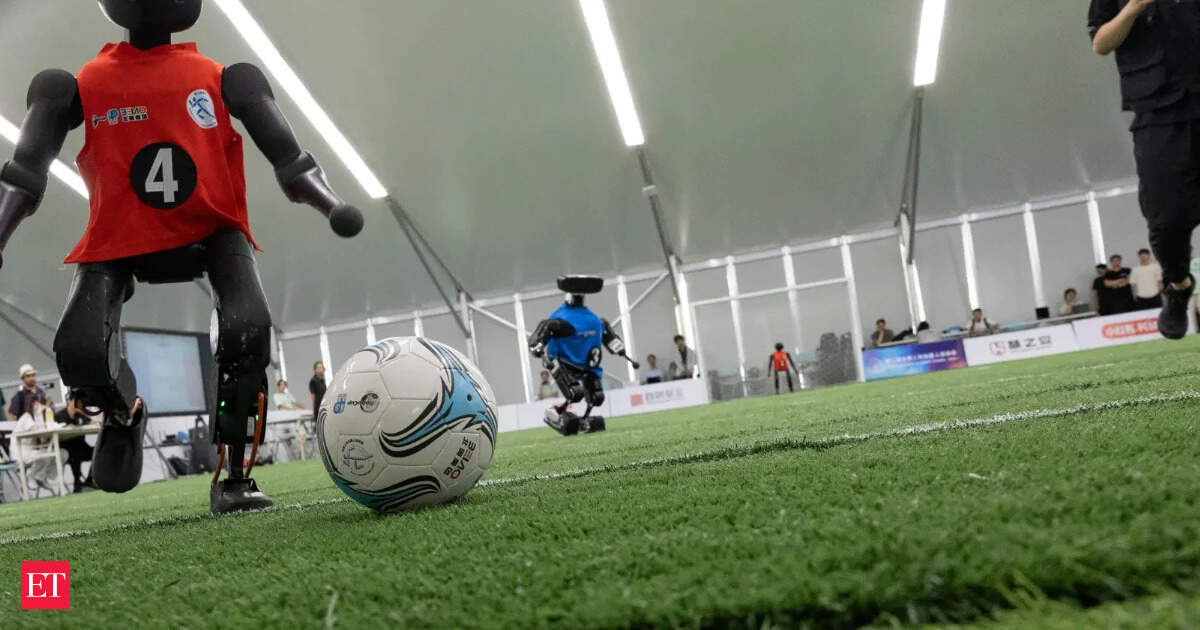
China's robot competitions have outgrown their academic origins. What started as university engineering projects now functions as a product launch platform for companies like Xiaomi, which used a 2023 event to show off its affordable robot dog. The next two years will test humanoid machines in real-world tasks – climbing stairs, carrying objects, navigating uneven terrain.
State backing and a dense supply chain explain the speed. Chinese robot makers can source motors, sensors, and batteries from domestic factories that already serve the electric-vehicle and drone industries. That vertical integration cuts development time and cost, letting companies iterate faster than rivals who depend on imported components.
The 2025 and 2026 competition formats reflect the shift from demonstration to deployment. Organisers have designed obstacle courses that simulate factory floors and disaster sites. Robots will need to open doors, operate tools, and avoid obstacles without remote control. The goal is to identify designs that could move from lab to logistics within a year.
Xiaomi's entry matters because it signals price compression. The company's robot dog, CyberDog 2, sells for roughly $1,600 – a fraction of Boston Dynamics' Spot, which starts near $75,000. Xiaomi can absorb thin margins on hardware because the robot serves as a platform for its software ecosystem. That model is hard to replicate without Xiaomi's scale in phones and smart home devices.
State media has framed the competitions as evidence of technological self-reliance. Officials point to the growing number of domestic components in winning entries. In 2019, roughly 40% of a typical robot's parts came from Chinese suppliers, according to event organisers. By 2023 that figure had passed 70%. The trend supports Beijing's broader push to reduce dependence on foreign chips and precision machinery.
The next hurdle is software. Chinese robot makers have closed the hardware gap faster than most analysts expected, but control algorithms and AI training remain areas where U.S. and European firms hold an edge. Several teams at the 2024 competition used open-source navigation code rather than proprietary systems. The 2025 rules will require entrants to demonstrate obstacle avoidance without pre-mapping the course – a test that could separate the contenders from the prototypes.