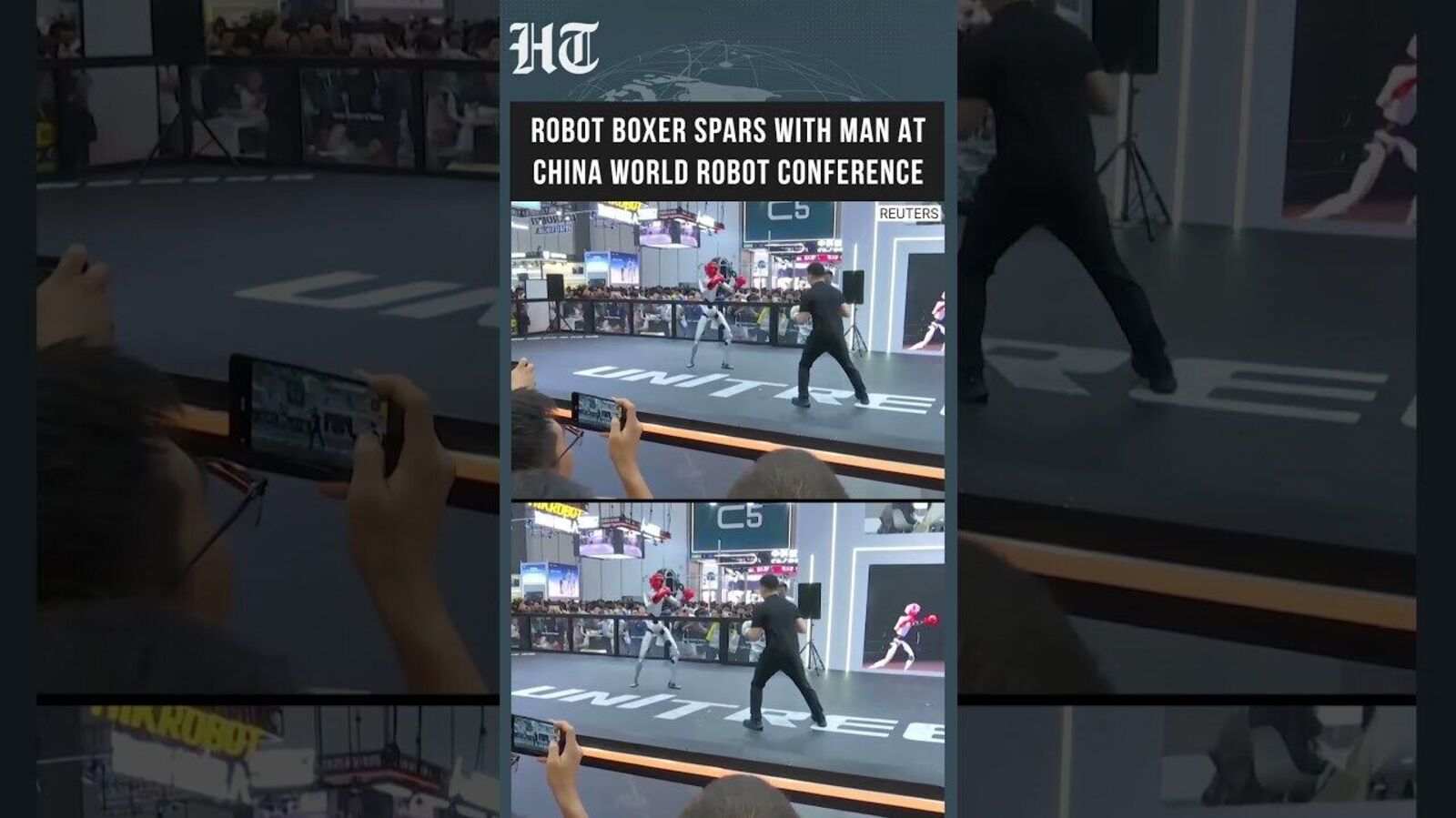
Unitree CEO Wang Xingxing says humanoid robots could achieve 80% task success within three years. Galbot's Wang He targets a 2028 'ChatGPT moment' for embodied intelligence. China dominates 97% of global shipments, but US national security bans are pushing manufacturers to seek new markets. IPO frenzy meets hardware reality.
Unitree Robotics, the Chinese maker of robot dogs and humanoids, made a wild Shanghai stock market debut last week. Shares surged nearly 600% on opening day before dropping 11% on Thursday. That volatility captures both the frenzy around Beijing's AI-driven robotics push and the gap between hype and hardware readiness.
Unitree's founder and CEO Wang Xingxing told a Beijing robotics conference that the industry is closing in on a "ChatGPT moment" for embodied intelligence. He defined that as the point where a machine enters an unfamiliar household and handles roughly 80% of chores through voice or text commands, without prior training. The timeline? Two to three years at best, a decade at worst, he said.
Galbot founder Wang He offered a sharper date. He predicted robots will manage 70% to 80% of daily household tasks without targeted training by 2028. "With continued accumulation of data and further technological breakthroughs, we expect to reach the 'ChatGPT moment' for embodied intelligence by 2028," he said.
China already dominates global humanoid shipments. A Chinese industry association reported the country accounted for 97% of worldwide deliveries in the first half of this year, with over 40,000 units shipped. Beijing is betting humanoids can offset a shrinking labor force and demographic decline by taking over low-level, repetitive, and hazardous tasks.
The sector has become a new flashpoint in US-China tech competition. The US Federal Communications Commission recently banned future imports of foreign quadruped and humanoid robots, citing national security concerns. Chinese manufacturers at the Beijing World Robot Conference told Reuters they are now scouting alternative markets for international expansion.
Georg Stieler, who leads automation at the robotics consultancy Stieler, noted that Wang Xingxing was "notably sober" about current capabilities given the hype around Unitree's IPO and the conference mood. Unitree is the top global manufacturer of robot dogs and the second-largest producer of humanoids by shipment volume. The brand gained widespread recognition through choreographed martial arts and dance routines broadcast on Chinese television. It is pushing its hardware into industrial settings.
Company IPO filings show research facilities and universities still make up the bulk of its clientele. Wang acknowledged that Unitree is investing heavily in human and financial capital to develop "world models" – the physical AI simulations robots need to understand and navigate real spaces safely. He said the firm is still "lagging behind" in applying those models in everyday scenarios.
Humanoids are not ready for widespread consumer use, he admitted. The primary bottleneck is AI decision-making and interaction. While the machines are slowly entering warehouses and factories, they currently operate with less efficiency than human workers. Reuters noted that the robotics industry has not yet experienced a true breakthrough in world models.
"Relative to the mood around World Robot Conference and Unitree's spectacular IPO, Wang Xingxing was notably sober about current capabilities," Stieler said.
Drafted by a large language model from the source reporting linked above, then screened by automated publishing checks. It is not read by a journalist before publication. Some articles cite our Alpha Score. Verify prices and figures against the original source. Educational coverage, not personalized advice.