China's economy grew at a 4.3% annualized pace in the April-June quarter, the weakest reading since late 2022, official data showed Wednesday. The figure missed analyst forecasts and marked a sharp deceleration from the 5% pace in the first three months of the year.
Domestic spending and investment have lagged, limiting the boost from a surge in exports. A prolonged property slump and uncertainty over jobs and wages have constrained household spending on big purchases. Chinese families have cut back, their appetite for big-ticket items dampened by the housing downturn and cautious income expectations.
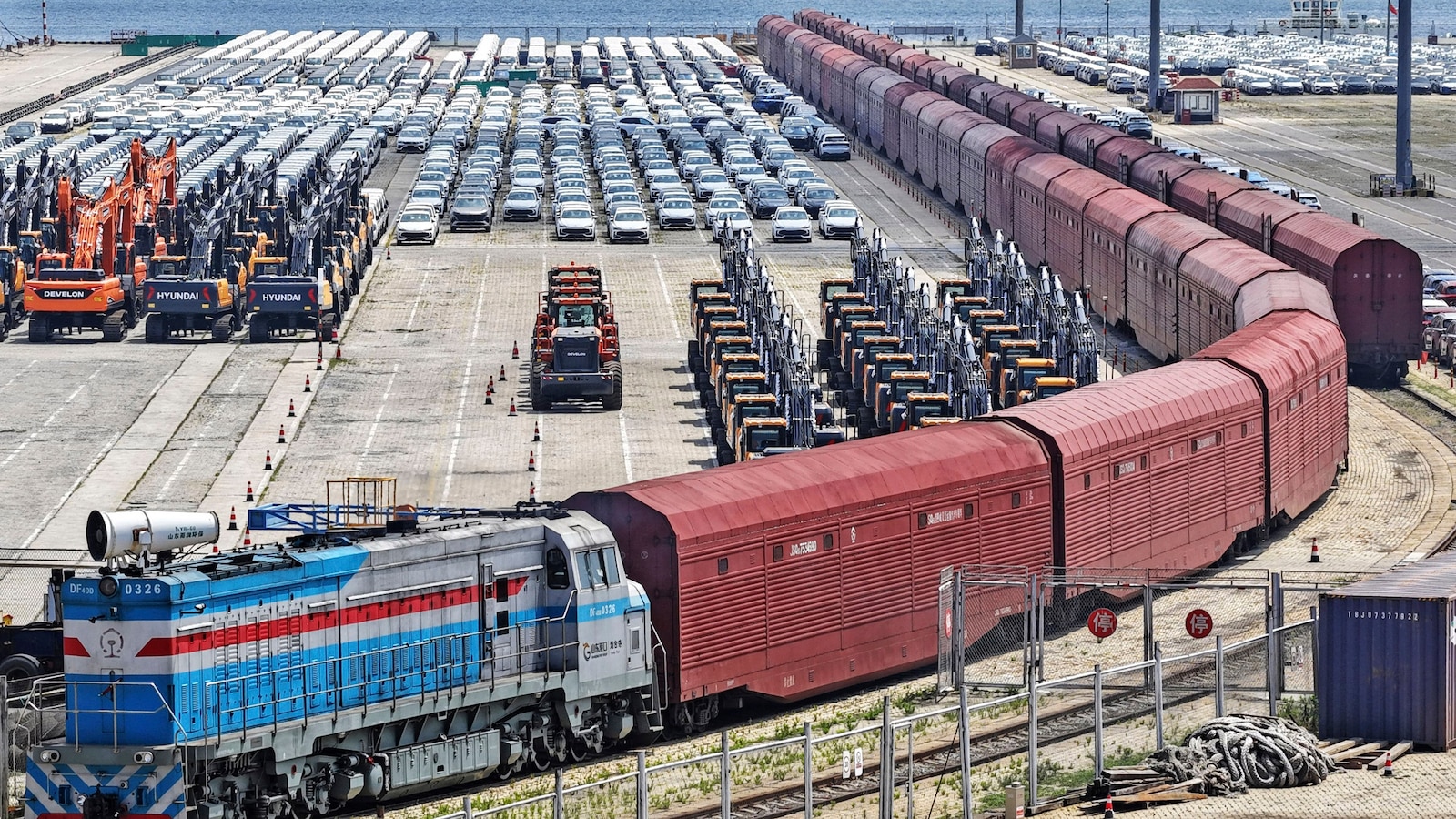
Exports rose 17.6% in the first half from a year earlier, customs data showed. June exports alone jumped 27%. The strength came from AI-related demand and global appetite for Chinese electric vehicles, computer chips and other high-tech products. Heavy government support has poured into frontier technologies, a top priority for China's leaders.
Some economists say the economy is becoming increasingly unbalanced. State support and private investment are flowing into AI, robotics and semiconductors while lower-value manufacturing and services industries that create jobs languish. Mao Shengyong, deputy head of the National Bureau of Statistics, told reporters the imbalance between strong supply and weak demand "remains acute" given the unstable global situation. He said China will work to build a robust domestic market and support employment as it pursues higher-quality growth.
Wei Li, head of multi-asset investments at BNP Paribas Securities (China), described the economy as going through a "significant transition."
China ran a record $1.2 trillion global trade surplus last year. Policymakers abroad have complained about trade imbalances, pointing to heavy state subsidies that they say contribute to an oversupply of manufactured goods exported overseas.
For the full year, Chinese leaders have set a growth target of 4.5% to 5%, slower than last year's 5%. The International Monetary Fund recently raised its 2026 growth forecast for China to 4.6% but expects the economy to expand just 4.1% in 2027.