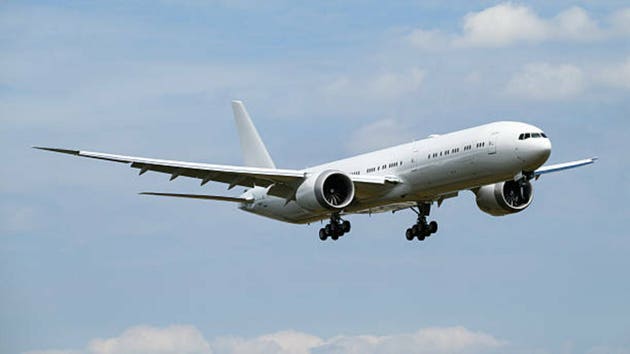
China confirmed plans to buy 200 Boeing (BA) aircraft and work with the U.S. to reduce tariffs, adding a concrete trade-policy lever to President Donald Trump's visit. The order includes GE engines and supply guarantees. The execution timeline depends on whether the two sides extend the current trade deal and deliver the tariff relief Beijing is seeking.
The 200-Jet Order and the Tariff Calculus
The simple read is that a 200-plane order from China is a major win for Boeing's backlog. The better market read is that the order is conditional on tariff cuts that have not yet been negotiated. China is using the aircraft purchase as a bargaining chip to lock in lower duties on Chinese goods, not as a standalone commercial decision. If tariff talks stall, the order could shrink or shift to European rival Airbus, which has already captured a large share of Chinese demand during the U.S.-China trade war.
For Boeing, the order provides a near-term demand signal. It does not solve the company's deeper production and certification problems. The 737 MAX grounding and quality-control issues have constrained delivery capacity. Even with a 200-plane commitment, Boeing must demonstrate it can manufacture and deliver at scale without further regulatory setbacks.
Boeing's Exposure and the Supply Chain Angle
Boeing's Alpha Score sits at 41/100, labeled Mixed, reflecting the tension between a large order pipeline and persistent operational risk. The company's stock page shows the Industrials sector weighting. The China order introduces a geopolitical overlay. GE Aerospace, which supplies engines for many Boeing widebodies, is directly exposed to the same tariff and delivery risks.
The supply guarantees mentioned in the announcement suggest that China is seeking assurance that the aircraft will not be subject to future U.S. export restrictions. That is a non-trivial condition. The U.S. government has used export controls on aerospace components as a trade weapon before. If the guarantees are not ironclad, the order may not convert into firm deliveries.
What Would Confirm or Weaken the Setup
A confirmed extension of the U.S.-China trade deal with specific tariff reduction schedules would validate the order and likely lift Boeing shares. Conversely, any breakdown in negotiations or new U.S. export restrictions on aerospace technology would weaken the setup and push China toward Airbus alternatives.
The next concrete catalyst is the formal trade deal extension deadline. Without a signed extension, the 200-jet order remains a letter of intent rather than a binding contract. Traders should watch for official statements from the U.S. Trade Representative and China's Ministry of Commerce, not just the headline order count.
The Next Decision Point
The order's execution depends on the trade deal extension and the specific tariff cuts China is demanding. Boeing's backlog will become a real-time proxy for U.S.-China trade policy. If the deal holds, Boeing gains a multi-year production runway. If it collapses, the 200 jets become a reminder of how quickly trade leverage can turn into stranded capacity.