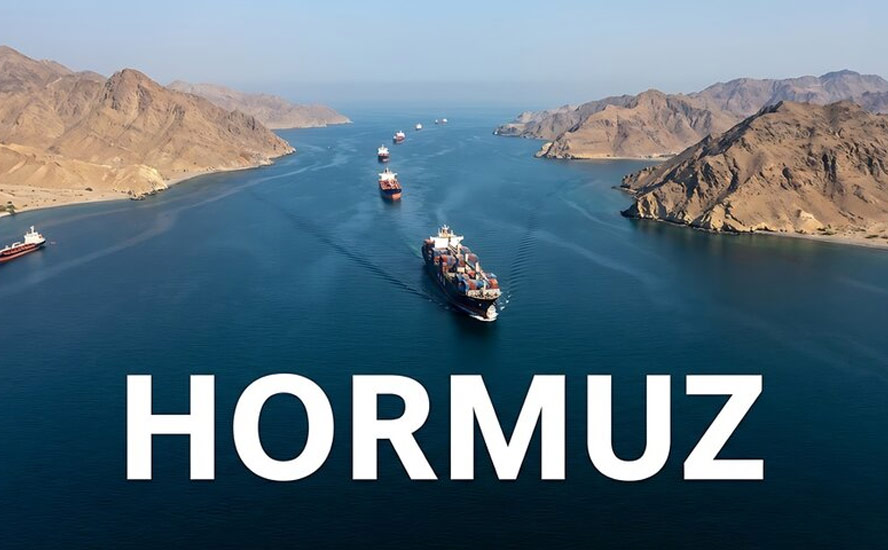
China can profit from a US forever war and a Taiwan blockade, analyst Richard Mills argues. Strait closures threaten oil, supply chains, and rare earths. The Pentagon has spent nearly $29 billion on the Iran conflict.
China stands to gain from a prolonged US military entanglement in the Middle East and could use that distraction to blockade Taiwan, analyst Richard Mills wrote on Investorideas.com. The Strait of Hormuz remains effectively closed after a ceasefire collapsed, and Houthi attacks on Saudi Arabia have escalated, Mills notes.
Pakistan, a close Chinese ally, has deployed roughly 8,500 troops to Saudi Arabia under a mutual defense pact signed in 2025. Mills argues that Beijing now has a proxy force inside the kingdom. China could either mediate peace or let the US stay mired in a conflict that drains missile stockpiles and political capital.
A dual closure of the Strait of Hormuz and the Bab el-Mandeb would choke more than a third of global seaborne oil. Ships would be forced around the Cape of Good Hope, adding 10 to 14 days to voyages and spiking insurance and freight costs, Mills wrote. US missile expenditures in the Iran war have already reached nearly $29 billion, according to the Pentagon’s acting financial officer, and the White House has asked Congress for an additional $87 billion.
The bigger prize for Beijing is Taiwan. Mills contends China can starve the island into submission within nine months via a blockade, using its anti-access/area-denial (A2/AD) capabilities to keep the US Navy at bay. Taiwan imports 97% of its energy and 70% of its food. The People’s Liberation Army Rocket Force operates intermediate-range ballistic missiles like the DF-26, with a strike radius of 3,000 to 4,000 kilometers, designed to target carriers and bases such as Guam.
China’s dominance in critical minerals adds another layer of risk. Beijing controls roughly 69% of rare earth mining output and up to 90% of processing and magnet production. Recent export bans block the sale of extraction and magnetic manufacturing technologies to foreign military suppliers, Mills notes. Allied defense supply chains for tungsten (83% of global extraction), graphite (79%), and titanium (69%) are uniquely vulnerable.
For investors, the key risks are concentrated in shipping lanes, energy supply, and rare earths. A prolonged blockage in the Red Sea and Persian Gulf would hit crude and LNG tankers hardest. A Taiwan blockade would disrupt over $6 trillion in trade, including semiconductors, metals, and agricultural inputs. The CSIS estimates that the US has already used roughly 30% of its Tomahawk missiles, nearly half of its Patriot interceptors, and at least half of its THAAD interceptors in the Iran conflict – raising questions about readiness in the Pacific.
"China will either emerge as a regional peacemaker or let the US fall on its sword," Mills wrote. The ongoing strain on US missile inventories and defense budgets is a structural constraint that Beijing is watching closely.
Drafted by a large language model from the source reporting linked above, then screened by automated publishing checks. It is not read by a journalist before publication. Some articles cite our Alpha Score. Verify prices and figures against the original source. Educational coverage, not personalized advice.