China retail sales miss as investment slump deepens in July
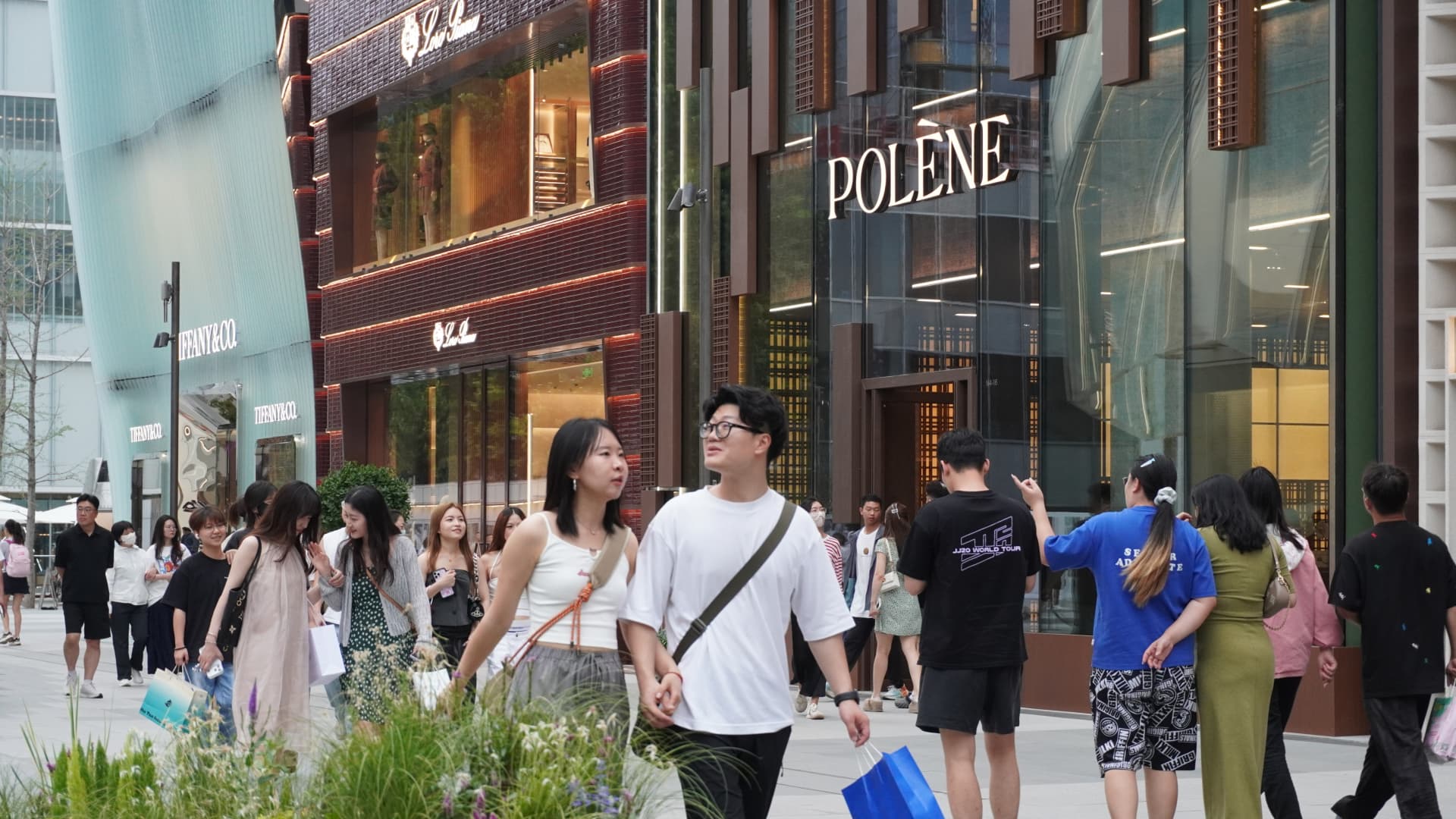
Retail sales rose just 0.6% in July, missing forecasts, while urban investment contracted 6.7% year to date. The deepening slowdown adds pressure on Beijing to expand stimulus.
China's economy lost momentum across the board in July, with consumer spending barely growing and urban investment contracting at a faster pace, adding pressure on Beijing to step up support.
Retail sales eked out a 0.6% gain from a year earlier, the National Bureau of Statistics reported Monday, missing the 1.5% estimate in a Reuters poll and slowing from 1% in June. Urban fixed-asset investment, including real estate and infrastructure, contracted 6.7% in the first seven months from a year earlier, worse than the 6% decline expected and deepening from a 5.7% drop in the first half. Industrial output rose 4.5% in July, undershooting the 4.8% forecast and slowing from 5.3% in June. The urban unemployment rate stood at 5.2%, ticking up from 5% in June.
The data, released at 3 p.m. instead of the usual 10 a.m., underscored the deepening supply-demand imbalance in the world's second-largest economy. Robust industrial production and exports tied to the global AI investment boom have powered headline growth, even as consumption and private investment weakened amid a prolonged property downturn and volatile energy prices.
Goldman Sachs economists attributed much of the retail sales slowdown to a government trade-in subsidy program that pulled purchases forward and has since become a drag. "Real momentum was likely even weaker given higher CPI inflation," they said in a note Friday. Sales growth will probably stay weak in the second half, leaving full-year growth at about 1.5%, Goldman estimates.
In another sign of persistent weakness, new bank loans issued in July recorded their largest monthly decline on record, according to Barclays calculations of official data released Friday by the People's Bank of China. Household loans, including mortgages, shrank after a brief recovery in June, as housing activity remained soft and the labor market weak.
The jobs picture may be worse than official figures suggest. A private survey conducted by the team of Li Daokui, a professor of economics at Tsinghua University, showed China's broad unemployment rate at 10.2% as of July, significantly higher than the official 5.2%. The survey, which counts people jobless for the past two years and no longer in the official labor force, also showed that more than half of the roughly 24 million long-term unemployed are aged 16 to 24. Official youth unemployment stood at 14.9% in June, the highest for that month since the government excluded university students from the sample more than two years ago.
Behind the weak hiring is a slump in investment. Urban investment declined for the first time in decades last year, falling 3.8%, and has deteriorated further this year as the property downturn and tighter constraints on local government borrowing hampered a traditional growth driver. Li described the pullback as "unprecedented" and called for a substantial expansion in government borrowing to more than double this year's planned 12 trillion yuan ($1.7 trillion) in new debt issuance.
Factory and construction activity also lost momentum in July. The official manufacturing purchasing managers' index unexpectedly contracted for the first time since February, as domestic orders slumped and extreme weather – typhoons and heavy rainfall – disrupted port activity and business operations.
Exports remain a rare bright spot. They rose 23.9% in July from a year earlier, beating estimates, after a 27% surge in June that was the fastest since 2021. Imports climbed 27.5%, short of forecasts. China's trade surplus reached $687.4 billion in the January-to-July period, putting it on track for another trillion-dollar-plus surplus in 2026. That massive surplus has become a standing grievance for trading partners, raising the risk of fresh trade restrictions aimed at forcing a rebalancing, analysts said.
The July figures came after the economy posted its slowest growth since late 2022 in the second quarter, expanding just 4.3% from a year earlier. First-half GDP growth of 4.7% puts the economy on track to meet Beijing's target range of 4.5%-5%, but the July data suggests the slowdown is deepening, keeping the pressure on policymakers to deliver more stimulus.
Drafted by a large language model from the source reporting linked above, then screened by automated publishing checks. It is not read by a journalist before publication. Some articles cite our Alpha Score. Verify prices and figures against the original source. Educational coverage, not personalized advice.