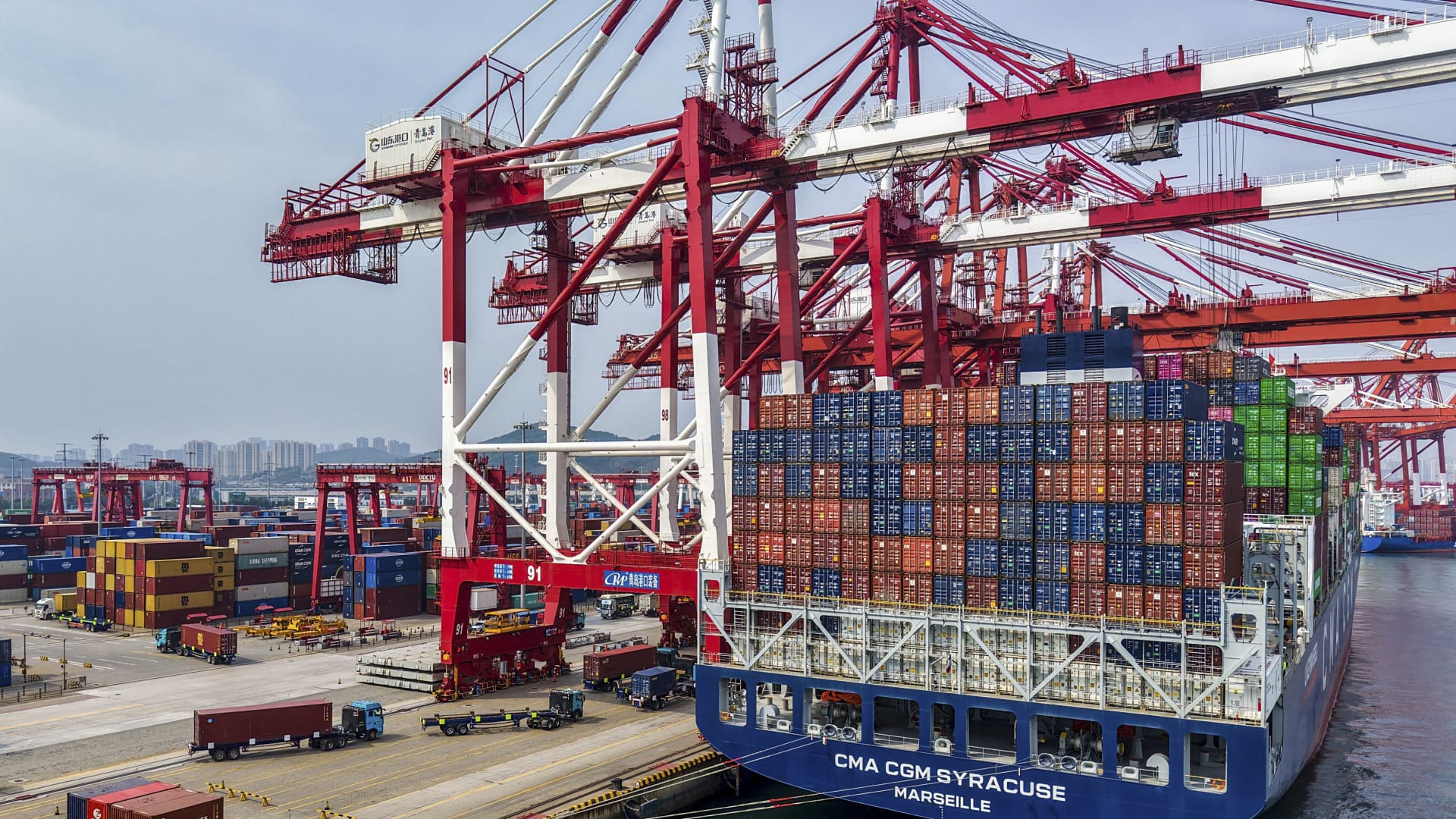
Consumer prices rose 1% y/y in June, missing forecasts, while producer inflation accelerated to 4.1%. Weak domestic demand contrasts with export-led manufacturing strength. The Politburo meeting in late July is the next catalyst for policy action.
China's consumer price growth fell short of expectations in June while factory-gate inflation accelerated, reinforcing the picture of a two-speed economy where weak domestic demand sits alongside export-led manufacturing strength.
Consumer prices rose 1% from a year earlier, the National Bureau of Statistics said Thursday. That missed the 1.1% consensus forecast in a Reuters poll and slowed from 1.2% in May. Core CPI, which strips out volatile food and energy costs, also eased to 1% from 1.1%. Food prices fell 1.6% year-on-year, a slightly shallower decline than May's 1.7% drop.
The producer price index jumped 4.1% from a year ago, in line with expectations and accelerating from 3.9% in May. Factory-gate prices turned positive in March for the first time in years, driven higher by energy costs linked to the Middle East conflict and by rising demand for semiconductors and tech equipment tied to artificial intelligence computing.
The official purchasing managers' index for June, however, showed input cost inflation easing to a six-month low of 54.2 from 60.5 in May. The output price sub-index fell to 48.2 from 51.9, marking the first contraction this year. That signals a pullback in industrial prices that had surged during the war.
The International Monetary Fund on Wednesday raised its 2024 growth forecast for China to 4.6%, up from 4.4%, citing strong high-tech manufacturing, export performance and frontloaded public infrastructure investment. The global growth forecast was trimmed to 3%.
“Many investors in China increasingly view the two-speed growth – marked by robust exports versus weak consumption and housing market – as a defining long-term feature of the Chinese economy,” said Neo Wang, China strategist at Evercore ISI. Consumer sentiment remains subdued as households grapple with the negative wealth effect from the prolonged housing downturn, Wang added.
The export-led resilience is expected to reduce pressure on Beijing to roll out new stimulus for consumer demand. “Policymakers are likely to refrain from major new stimulus unless the slowdown persists beyond the conflict,” said Gabriel Wildau, managing director at Teneo. Wildau pointed to a late-July Politburo meeting as “the next opportunity to escalate policy stimulus.”
Prepared with AlphaScala research tooling and grounded in primary market data: live prices, fundamentals, SEC filings, hedge-fund holdings, and insider activity. Each story is checked against AlphaScala publishing rules before release. Educational coverage, not personalized advice.