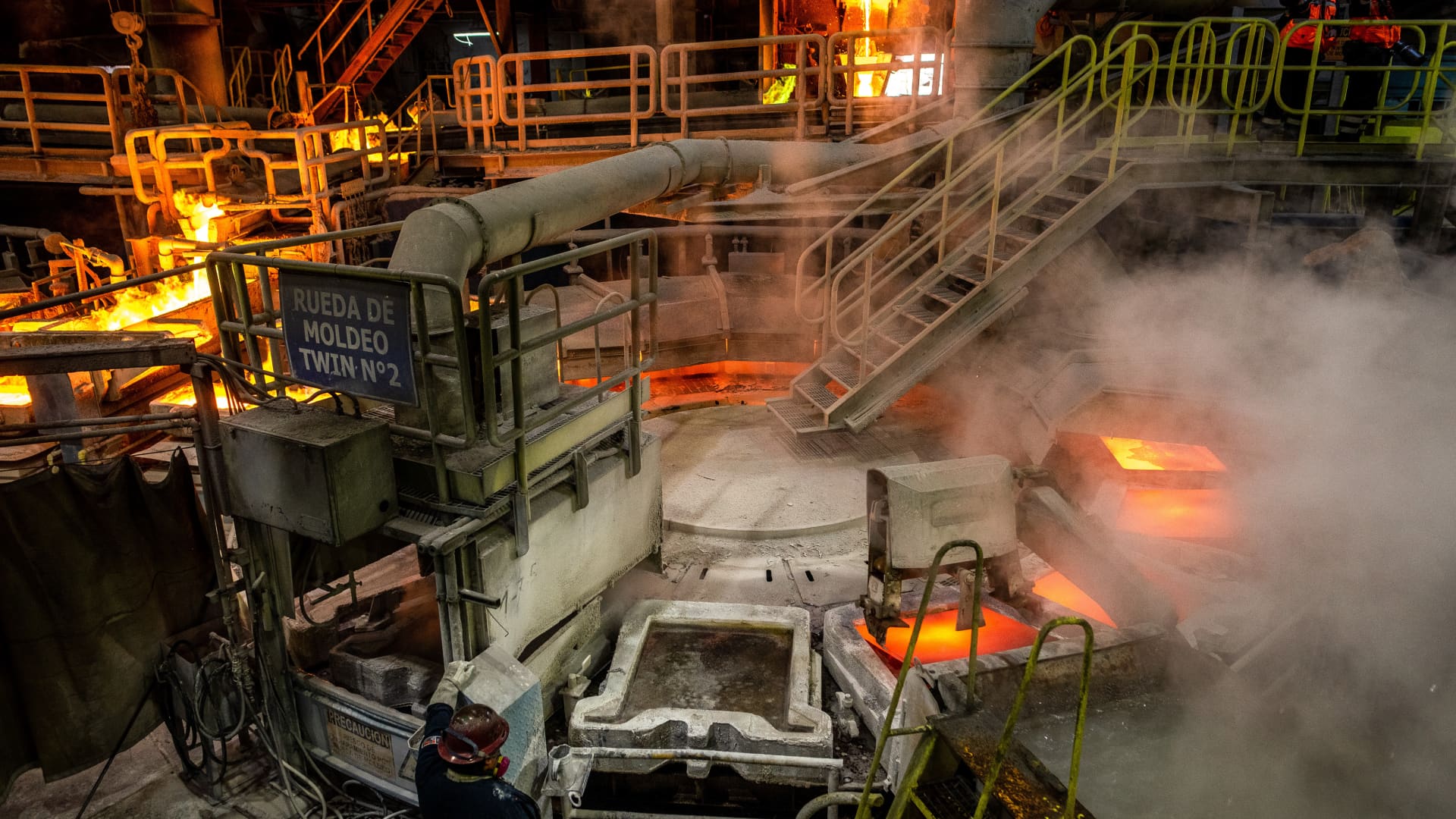
Deadly storms that swept across Chile over the past week disrupted operations at some of the world's biggest copper mines, adding fresh pressure to a market already squeezed by tariff uncertainty, tighter scrap supply and rising demand from AI infrastructure and power grids, strategists said.
Heavy snow, flash flooding and high winds killed 13 people and forced major producers including Anglo American, Antofagasta, Lundin Mining and state-owned Codelco to halt or slow mining and processing. Antofagasta, the London-listed Chilean major, stopped operations at its Los Pelambres site. Barrick Gold evacuated employees because of the extreme weather.
Lundin Mining said Monday that its Caserones mine in Chile's northern Atacama region could take two to three weeks to restart. Power lines serving the mine were damaged by heavy snowfall, forcing the Vancouver-based company to suspend operations on July 18. Rainfall also disrupted Lundin's Candelaria mine, though the site kept running using existing ore stockpiles and later returned to full capacity.
Chile accounts for more than a fifth of global copper production. Ewa Manthey, commodities strategist at ING, said the storms alone were unlikely to upend the market. The disruption reinforces the broader theme driving prices: supply is struggling to keep pace with demand.
"With the market already facing supply disruptions, tariff uncertainty and tighter concentrate availability, any prolonged weather-related outages in Chile could provide additional support for prices," Manthey told CNBC via email.
Copper prices hit an all-time high of $6.70 per pound, or $13,643 per metric ton, on June 2 as concerns over a global supply squeeze intensified. Three-month copper on the London Metal Exchange now trades around $13,750.
Natalie Scott-Gray, senior metals demand strategist at StoneX, said uncertainty over potential U.S. Section 232 tariffs and China's crackdown on scrap copper availability have tightened global supplies this year. Chile recently downgraded its output forecast by 2% to 5.3 million tonnes, she told CNBC's "Morning Call."
"It just amplifies mining supply risks for Chile, in which we expect a second year of declining output," she later said via email.
Scott-Gray described the storm impact on major producers as "temporary and limited," noting contingency plans designed to contain the damage. Smaller miners, which tend to have less operational flexibility, are more likely to be affected. Any further setbacks to mine supply could leave buyers competing for an even smaller pool of available copper.
Nearly two-thirds of visible global inventories – 64% – are now held in the U.S., while tariff fears, strategic stockpiling and import arbitrage into the U.S. and China have pulled supplies away from other markets. Scott-Gray said inventories on the London Metal Exchange and Shanghai Futures Exchange are below their five-year averages, signaling "real world physical tightness."
"It is not out of the question that we will see another record high for copper being posted this year, especially with speculative net longs now prevailing across all major exchanges," she added.
Anglo American CEO Duncan Wanblad said the company is "very, very bullish" on copper's fundamentals. The firm reported a 35% jump in earnings before interest, taxes, depreciation, and amortization to $4 billion in its first half trading statement Thursday, aided by a "favorable" copper price. Speaking with CNBC's "Squawk Box Europe," Wanblad said the London-listed miner has "reshaped its business" around the metal.
"We are a copper-led mining company... underpinned by some of the world's best mining assets," he added.
Commodity strategists earlier this month flagged the outsized impact on commodity markets from the stronger-than-usual El Niño this year, with both floods and drought potentially affecting mining. George Cheveley, natural resources portfolio manager at Ninety One Asset Management, said storms are typically short-lived unless they cause major infrastructure damage. Droughts can have longer-lasting effects on water and power availability, particularly for hydro power. Most mines have contingency plans to mitigate at least some of those effects. He added that speculation on U.S. tariff changes remains a main driver of price moves rather than physical demand.
Scott-Gray expects Chinese buying to ease in August, reducing the flow of metal into the country and slowing withdrawals from LME inventories. "The largest unknown in the market remains what the U.S. administration will do over Section 232 tariffs, and the outlook in each case," she said.
ING carries an Alpha Score of 75, reflecting a strong position in financial services. The bank's commodities desk, led by Manthey, has been among the more bearish voices on near-term copper supply risks. The storm disruptions have pushed the debate toward upside price risk.
ING stock page