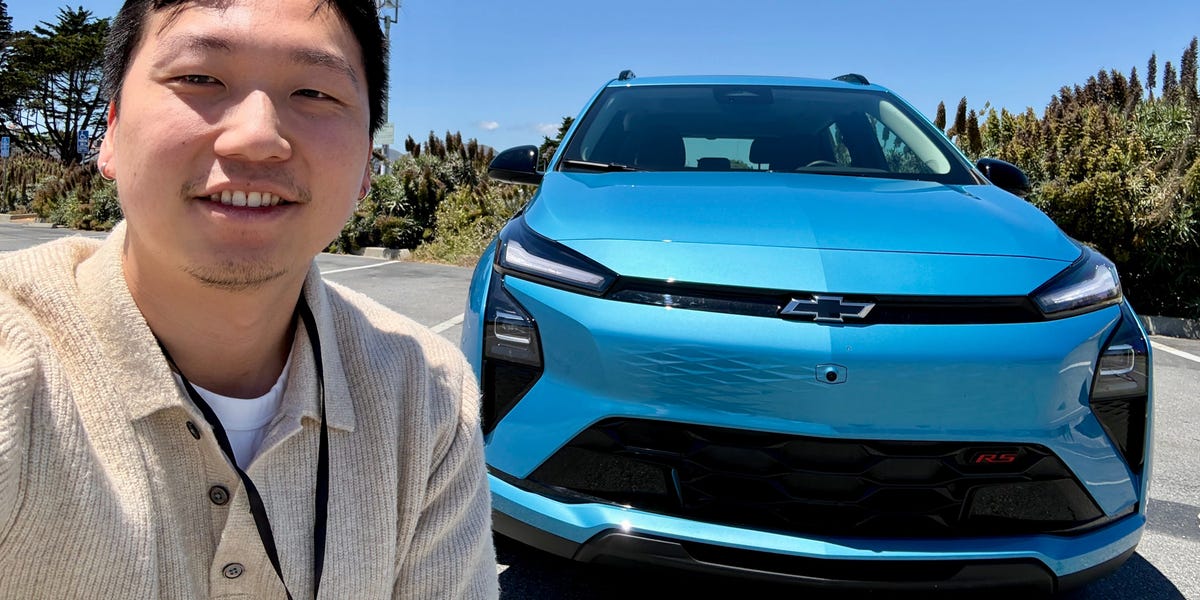
General Motors will end production of the Chevrolet Bolt EV this year, pulling America's cheapest electric car from the showroom floor. The decision, confirmed in GM's latest investor materials, removes a vehicle that started at $26,500 before federal credits and outsold every other GM electric model in 2023.
The Bolt was always an odd fit inside GM's broader EV strategy. It used an older battery chemistry and a separate platform from the Ultium architecture that underpins the Cadillac Lyriq, GMC Hummer EV, and Chevrolet Silverado EV. GM had already discontinued the Bolt in 2021 over battery fire recalls, then brought it back with a refreshed model in 2022. That resurrection looks short-lived.
The simple read is that Americans prefer bigger vehicles. SUVs and pickups accounted for more than 75% of new-vehicle sales last year, according to industry data. The Bolt's hatchback shape and modest range – 259 miles on the EPA cycle – competed against a growing roster of compact crossovers from Hyundai, Kia, and Tesla, which now sells the Model 3 at roughly $38,000 before incentives.
The better read is about margin. GM has said it earns more on each Ultium-based vehicle than it did on the Bolt, partly because the Ultium platform allows shared components across models and partly because larger vehicles carry higher transaction prices. The Bolt's sticker, while attractive to buyers, left little room for profit after battery costs. GM's EV division remained unprofitable through 2023, and management has signaled that cutting low-margin models is part of the path to positive margins by 2025.
The phase-out has implications for the affordable EV segment. Tesla's cheapest Model 3 currently costs about $38,000. The Nissan Leaf starts near $28,000 but offers less range and an older charging standard. No major automaker has announced a direct Bolt replacement at the same price point. Hyundai's Ioniq 6 and Kia's EV6 both start above $37,000. The gap leaves room for Chinese automakers like BYD, which sells the Seagull for roughly $11,000 in China, though tariffs and regulatory hurdles make a U.S. entry uncertain.
For GM, the decision simplifies its factory footprint. The Orion Assembly plant in Michigan, which built the Bolt, is being retooled for electric pickup trucks. The company has said it will build the Chevrolet Equinox EV and Blazer EV on the Ultium platform, both starting in the low $30,000 range, though those models have faced production delays and software issues. The Equinox EV is expected to reach dealers by mid-2024 at a starting price near $34,000, narrowing but not closing the gap left by the Bolt.
Competitors may see an opening. Ford has not announced a small EV below the Mustang Mach-E, which starts over $42,000. Rivian's R2 platform, slated for 2026, targets the $40,000 range. Legacy automakers have struggled to manufacture affordable EVs at scale while battery costs stay elevated. The Bolt's exit removes the one U.S.-built EV that a buyer with a $30,000 budget could reasonably consider.
Production of the Chevrolet Bolt EV and its EUV variant is scheduled to end in late 2024. The final units will sell out of dealer inventory through early 2025.