Commodities● Neutral
Central Banks Plan 7% Reserve Shift From Dollars to Gold
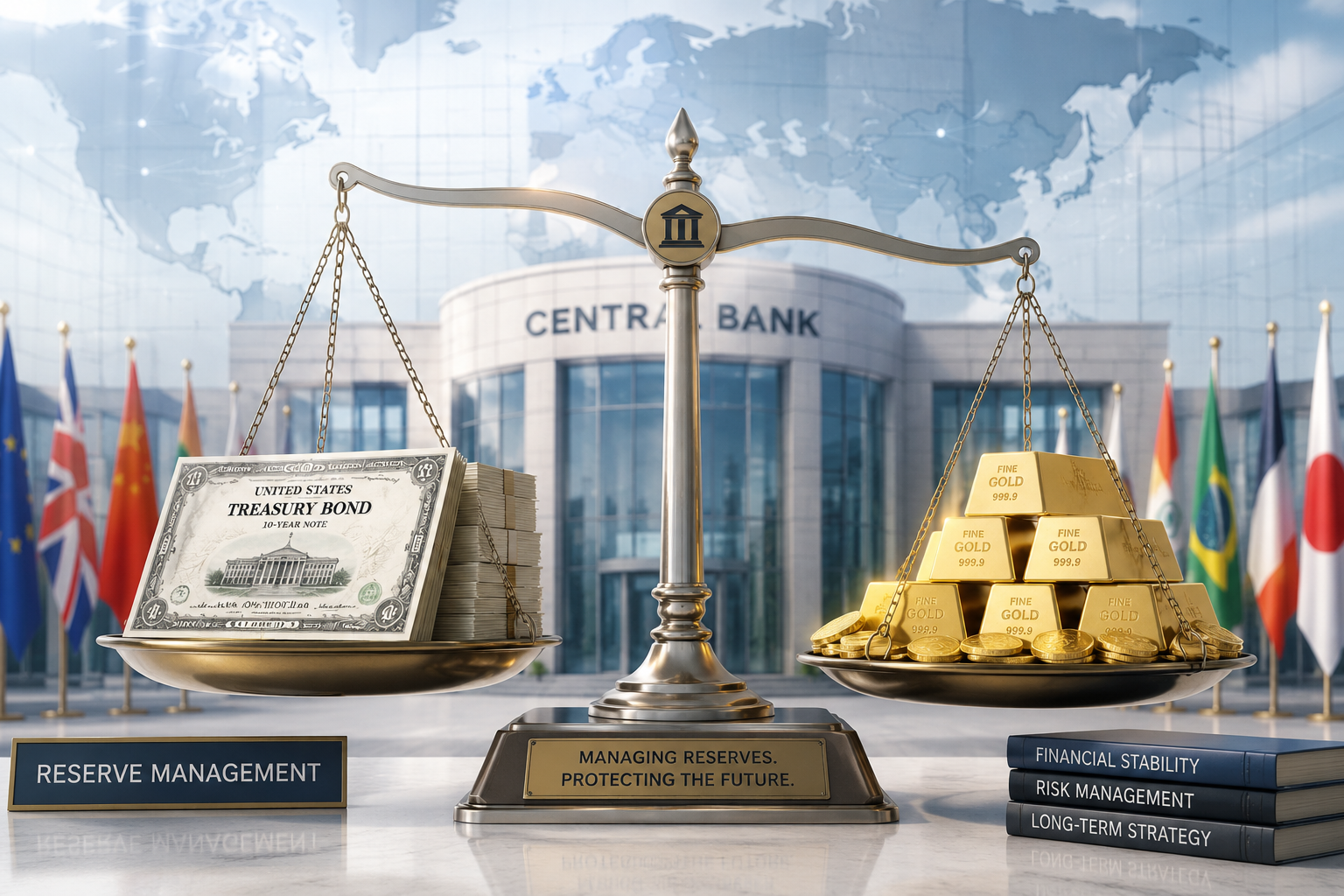
Survey of managers holding $10 trillion: central banks plan to move 7% of reserves out of dollars, with 61% seeing gold at $5,000-$6,000 by 2027.
Continue with
Reserve managers controlling more than $10 trillion in central bank assets told OMFIF this year they plan to cut their dollar holdings over the next decade. For the first time in the survey's history, more respondents said they would reduce dollar reserves than increase them.
OMFIF, the London-based Official Monetary and Financial Institutions Forum, asks reserve managers the same question every year: what do you plan to do with your US dollars? This year's answers describe a slow, deliberate exit. Reserve managers are paid to be boring, and diversification of this size takes years, sometimes a decade or more.
The turn traces to February 2022. Washington and its European allies froze roughly $300 billion of Russian central bank reserves after the invasion of Ukraine. Much of that money sat in European custody rather than the United States; the US government pressed its allies to block the assets anyway. The lesson for every reserve manager was direct: dollar assets parked abroad can be locked up by a policy decision.
The dollar dominates reserve portfolios because US Treasuries are the deepest, safest market in the world. The same depth makes them hard to replace. Neither a BRICS settlement currency nor central bank digital money is close to absorbing official savings at this scale. The obvious destination is gold.
Between 2022 and 2025 central banks bought several hundred billion dollars of the metal above their normal pace, enough to lift gold's share of global reserves to about 2%. The extra demand more than doubled the price, from roughly $1,600 an ounce to above $4,000.