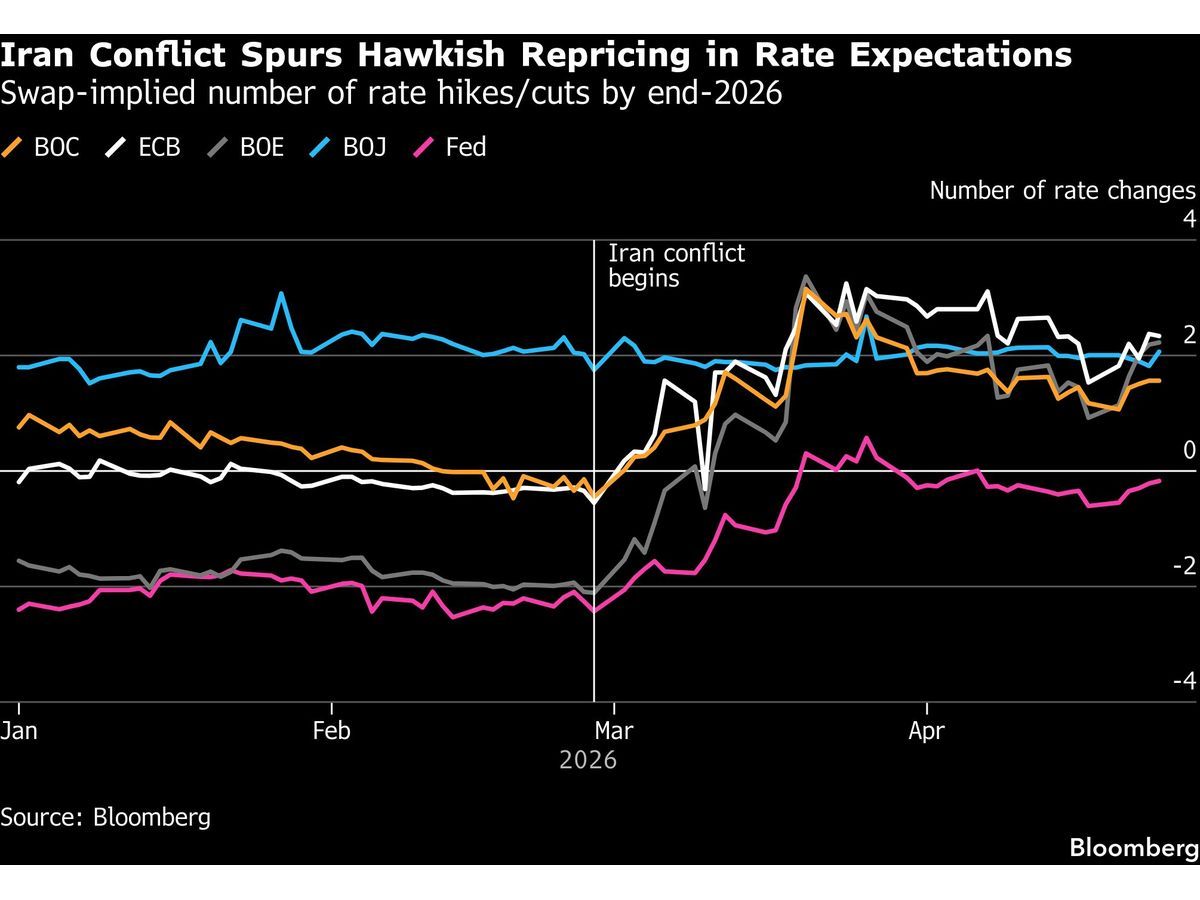
The global fixed-income landscape faces a critical inflection point this week as major central banks prepare to deliver a series of interest rate decisions. The narrative shifting the bond market involves a growing consensus that policymakers may maintain higher rates for longer than previously anticipated. This expectation creates a persistent headwind for government bond prices, as investors adjust their portfolios to account for the potential of fewer rate cuts in the near term.
Policy Divergence and Yield Pressure
The primary driver of current market sentiment is the recalibration of expectations regarding central bank reaction functions. As inflation data remains sticky across several major economies, the window for aggressive monetary easing appears to be closing. Bond traders are now focusing on the specific language used in post-meeting statements to determine if officials are signaling a shift toward a more hawkish stance. If central banks emphasize the need for sustained restrictive policy, the resulting upward pressure on yields could trigger a broader sell-off in government debt.
This environment forces a reassessment of risk premiums across the yield curve. When policy rates remain elevated, the opportunity cost of holding long-duration assets increases, often leading to a repricing of sovereign debt. Investors are closely monitoring the spread between short-term and long-term yields to gauge whether the market is pricing in a soft landing or a more prolonged period of economic stagnation. The outcome of these central bank meetings will likely dictate the direction of capital flows for the remainder of the quarter.
Sectoral Read-Through and Valuation Risks
The impact of these rate decisions extends well beyond the bond market, influencing valuation models for high-growth technology firms and consumer-facing entities. Companies with significant debt loads or those that rely on low-cost capital for expansion are particularly sensitive to shifts in the yield environment. For instance, firms tracked on our NOW stock page and SHOP stock page often face increased scrutiny when discount rates rise, as their future cash flows are discounted more heavily.
AlphaScala data currently reflects a cautious outlook for several technology and consumer cyclical names. Specifically, we note the following:
- ServiceNow Inc. (NOW) holds an Alpha Score of 52/100, indicating a mixed outlook.
- Shopify Inc. (SHOP) carries an Alpha Score of 47/100, reflecting current market uncertainty.
- Amer Sports, Inc. (AS) maintains an Alpha Score of 47/100, consistent with broader consumer cyclical trends.
These scores reflect the ongoing tension between operational performance and the macroeconomic backdrop. As central banks finalize their decisions, the primary marker for investors will be the updated guidance on future policy paths. Any deviation from current market expectations regarding the timing and magnitude of rate adjustments will likely serve as the next catalyst for volatility in both equity and debt markets. The focus remains on whether policymakers can maintain credibility while navigating the competing demands of price stability and economic growth. Investors should look to the official post-meeting transcripts for the specific language that will define the next phase of the interest rate cycle.