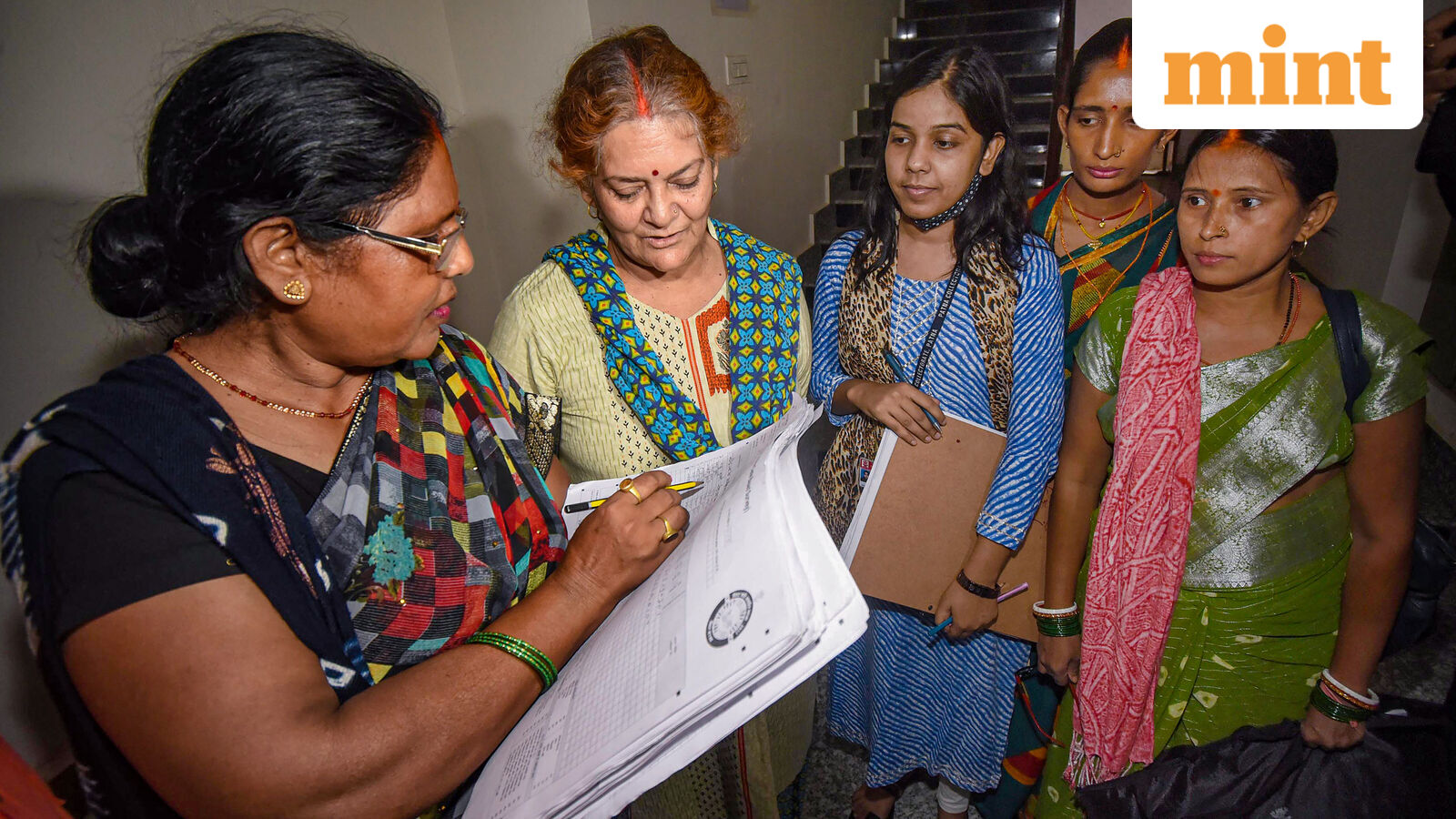
Census 2027 is the first to count every individual's caste. The government has not clarified how it will collect that data, risking a repeat of the 2011 failure, an expert said.
India's decennial census, delayed by six years from its original 2021 schedule, is finally underway. Census 2027 will be the first effort by independent India's registrar general to count the caste of every individual. The government has not said how it will collect that information, raising questions about the credibility of the data, according to Himanshu, an associate professor at Jawaharlal Nehru University and visiting fellow at the Centre de Sciences Humaines, New Delhi.
The census is the foundation of India's statistical system, providing the sampling frame for all National Statistical Office surveys. An outdated sampling base leads to biased estimates, Himanshu said. The delay from 2021 to 2027 has already pushed the reference period past its useful life for some surveys.
The last national attempt at a caste count, the Socio Economic and Caste Census of 2011, used an open-ended question. Households reported thousands of caste names and spelling variants. The data was unusable for analysis, Himanshu said.
State-level exercises in Bihar, Telangana and Karnataka took a different approach. Each used a pre-determined list of caste categories. Bihar had 215. Telangana used 242. Both released socioeconomic tabulations. The process involved public feedback and consultation with academic and caste groups before enumeration began, Himanshu said.
A pre-determined list produces usable estimates, he said. The challenge at the national level is scale and mobility. Migrants move across state lines. Caste names and social hierarchies shift between regions. A list that works in Bihar may not capture how the same community identifies in Maharashtra.
Himanshu called for the government to publish a draft caste list and open it for public discussion and scrutiny before the February enumeration begins. The only proper way to do it, he said, is by making a list of castes and opening it up for public discussion as well as scrutiny before population enumeration begins. That process would resolve contentious issues of caste categorization and work in favour of the Census process's credibility.
House-listing operations, which involve a preliminary survey of households, are likely to conclude on September 30. Population enumeration will take place in two phases. For Ladakh and snow-bound areas of Jammu and Kashmir, Himachal Pradesh and Uttarakhand, it begins in September. For the rest of the country, it starts in February. Himanshu said the lack of clarity on caste data collection this close to the first enumeration phase raises questions about the seriousness of the effort.
Caste data was collected in censuses before independence, the last being in 1931. After independence, the census limited caste collection to Scheduled Castes and Scheduled Tribes. The push for a broader count dates to 1957. Census 2027 is the first time the registrar general will attempt it.
Himanshu's argument is that a pre-determined list is the only way to get usable estimates. The list requires collation across states and open consultation. He said the government should make the list, release it, and let citizens, academics and caste groups weigh in before the enumerators go door to door.
Drafted by a large language model from the source reporting linked above, then screened by automated publishing checks. It is not read by a journalist before publication. Some articles cite our Alpha Score. Verify prices and figures against the original source. Educational coverage, not personalized advice.