Stocks● Neutral
CBSE Class 12 Answer Sheet Deadline Extended to June 7
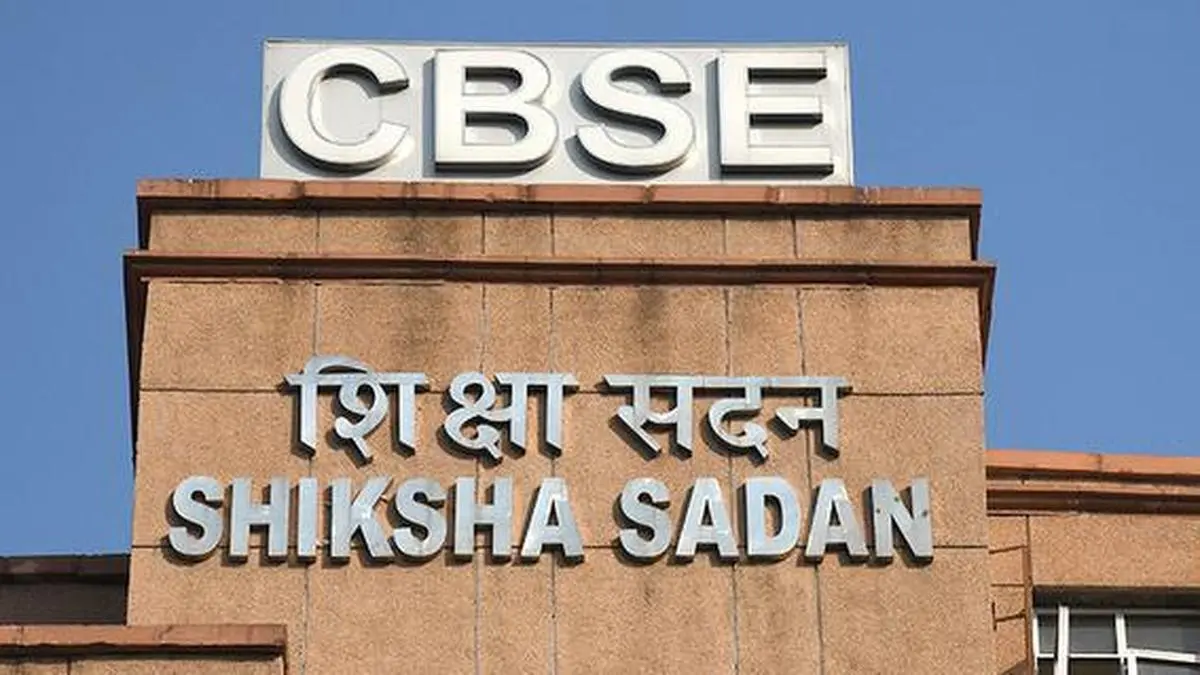
CBSE extends Class 12 answer sheet verification deadline to June 7 after portal access issues. The Cabinet Secretariat investigates OSM system procurement. What students should check before the cutoff.
Continue with
The One-Day Extension and What It Signals
The Central Board of Secondary Education (CBSE) pushed the Class 12 answer-sheet verification and re-evaluation deadline by 24 hours, moving the cutoff from June 6 to June 7 at midnight. The board cited student access issues on the post-result services portal launched June 2. The extension itself is small. The reason behind it is not.
Students reported they could not access their scanned answer books or submit applications on the portal. The CBSE acknowledged the problem in a post on X: "In the interest of students, the CBSE has decided to extend the last date for submission of applications for verification and re-evaluation for the Class 12 board examinations, thereby providing students additional time and support to complete the process."
The word "support" is the tell. A simple scheduling fix would not require that language. The Cabinet Secretariat has already formed a one-member committee to investigate procurement of services for the on-screen marking (OSM) system. That committee exists because the board's technical infrastructure may have a design flaw, not just a portal uptime issue.
The OSM Mechanism and the Handwriting Discrepancy
On-screen marking (OSM) replaces physical evaluation. Examiners see scanned copies of each student's answer sheets on a digital interface. The system should produce an exact pixel-by-pixel copy of the original handwriting. Some Class 12 students claimed the scanned copies did not match their handwriting. If those complaints are valid, the OSM system either mis-assigned answer books or corrupted image files.
The CBSE has said students can report missing pages, missing supplementary sheets, missing maps or graphs, blurred pages, incorrect answer books, or evaluation against a different question paper set. That list covers physical scanning errors. It does not cover the possibility that the wrong student's answer book was uploaded under the right name.
Risk to watch: A single confirmed case of answer-book misassignment would create a much larger credibility gap than an extension deadline ever could. The committee process, not the portal uptime, is the real indicator.
How Verification and Re-Evaluation Actually Work
A student who applies for verification submits a formal request through the online portal. The CBSE then re-examines the scanned copy to confirm that all pages were evaluated and that no marks were omitted. If the scanned copy shows a genuine mistake – a missing page or a blurred section – the board may adjust the marks. The re-evaluation process is separate: an examiner re-reads the answer sheet and reassigns scores.
Practical rule: Verification catches administrative errors. Re-evaluation catches judgment errors. The two processes cover different failure modes, and a student can use both.
What the Cabinet Secretariat Committee Adds
The one-member committee will review how the CBSE procured the OSM system. That inquiry focuses on procurement procedures, not on individual student cases. It may recommend changes to vendor contracts, quality checks, or audit trails. For students, the committee's existence is a signal that the board acknowledges a potential systemic flaw.