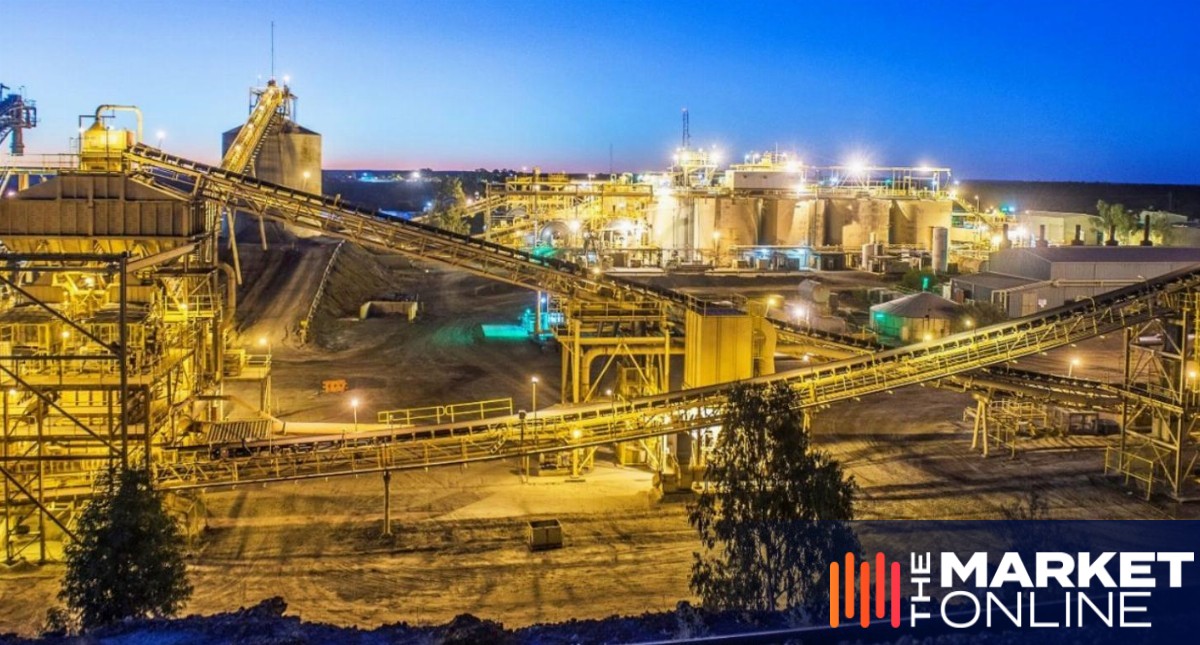
The Old Highway gold deposit in Western Australia has become the next test in Catalyst Metals’ plan to double annual production. The company reported high-grade intercepts from drilling designed to extend mineralisation outside the current resource envelope. Those intercepts land directly on the single most important number at Old Highway: a four-year mine life. The reserve of 140,000 ounces at 3.2 grams per tonne supports production of 35,000 ounces per annum for only four years. For a Catalyst that is targeting growth from more than 100,000 ounces per annum to over 200,000 ounces per annum, Old Highway must deliver more than its current reserve allows. The latest assays have opened a window. The follow-up drilling now underway will determine whether that window stays open.
The Four-Year Mine Life and the 200,000-Ounce Production Target
Old Highway sits 40km south of the Plutonic Belt in a prolific gold region. The deposit contains a resource of 206,000 ounces at 3.0 grams per tonne (g/t). The mine life constraint comes from the smaller reserve number: 140,000 ounces at 3.2 g/t. That reserve anchors the entire development case.
Reserve of 140,000 Ounces Anchors the Immediate Plan
The reserve lives entirely within the Zone 400 deposit, the area that forms the basis of Catalyst’s immediate development plans. Shallow, historic drilling by prior owners defined that reserve. Zone 400 is a small subsection of a broader four-kilometre mineralised trend. The company’s thesis is that the trend holds significantly more ounces, and the current reserve merely represents the first phase of mining. If that thesis is wrong, Old Highway contributes nothing after its initial four-year campaign.
Old Highway’s Role in the Production Growth to 200,000 oz pa
Old Highway is the fifth deposit to be developed in Catalyst’s production growth plan. The other deposits include Trident, which delivered exploration success in 2025, and Cinnamon, which followed in 2026. The sequencing is tight. A failure to extend the Old Highway mine life would create a production gap after 2029, pushing the 200,000-ounce target further into the future or forcing the company to find replacement ounces elsewhere on the belt. That is why the latest drilling results matter beyond the grade headlines.
Intercepts Outside the Resource Envelope: 17.4 g/t Over 2m
The recent program tested down-dip and up-dip extensions outside the current resource envelope. The objective was to find mineralisation that could eventually be converted into new reserves and extend the mine life. The grade numbers are eye-catching. The real question is continuity.
What the Drilling Tested: Depth Extensions Beneath Shallow Oxide
Old Highway’s existing reserve is shallow, derived from historic near-surface oxide drilling. Catalyst is now chasing depth extensions with a view to building an underground resource. The intercepts reported came from outside the resource envelope, meaning they represent potential new ounces.
| Interval (m) | Grade (g/t Au) |
|---|
| 6.0 | 4.1 |
| 5.0 | 4.7 |
| 2.0 | 17.4 |
| 12.0 | 3.7 |
| 5.0 | 3.7 |
The 2.0-metre interval at 17.4 g/t is the standout. It points to a high-grade shoot that, if traced along strike and down-dip, would materially change the underground resource calculation. The broader intercepts, such as 12 metres at 3.7 g/t, suggest lower-grade halos around the high-grade core. That is consistent with orogenic gold systems in the Plutonic Belt.
From Intercept to Mineable Reserve
One high-grade hit does not add mine life. The critical next step is a series of follow-up holes that demonstrate the shoot has scale and that the grade holds over mineable widths. A single narrow, high-grade intercept can be geologically real but economically irrelevant if it cannot be linked into a continuous orebody. The market will watch the next batch of assays for confirmation of thickness and grade repeatability.
Zone 400 Focus and the Missing Zone 250
Catalyst’s development plan is concentrated on Zone 400. A second open pit, Zone 250, sits one kilometre south-west and holds an indicated resource of 53,000 ounces at 1.6 g/t. That resource is not in the current development plan. The omission is not an oversight; it is a grade problem.
Zone 400: The Only Reserve-Bearing Ground
Zone 400 contains the full 140,000-ounce reserve. The four-year mine life depends entirely on it. The recent drilling targeted extensions around Zone 400 precisely because any new ounces found there could directly convert into reserves and push the mine life beyond the initial four years. The exploration team’s focus on this zone is the most capital-efficient path to expanding the production profile.
Zone 250: 53,000 Ounces Not in the Plan
The 53,000-ounce indicated resource at 1.6 g/t is a lower-grade accumulation roughly half the grade of Zone 400. At prevailing cost structures, it struggles to be economic as a standalone pit. Catalyst’s decision to exclude it from development plans suggests capital is better deployed elsewhere. A sustained higher gold price would alter the economics, however that is an external variable, not a drilling outcome. For now, Zone 250 is a footnote that the market is not pricing.
What Would Confirm the Resource Growth Thesis
A confirmation requires multiple follow-up holes that intersect similar grades over mineable widths. The company needs to demonstrate that the high-grade shoot at depth has scale. A resource update that adds at least 50,000 to 100,000 ounces to the reserve would be a tangible step. The market would also expect a revised mine plan that extends production beyond the initial four years. If Catalyst can outline a seven-to-ten-year mine life at Old Highway, the deposit becomes a meaningful contributor to the 200,000-ounce target and de-risks the production growth narrative.
Risk to watch: The current reserve supports only four years of production. Without a material resource upgrade, Old Highway’s contribution to Catalyst’s 200,000 oz pa target drops off after 2029.
What Would Break the Thesis
The most direct risk is that follow-up drilling fails to replicate the high-grade intercepts. Narrow hits can be discontinuous. A second risk is that depth extensions encounter lower grades, making an underground operation uneconomic. A third risk is execution: even if the resource grows, permitting, development timelines, and capital costs could delay first production. Catalyst shares closed up 2.05% at $5.98, giving a market capitalisation of $1.529 billion. That valuation already prices in a degree of exploration success at Old Highway and across the broader belt. A disappointment would likely see the stock give back recent gains.
The follow-up drilling program is already underway, with results expected in the coming weeks. The market will focus on whether the high-grade zone continues at depth and whether the intercept widths support a mineable underground resource. For traders, the risk-reward hinges on the gap between a four-year mine life and a production growth story that needs Old Highway to deliver more. The drilling has provided the first data point. The next set of assays will determine whether Catalyst can convert a single high-grade hit into a longer-lived asset.