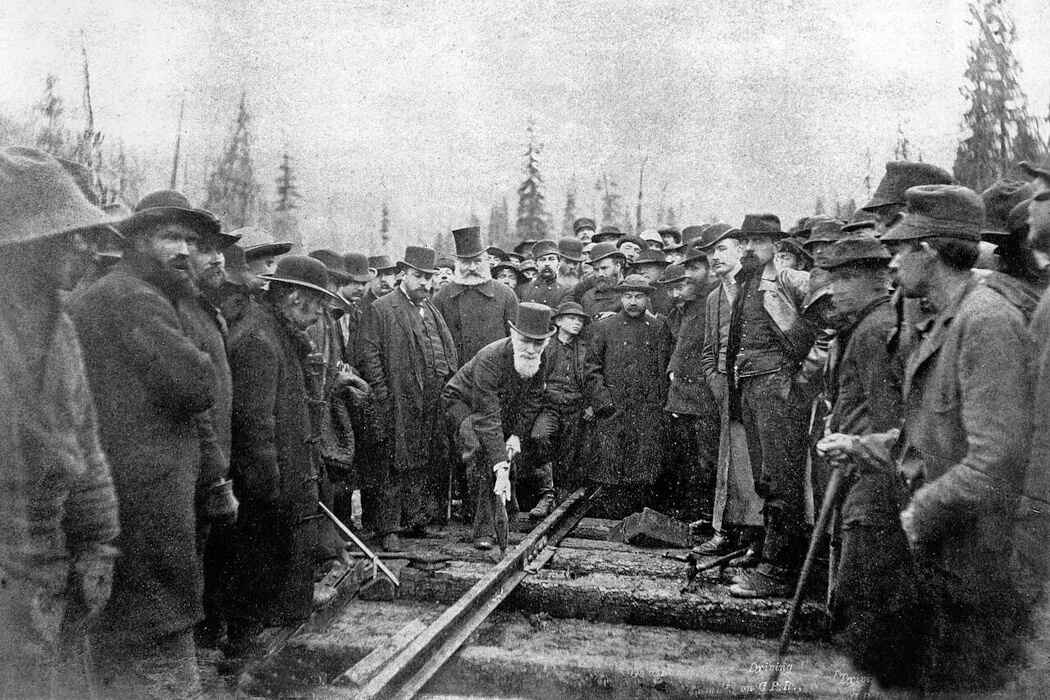
Alex Tapscott, co-founder of the BRI and CEO of CMCC Global Capital Markets, published a report June 16 drawing a direct line between the Canadian Pacific Railway's nation-building role and the current risk of foreign control over foundational AI models. The piece, released ahead of Canada Day, argues this generation needs its own version of the 19th-century project.
Tapscott's example is stark. On June 12, 2026, the Trump administration directed Anthropic to block non-U.S. users from its most advanced models – Fable 5 and Mythos 5. Anthropic shut those systems down globally. The details of the directive matter less than what it revealed: when the foundational infrastructure of the AI era belongs to foreign firms operating under foreign governments, those foreign powers can restrict, reprice, or revoke access without warning, recourse, or regard for the institutions that depend on it.
Dependency dressed as convenience is still dependency. The builders of the CPR understood this. George Stephen, the railway's financial architect, lobbied to block the Grand Trunk from extending north of Lake Superior. Had it done so, much of the economic bounty of the Canadian Northwest would have been diverted to Chicago rather than Toronto and Montreal.
The railways of the nineteenth century determined patterns of commerce, migration, and economic power for generations. AI will do the same in the twenty-first.
Here is another lesson from the 1880s: incentives matter. The initial government-led railway effort largely faltered. Construction advanced slowly, costs mounted, and the project struggled to attract capital to complete the line. Only when Ottawa partnered with private entrepreneurs, assembled a syndicate, provided meaningful incentives, and recruited foreign investment did the project acquire the scale and speed necessary to succeed. Ottawa granted the railway 25 million acres of land – roughly the size of New Brunswick – and then sold "land grant" bonds to foreign investors, unlocking the vast capital required to traverse a barren wilderness.
The objective is not for government to build AI infrastructure. The objective is to make Canada the most attractive place to build it.
With the right incentives, Canada could attract private capital at home and abroad. The Maple 8 Group of Canada's largest pension funds collectively manage more than $2 trillion in assets. The Big Five Banks are among the strongest financial institutions in the world. Canada possesses abundant energy, world-class universities, political stability, and proximity to the largest technology market on earth, to entice foreign investors, too.
Macdonald did not simply ask investors to believe in Canada. He created structures that made building Canada investable.
The modern equivalents of CPR land grants are not hard to imagine. Governments control vast Crown lands near hydroelectric resources in Quebec, British Columbia, Manitoba, and Newfoundland and Labrador. A one-gigawatt AI campus may require 500 to 800 acres and as much electricity as a mid-sized city.
Ottawa and the provinces are moving in this direction, albeit scattershot: sovereign compute initiatives under Canada's AI strategy, Hydro-Québec's active allocation of power to data centres, BC Hydro's expansion of baseload capacity, and federal efforts to accelerate approvals for "nation-building" projects.
The next step is coordination. Governments could identify strategic sites, pre-clear permitting, secure grid access with utilities, and contribute land through long-term leases that reduce development risk, clearing the way for the Maple 8 pensions and Canada's Big Five Banks to crowd in private capital.
With the Alto high-speed railway, the government has signalled it can take on $100 billion projects. Tapscott's report suggests redirecting that capital to projects that will futureproof the economy, not marginally shorten train rides.
The CPR also offers another lesson. In The Last Spike, Pierre Berton observed that American engineers, operators, financiers, and entrepreneurs came north because Canadians were building the most ambitious project on the continent.
Anxiety about losing AI researchers and engineers to Silicon Valley need not be Canada's destiny. The right project, pursued at sufficient scale, can reverse the flow. Great national projects not only retain talent. They attract it.
Contemporary critics once called the CPR "Macdonald's Folly." The builders thought differently, even before Calgary became a global energy capital or Vancouver, a Pacific gateway. They knew that infrastructure expanded the realm of possibility.
As Canada marks another birthday, the question is whether Ottawa moves from scattered initiatives to coordinated policy before the next Anthropic-style directive tests the limits of digital sovereignty. The report's answer is clear: build the infrastructure, or accept the dependency.