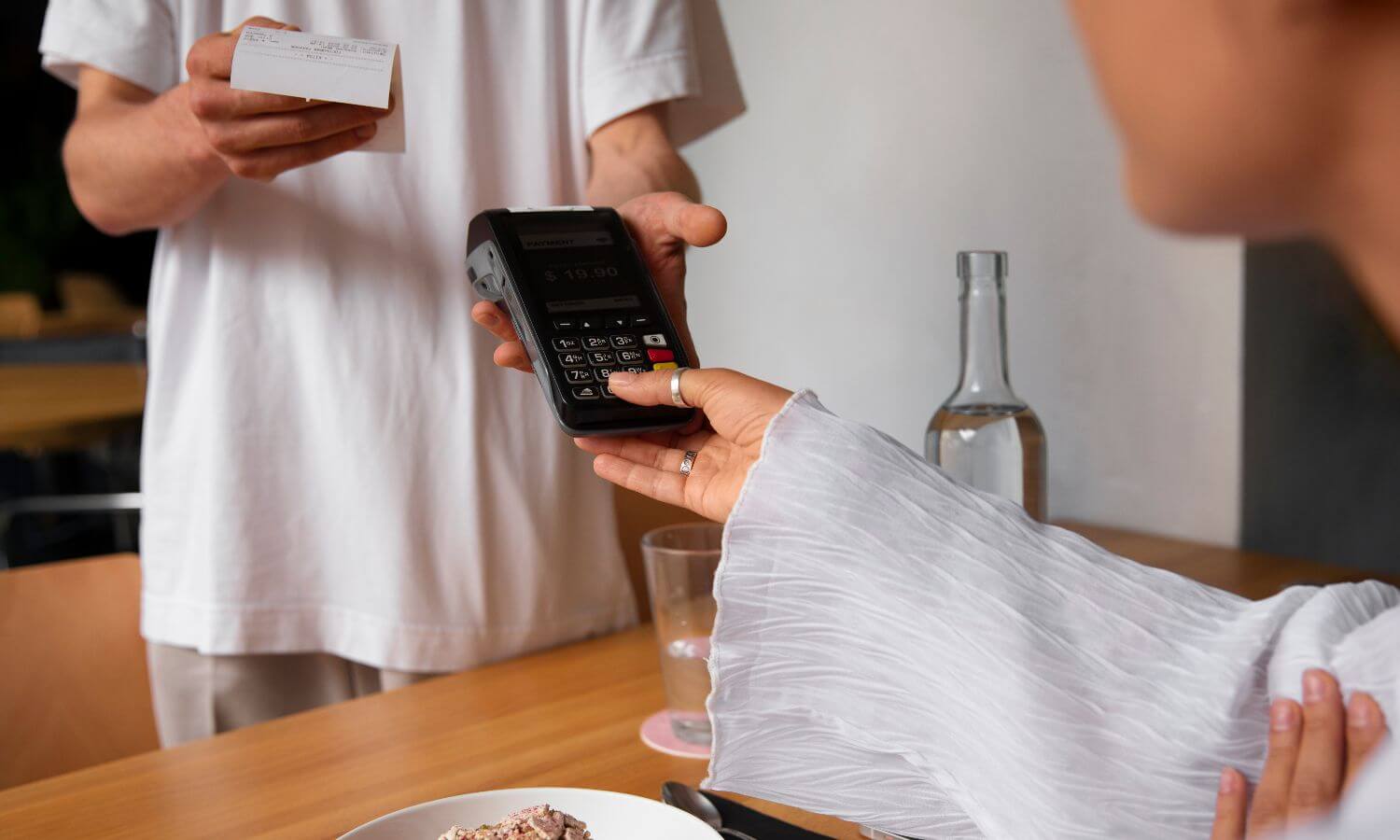
The preset tip percentages on Canadian payment terminals–often 15%, 18%, and 20%–are not neutral design choices. They are revenue levers that shift server income and restaurant margins with every transaction. For the companies that build point-of-sale software, the arrival of over 400,000 permanent residents in 2023, many unfamiliar with North American tipping norms, is a catalyst that is already changing product roadmaps.
Lightspeed’s Terminal Defaults Become a Revenue-Management Tool
Lightspeed Commerce (LSPD) supplies POS systems to thousands of Canadian restaurants. Its software controls the tip prompt flow, the default percentages, and the option to skip. When a newcomer faces a terminal that suggests a 20% tip on a counter-service coffee, the moment can feel like a social test rather than a transaction. That friction is a retention risk for the merchant. A diner who feels pressured may avoid returning. A server who receives a lower tip because a confused customer hit “no tip” may blame the technology.
Lightspeed has been rolling out more granular tipping controls, including the ability for merchants to set custom presets and to display tip amounts in dollar terms instead of percentages. The shift changes the economics of every transaction. A restaurant that moves its default from 15% to 18% can lift staff income without raising menu prices, a lever that becomes more valuable when food-cost inflation is squeezing margins. For Lightspeed, the feature set is a competitive differentiator against Square (SQ) and legacy providers. The company that makes tipping feel effortless for both the payer and the payee wins more merchant contracts.
MTY Food Group and Recipe Unlimited Face a Tipping Reset
Tipping is not a side note for publicly traded restaurant groups. MTY Food Group (MTY) and Recipe Unlimited operate hundreds of locations where labour costs are partly offset by gratuities. When terminal defaults shift, the effective hourly wage of front-of-house staff moves with them. That changes unit economics. A sustained move toward higher default tips can reduce pressure to raise base wages, protecting margins. Conversely, if terminal fatigue causes more customers to select “other” and enter a lower amount, the labour-cost buffer shrinks.
Canada welcomed 401,000 permanent residents in 2023, according to Immigration, Refugees and Citizenship Canada. Many are encountering North American tipping norms for the first time. Their behaviour at the terminal is not yet anchored. A Square study from 2022 showed that first-generation immigrants tip differently than long-term residents. The data, however, is sparse. Payment processors that can capture this cohort early–with clear, culturally sensitive defaults–stand to influence spending patterns that persist for years.
- Terminal preset percentages directly affect average tip size and server income.
- Confusion at the point of payment can reduce customer return frequency.
- POS providers that offer flexible tipping controls gain a retention edge with merchants.
- Restaurant chains with high labour-cost sensitivity see margin impacts from tipping shifts.
The Next Signal: Lightspeed’s Adoption Metrics
The tipping terminal is not a static feature. Lightspeed’s product updates, Square’s Canadian merchant acquisition numbers, and restaurant earnings calls that mention labour-cost trends will all provide signals. The next concrete marker is Lightspeed’s quarterly report, where management may disclose adoption rates for its new tipping modules. If merchants are actively reconfiguring defaults, it suggests the terminal is being treated as a revenue-management tool, not just a payment step. That would be a catalyst worth pricing in.
For now, the minefield that newcomers navigate is also a map for investors. The companies that solve the awkward terminal moment are solving for retention, transaction volume, and the labour equation all at once.