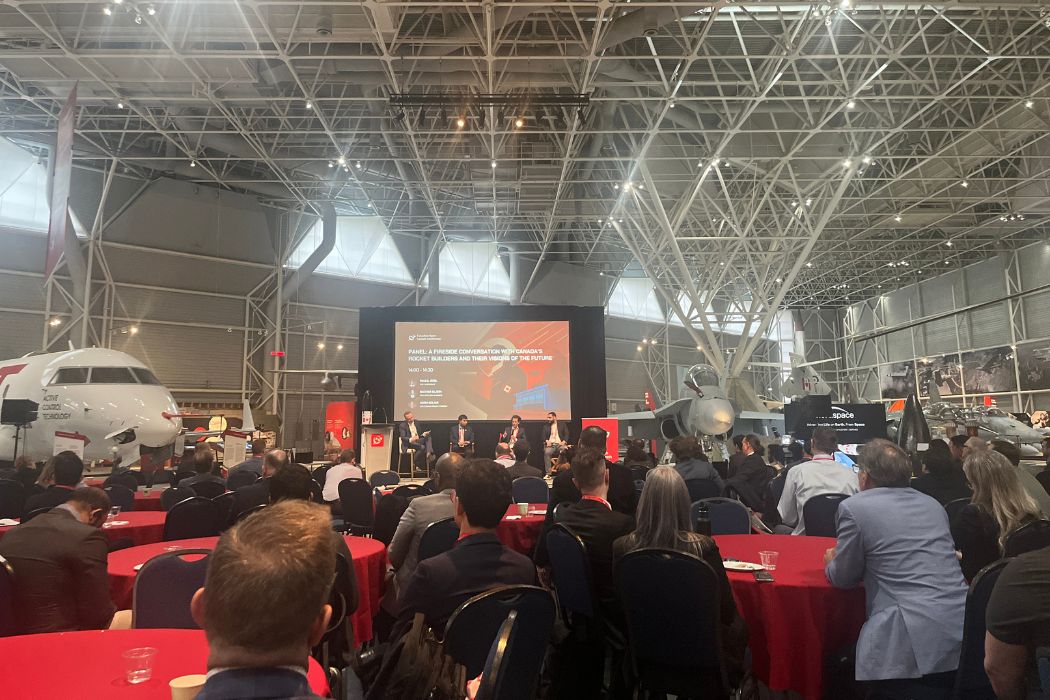
The Canadian government has committed nearly $225 million CAD to establish domestic space launch capabilities, a strategic pivot aimed at ending the nation’s reliance on foreign providers for orbital access. This capital injection, which includes $8.3 million grants provided to each of the three startups NordSpace, Canada Rocket Company, and Reaction Dynamics, signals a shift toward building a vertical supply chain that spans design, manufacturing, and launch operations on Canadian soil. For investors and industry observers, the move is less about immediate commercial viability and more about the geopolitical and economic necessity of sovereign access to low Earth orbit.
The Medium-Lift Market Gap
While the global launch market is currently dominated by SpaceX for heavy-lift payloads, the founders of Canada’s emerging space sector argue that the medium-lift segment—defined as vehicles capable of delivering between 2,000 and 20,000 kg to orbit—has been neglected. The prevailing industry narrative suggested that the medium-lift market was already oversupplied, a claim that Canada Rocket Company CEO Hugh Kolias dismissed during the Canadian Space Launch Conference in Ottawa. Instead, the current landscape reveals a structural opening where demand for mid-sized payloads is expected to outpace the existing capacity of international incumbents.
By focusing on this specific weight class, Canadian firms are attempting to carve out a defensible niche that avoids direct, capital-intensive competition with heavy-lift giants. The technical hurdle, however, remains significant. Reaction Dynamics founder and CEO Bachar Elzein noted that the margins associated with orbital delivery are notoriously thin, and the path to a reliable, flight-proven vehicle requires a high volume of testing and iteration. The success of this initiative depends on whether these firms can move beyond the prototype phase and achieve consistent, cost-effective launch cadences that satisfy both domestic government requirements and international commercial contracts.
Sovereignty as a Competitive Moat
NordSpace CEO Rahul Goel defined sovereign launch as a closed-loop system where Canadian payloads are launched from Canadian territory using Canadian-made rockets. This approach is framed as a response to the volatility of foreign partnerships, particularly in light of shifting political climates in the United States. The argument is that relying on foreign infrastructure creates a house of cards, where the ability to access space could be revoked or restricted by external policy decisions. For a deeper look at how sovereign tech initiatives often mirror broader industrial policy shifts, see our stock market analysis.
This push for independence is not merely about national pride; it is a calculated effort to capture a larger share of the global space economy. By controlling the entire launch stack, these companies aim to offer a more dependable service to satellite operators who are increasingly wary of geopolitical supply chain risks. The economic stakes are high, with proponents citing the 1959 cancellation of the Avro Arrow as a cautionary tale of what happens when a country abandons its high-tech industrial ambitions. The current $225 million investment is intended to ensure that Canada does not repeat that historical error.
Execution Risk and Regulatory Hurdles
Despite the influx of government funding, the transition from a grant-funded startup to a global launch provider is fraught with execution risk. The technical complexity of rocket propulsion and orbital mechanics means that failure rates in the early stages are high. Furthermore, the regulatory environment in Canada must evolve to support these ambitions. As NordSpace’s Goel noted, the government’s role must extend beyond simple funding to ensuring that the regulatory framework makes launching from Canadian soil favorable, rather than merely possible.
Investors should monitor how these firms manage their burn rates against the milestones set by the federal government. The $8.3 million grants are likely just the beginning of the capital requirements for these companies. If they can successfully demonstrate a medium-lift vehicle, they may unlock further private equity interest, but the path to profitability remains long. The ultimate test will be whether these startups can achieve the technical reliability required to compete with established global players while navigating the unique challenges of operating in a nascent domestic space ecosystem. For context on how other high-tech sectors handle rapid scaling and infrastructure bottlenecks, consider the lessons from FirstHX Adaptive AI Targets Rushed Clinical Intake Bottlenecks.