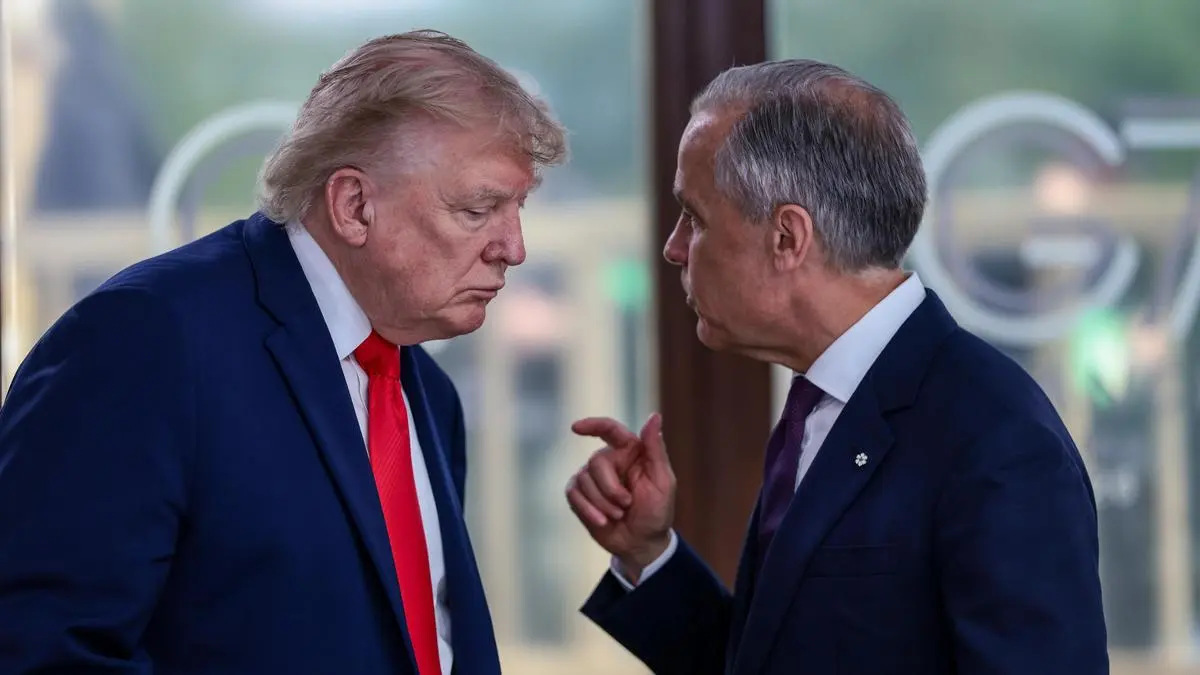
The collapse of the US-Canada trade deal shows how Washington can move the goalposts at the last minute. India, nearing its own agreement, should take note.
The collapse of the US-Canada trade deal offers a vivid warning for any country negotiating with the Trump administration. Canadian Prime Minister Mark Carney ordered his negotiators home after the US introduced last-minute conditions he called “unfair” and “uneconomic.” The talks had appeared close to completion just days earlier, with Trump declaring “subject to the finalization of documents (we) have a DEAL” and Ottawa saying “substantial progress” had been made.
Carney said the US demands went beyond trade into Canadian sovereignty. One issue was language protections for French in Quebec. “We weren’t prepared to compromise on the protection of the French language and our culture,” Carney said. Another was a US attempt to restrict Canada’s ability to negotiate foreign trade agreements with other countries. The US also reportedly sought preferential access to Canada’s critical minerals.
Taken together, Carney said, the US “asked too much.” After the talks broke down, Trump declared Canada wanted “the benefits of being a state, without being one.” The US has imposed 50% tariffs on $20 billion of Canadian goods, and Canada has promised dollar-for-dollar retaliation.
India, which has been pursuing its own trade deal with Washington, should study the Canadian experience closely, according to the analysis. US Ambassador Sergio Gor said most major elements have been agreed “in principle,” and Secretary of State Marco Rubio is expected to return to India in October. But only days before the Canada-US talks collapsed, Trump had declared that deal all but done.
Carney’s warning that “sometimes its signature is written in pencil” applies beyond Tehran. The Canadian experience shows that an “agreement in principle” may not survive the final stages. For India, the risk lies in buried clauses on agriculture, digital economy, or freedom to negotiate with other countries. Canada thought it was at the finish line. Then Washington moved the line.
Drafted by a large language model from the source reporting linked above, then screened by automated publishing checks. It is not read by a journalist before publication. Some articles cite our Alpha Score. Verify prices and figures against the original source. Educational coverage, not personalized advice.