Stocks● Neutral
Canada-Thailand Trade Pact Gets Push: EDC, EXIM Thailand Sign MOU
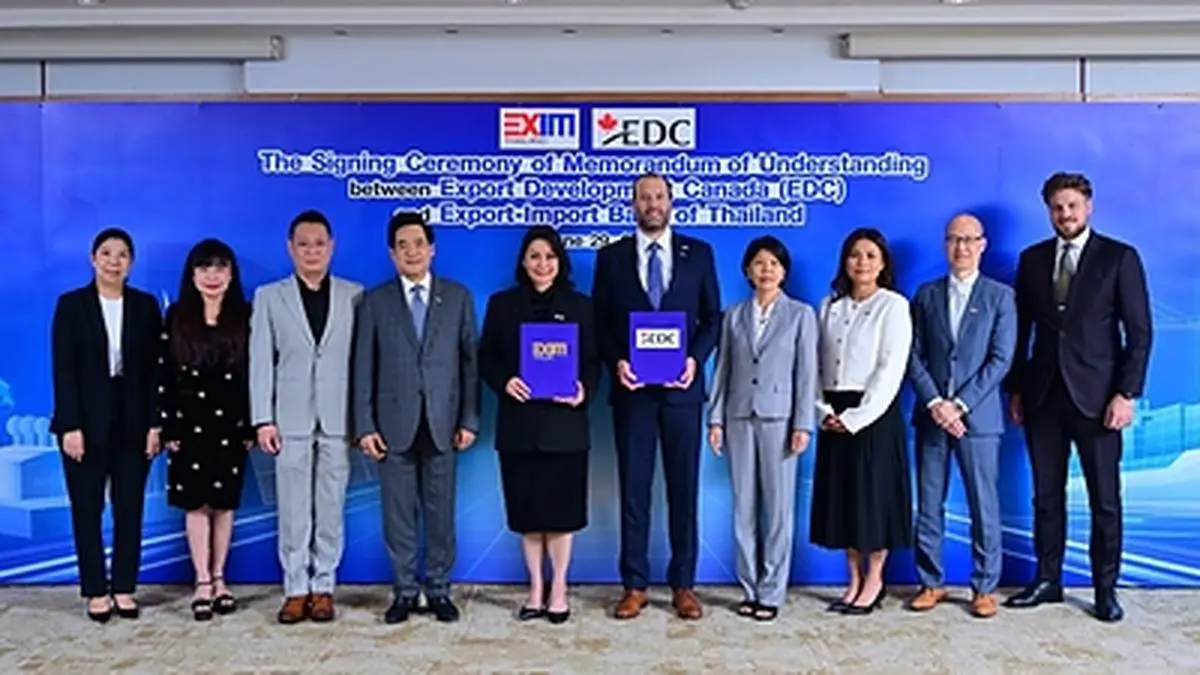
Export Development Canada and EXIM Thailand signed an MOU targeting CAD$7.4B in bilateral trade. Sectors from agri-food to critical minerals are in play.
Continue with
Export Development Canada and the Export-Import Bank of Thailand signed a memorandum of understanding Monday to deepen trade and investment ties between the two countries. The agreement targets sectors where both economies overlap: agri-food, clean technology, advanced manufacturing, and critical minerals.
Bilateral merchandise trade hit CAD$7.4 billion in 2025, the release said. Canadian exports to Thailand reached CAD$1.14 billion that year, a compound growth rate of just over 7% from 2020. Canadian direct investment in Thailand totaled CAD$531 million in 2024; Thai investment in Canada was CAD$692 million.
The MOU sets up a framework for co-financing projects, sharing market intelligence, and connecting companies across Canada, Thailand, and the broader Asia-Pacific region. "Through closer collaboration, we are strengthening in-market connections and helping Canadian and Thai companies access opportunities," Alison Nankivell, president and CEO of EDC, said. Charat Rattanaboonniti, president of EXIM Thailand, noted a focus on "knowledge exchange in ESG, sustainable finance, and risk management."
Canada's trade minister, Maninder Sidhu, said the agreement dovetails with ongoing negotiations toward a Canada-Thailand free trade agreement. Ottawa is pushing to diversify its export base beyond the United States, and Thailand is Canada's second-largest trading partner inside ASEAN.