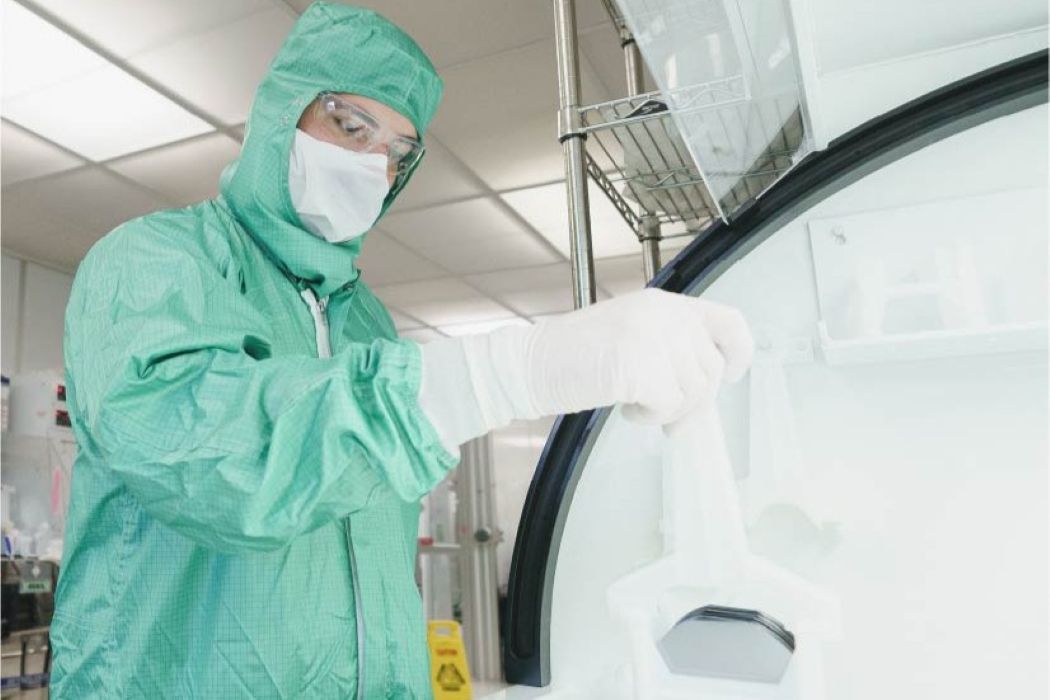
Canada plans to spin off its CPFC semiconductor facility into a commercial entity to boost photonics manufacturing. The move follows $115M in recent upgrades.
The Canadian federal government has initiated a structural pivot for the National Research Council’s (NRC) Canadian Photonics Fabrication Centre (CPFC), signaling an intent to transition the facility into a standalone commercial entity. Industry Minister Mélanie Joly announced the move at the CHIPS NORTH semiconductor conference, framing the spinoff as a necessary evolution to attract private-sector capital and scale domestic production. While the government has yet to release a timeline, ownership structure, or operational roadmap, the policy shift aims to transform the CPFC from a government-run research hub into a market-facing commercial platform.
Established in 2005, the CPFC currently operates as the only end-to-end, pure-play compound semiconductor facility in North America. Unlike traditional silicon-based chips, compound semiconductors are engineered to transport data at higher velocities, positioning them as critical infrastructure for 5G and 6G telecommunications, autonomous vehicle systems, and quantum computing. Despite this technical advantage, the facility has faced criticism for decades of underinvestment. Industry advocates, including Cohere co-founder Ivan Zhang, have likened the current state of the CPFC to an airplane factory capable of supersonic flight that produces only prototypes rather than commercial jets.
By spinning the facility into a commercial entity, the government intends to bridge the gap between prototype development and industrial-scale manufacturing. The stated goal is to integrate the CPFC into advanced technology supply chains, providing small and medium-sized Canadian AI and quantum firms with more timely access to fabrication services. This transition is explicitly modeled after the historical support Taiwan provided to TSMC in the 1980s, a move that eventually established that firm as the dominant global contract chipmaker.
Since 2021, the federal government has directed over $115 million toward the modernization of the CPFC. This capital has been deployed toward equipment upgrades and the construction of an 8,000-square-foot expansion to increase laboratory capacity. The transition to a commercial entity is intended to build upon this foundation, moving beyond government-funded research to a model driven by private investment and industrial demand. The government has stated that the new entity will maintain "firmly Canadian foundations," though the specific mechanism for retaining national interest remains undefined.
For investors and industry participants, the primary question centers on the operational autonomy of the new entity. Historically, the CPFC functioned as a design and fabrication partner for specific clients, but its integration within the NRC bureaucracy often limited its ability to scale or compete in the global market. A successful spinout would require a shift toward a high-volume, service-oriented model that can compete with international foundries. The following table outlines the current state versus the proposed commercial objective:
While the policy intent is clear, the execution risk remains high. The government has not clarified how it will balance the need for private-sector profitability with the mandate to protect national sovereignty in critical technology sectors. Furthermore, the lack of a defined ownership structure leaves potential partners and investors without a clear path to participation. Without a concrete timeline, the transition could face significant delays as the government navigates the complexities of transferring public assets into a private framework.
For those tracking the broader stock market analysis, this move reflects a growing trend of governments attempting to secure domestic supply chains for high-performance computing. However, the success of the CPFC as a commercial entity will depend entirely on its ability to transition from a research-focused lab to a competitive, high-throughput foundry. The government’s commitment to "Canadian industrial development" suggests that while the entity will be commercialized, it will likely remain under a degree of regulatory or strategic oversight to ensure it serves domestic needs before global ones.
Investors should monitor the upcoming details regarding the board structure and the specific role of private shareholders. If the government retains a significant stake, the entity may struggle to shed the bureaucratic inefficiencies that have historically hampered its growth. Conversely, a clean break with significant private capital injection could provide the necessary agility to capture a larger share of the rapidly expanding AI compute market. The next concrete marker will be the release of the formal spinout structure, which will determine whether this facility can truly replicate the success of global leaders in the semiconductor space.
AI-drafted from named sources and checked against AlphaScala publishing rules before release. Direct quotes must match source text, low-information tables are removed, and thinner or higher-risk stories can be held for manual review.