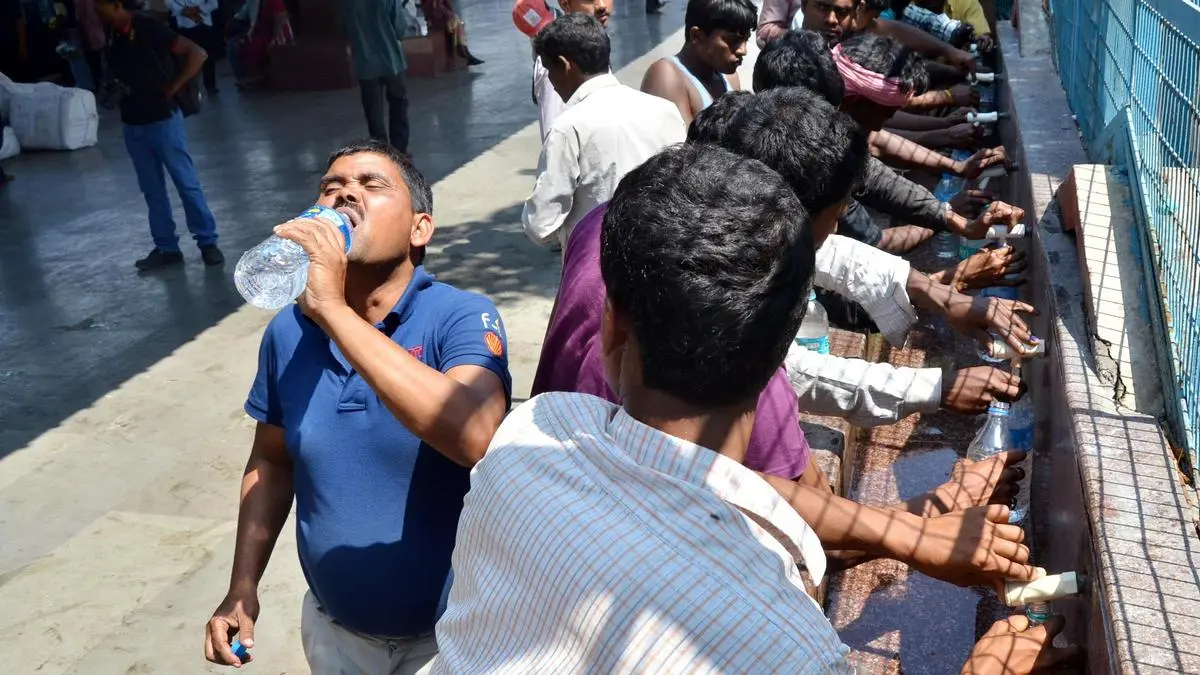
E. coli bacteria turned up in drinking water from coolers at nine railway stations across four zones, the Comptroller and Auditor General reported. The pathogen was detected at Coimbatore and Palakkad Junctions on Southern Railway, Hyderabad on South Central Railway, Chhatrapati Shivaji Maharaj Terminus, Bhiwandi Road, Kalyan and Lonavala on Central Railway, and Madhupur on Eastern Railway.
The CAG examined passenger services at 512 non-suburban grade stations across all zones as part of a broader audit covering 2019-20 through 2023-24. Some strains of E. coli cause food poisoning, diarrhoea and kidney failure.
The auditor found that 458 of the 512 stations – more than 89% – fell short of the Railway Board's Minimum Essential Amenity norms. The board issued those guidelines in April 2018, mandating compliance by August 31 of the same year. The required amenities include drinking water, waiting halls, seating, platform shelters, urinals, latrines, high-level platforms, fans, foot over bridges, dustbins, clocks and public address systems.
Even the highest-category NSG-1 stations showed gaps. CSMT, Howrah, Sealdah, New Delhi and Mumbai Central were all deficient in seating, sanitary facilities, dustbins and electronic train indicator boards, the CAG said. Across all NSG-1 stations, the audit found problems with drinking water taps at 12 stations, fans and water coolers at eight each, and signage at five.
At lower-category stations the shortfall was starker. Against the MEA norms, the CAG counted a deficit of latrines at 201 stations, urinals at 403 stations and water taps at 2,035 stations.
Drinking water quality was a separate concern. Bacteriological testing beyond the standard total coliforms check was unsatisfactory at eight stations in four zones during 2022-23 and at 11 stations in five zones during 2023-24, the report said. The audit also found total coliform bacteria – including E. coli – in tap water samples from platforms at 49 stations in eight zones over 2022-23 and 56 stations in nine zones over 2023-24.
Indian Railways runs 5,908 stations under the Non-Suburban Group classification and operates more than 7,424 non-suburban passenger trains daily. Those trains carried 292.4 crore passengers in 2023-24.
The CAG recommended that the Railways enforce the Uniform Drinking Water Quality Protocol, including all testing parameters, and ensure regular inspection of water supply systems. The report covered instances identified during the audit period plus earlier cases not previously reported and, where relevant, events after 2023-24.
A passenger arriving at any of the nine stations with contaminated coolers has no way to know which tap or cooler is safe. The CAG's finding suggests the gap between what the Railway Board mandates and what stations deliver is not limited to minor amenities. It extends to the water passengers drink.