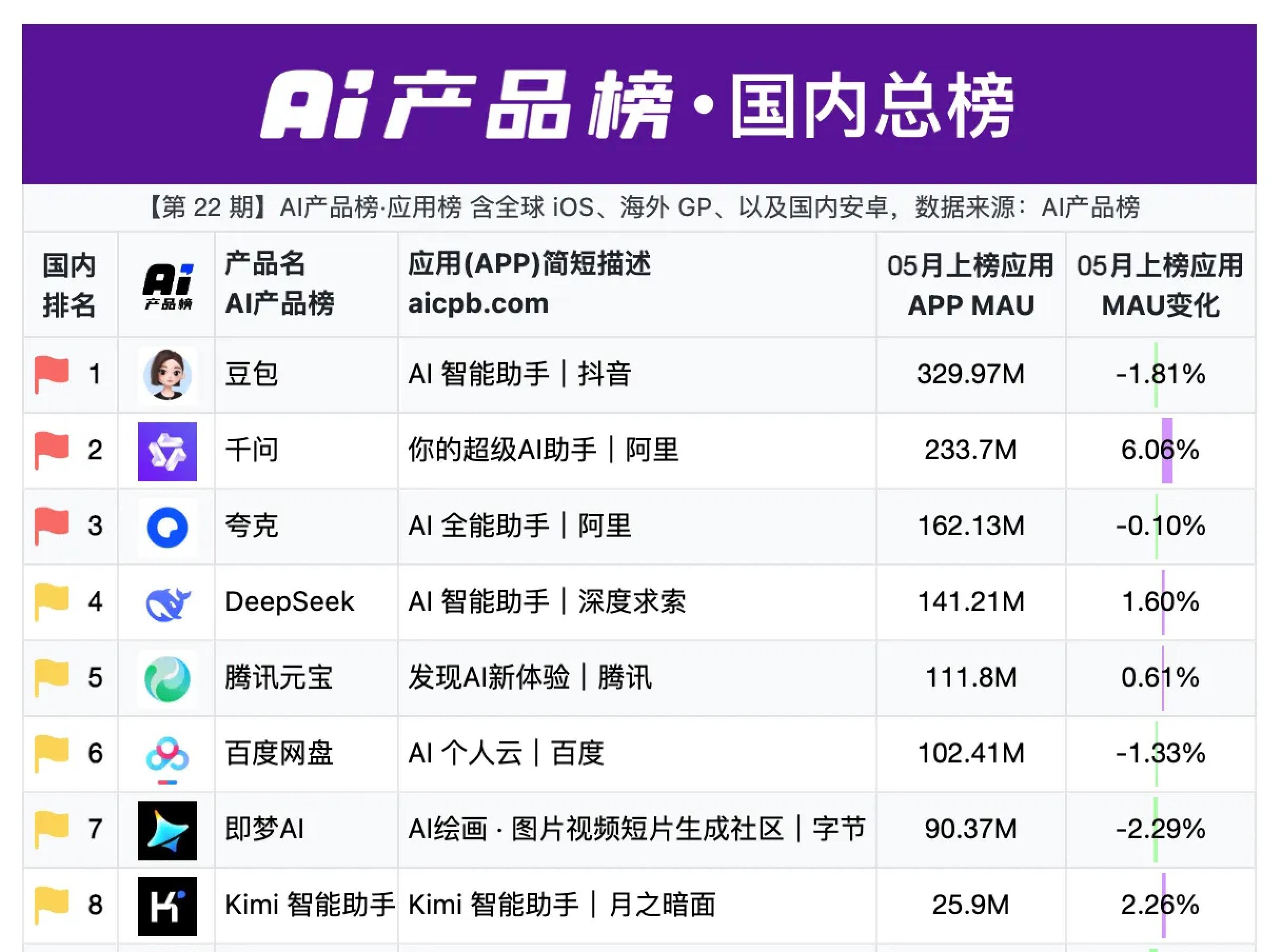
ByteDance's AI assistant Doubao has launched a paid subscription tier, the Doubao Pro version, with monthly pricing from 68 to 500 RMB ($9 to $70). The move shifts China's most popular chatbot by user count from a fully free model to a freemium structure. It arrives as third-party data shows Doubao lost 6.07 million monthly active users in May, a 1.81% decline that brought MAU to roughly 330 million.
Doubao's Pricing Range and the Monetization Push
ByteDance priced the Pro tier across a wide span. The low end of 68 RMB targets individual users who want priority access or advanced features. The 500 RMB top tier is likely aimed at professionals or heavy users, possibly including API-level capabilities. This pricing band suggests ByteDance is testing willingness to pay before committing to a single premium feature set. The company must prove that enough users see value in the paid version to replace the advertising or data revenue it has not yet built around Doubao.
The May user decline may have accelerated the launch timeline. A shrinking free user base reduces the pool of potential conversion candidates. ByteDance now needs to capture paying subscribers while the service still commands a leading market share. Competitors including DeepSeek and other domestic AI chatbots remain free, putting pressure on Doubao to offer features worth the outlay.
What the MAU Drop Signals About Competition
The 6 million user loss could be seasonal, tied to school schedules or workplace patterns. It could also reflect growing competition from newer entrants that launched after Doubao's initial surge. Chinese consumers have multiple free AI alternatives, and switching costs are near zero. ByteDance's decision to introduce a paywall at the moment of a user-base contraction is a calculated risk: it sacrifices some of the remaining free users to test the revenue hypothesis. If the Pro tier converts even 1% to 2% of the 330 million MAU at an average price of 200 RMB, the annual revenue potential exceeds 7 billion RMB. That math may explain why ByteDance moved now rather than waiting for user growth to resume.
The simple read: ByteDance is monetizing its leading AI chatbot. Subscriptions give it direct revenue.
The better market read: The MAU dip creates a pressure point. By moving to paid tiers while the user base is contracting, ByteDance forces a choice for marginal users – pay or leave. The risk is that high churn among free users accelerates, and the paid conversion rate proves too low to offset the loss. The 68 to 500 RMB range is itself a hedge; the low end keeps casual users on board while the high end extracts maximum willingness-to-pay from power users. Success depends on whether Doubao's paid features – likely faster response, longer context windows, or domain-specific models – justify the premium in a market where free alternatives are still improving.
Next Data Points to Watch
ByteDance has not disclosed subscriber numbers. The next meaningful catalyst will be any official update on user and paying customer counts, likely at a product launch or earnings release for ByteDance's broader operations. External data from third-party app trackers will show whether the June MAU stabilizes or falls further after the paywall goes live. Competitor responses matter too. If DeepSeek or Baidu's Ernie Bot follow with their own paid tiers, the narrative shifts from a Doubao problem to a sector-wide bet on monetization. If they stay free, ByteDance must defend its subscription thesis alone.
For now, the story is a test of whether China's AI chatbot market can sustain a premium tier at scale. The 68 to 500 RMB price ladder gives ByteDance flexibility, the timing – after a 6 million user loss – raises the execution bar.