The $1.5B Bybit cold-wallet hack showed that offline storage has a blind spot: the moment funds move. North Korea stole $2.02B in 2025 alone.
Chainalysis reported that hackers stole more than $3.4 billion in cryptocurrency during 2025. North Korean groups accounted for $2.02 billion of that total. The single largest incident was the February 2025 Bybit hack, where attackers made off with $1.5 billion during a routine transfer from cold storage to a warm wallet.
That event shattered the assumption that offline storage is invulnerable. Bybit's cold wallet infrastructure used secure multi-party computation, but the attack targeted the moment funds moved across the air gap. The funds were taken after the signing process was completed, before they reached the hot wallet, according to blockchain analysts who tracked the transaction.
Exchange wallets and hardware wallets both saw their weaknesses exposed. Exchange wallets carry counterparty risk. When FTX collapsed in November 2022, roughly $8 billion in customer assets became inaccessible, affecting over 9 million users. Mt. Gox lost 850,000 BTC in 2014, affecting 127,000 users. QuadrigaCX locked away about CAD 190 million after founder Gerald Cotten died in December 2018 with the sole access to funds.
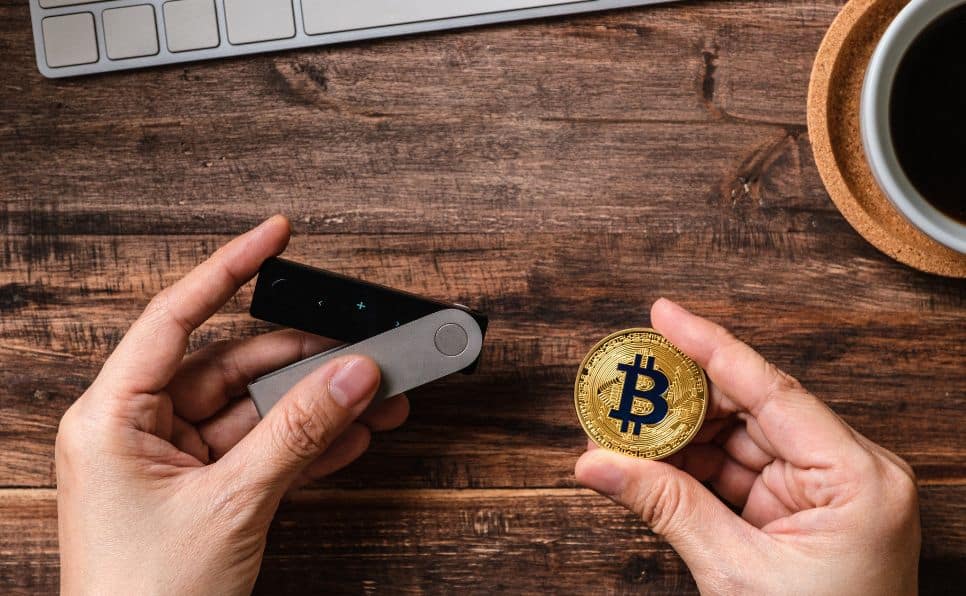
Hardware wallets eliminate that counterparty risk. Ledger and Trezor dominate the market. Ledger offers four models ranging from the Nano S Plus at $79 to the Stax at $399. The Stax and Flex use CC EAL6+ certified secure elements; the Nano X uses a CC EAL5+ chip. Trezor's Safe 3 starts at roughly $47, the Safe 5 at around $129. Both makers support over 5,500 coins on their top models.
But hardware wallets transfer the risk to the user. Phishing, supply-chain tampering, and poor backup practices remain the primary threat vectors. The Coldcard exploit of July 2026 showed that outdated firmware can introduce critical vulnerabilities. Trezor launched its Safe 7 with quantum-ready security in 2026, a sign that the industry is trying to stay ahead of emerging threats.
The Bybit hack proved that even cold storage is not immune during transfers. Attackers watched the signing ceremony and intercepted the transaction. The U.S. Federal Bureau of Investigation later linked the attack to North Korea's Lazarus Group, according to a Bureau statement.
Security experts at firms like Chainalysis and TRM Labs have recommended a hybrid approach. Active trading balances covering 30 to 90 days of expected activity stay on exchanges. The rest goes to hardware wallets or multisig cold storage. Two-factor authentication, withdrawal whitelists, and account locks add layers to exchange accounts.
A portfolio under $1,000 that trades daily may not justify the $47 to $399 cost of a hardware wallet. A portfolio exceeding $10,000 with infrequent trading should prioritise self-custody, given the pattern of exchange failures, several analysts said.
Regulatory changes are shifting the landscape. The SEC rescinded Staff Accounting Bulletin 121 in January 2025 through SAB 122. Custodians no longer have to record the full value of customer crypto assets as balance-sheet liabilities. Instead they recognise only the estimated risk of loss. That change could affect exchange insurance structures, though no major policy has been announced.
Exchange platforms continue investing in proof-of-reserves audits. Binance held $152.9 billion in verified user assets during the first quarter of 2026, the exchange said. But proof of reserves does not insure against a hack. The Bybit funds were gone before any audit could flag them.
The safest approach remains layered security. No single wallet type offers absolute protection. Exchanges provide regulated infrastructure but create a single point of failure. Hardware wallets remove third-party risk but demand disciplined backup habits. The $3.4 billion stolen in 2025 is a reminder that both models have blind spots, and attackers are probing them.
Drafted by a large language model from the source reporting linked above, then screened by automated publishing checks. It is not read by a journalist before publication. Some articles cite our Alpha Score. Verify prices and figures against the original source. Educational coverage, not personalized advice.