Stocks● Neutral
Bush, Obama, Clinton Avoid Naming Trump in Presidential Essays
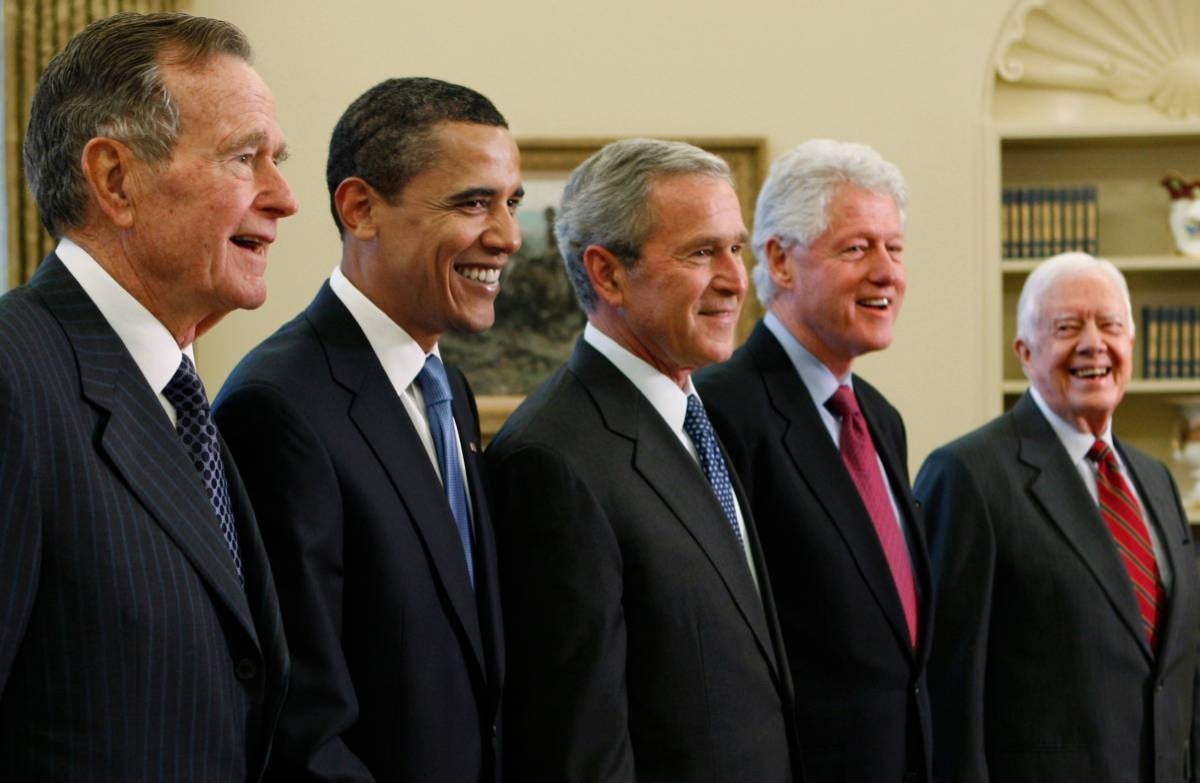
Three ex-presidents wrote essays for a 250th-anniversary series on U.S. leaders. None mentioned Trump by name, but their themes of power and loyalty echo current political tensions.
Continue with
WASHINGTON – The three living former presidents each contributed an essay to a 250th-anniversary series about U.S. presidents and first ladies. None of them mentioned Donald Trump by name.
The In Pursuit project, curated by former U.S. archivist Colleen Shogan, asked historians, authors and the former presidents to write about a single president or first lady. Shogan, whom Trump fired without explanation in February 2025, told contributors not to be partisan or ideological. The goal, she said in an interview with the Associated Press, was for all Americans to “feel welcome to be able to read these lessons and essays and learn something from them.”
George W. Bush wrote about George Washington, the original “No Kings” guy. The essay, released on Presidents Day, does not name Trump. It is difficult to read without thinking of Trump’s reluctance to cede power after the 2020 election and his musings about a third term in defiance of the Constitution’s two-term limit.
“Our first president could have remained all-powerful,” Bush writes, “but twice he chose not to. In so doing, he set a standard for all presidents to live up to.” Washington first resigned as commander in chief of the Continental Army, then set the precedent of serving only two terms before the limit was enshrined in the Constitution. Bush, a Republican, calls Washington’s “humility in giving up power willingly” among the most consequential decisions in American politics.
Retired Gen. Stanley McChrystal, who led U.S. and international forces in Afghanistan, wrote about Ulysses S. Grant. McChrystal presents the Union general and post-Civil War president as a leader who showed “an absolute commitment to principles larger than personal ambition” and who resisted pressure on military leaders to “align with political factions and be loyal to a person rather than the Constitution.” The emphasis on personal loyalty resonates at a time when Trump has repeatedly demanded fealty from administration officials. McChrystal writes that “the temptation to bend institutions toward personal power is not unique to Grant’s era. Our future still depends on whether our leaders choose law over loyalty.”
Democrat Bill Clinton writes about Theodore Roosevelt, focusing on that president’s drive to expand the universe of “we the people” at the expense of powerful corporate interests, while also noting Roosevelt’s exclusionary views on Black and Indigenous people. The essays frequently address presidents’ failures alongside their accomplishments, a contrast with Trump’s calls for federal cultural institutions to stick to patriotic interpretations of American history.