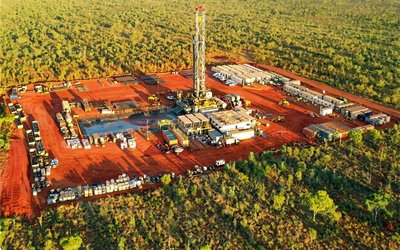
Buru Energy has secured A$5.3 million through a two-tranche share placement to accelerate development of its Rafael gas project. The capital injection comes as the company reports internal technical optimizations that project a 20-47% increase in pre-tax cash flow for the asset.
Project Economics Shift
Management is leaning into the revised economic outlook for the Rafael site to justify the dilution. By refining the development plan, the company now estimates the internal rate of return (IRR) for the project will land between 42% and 80%. These figures suggest a significant improvement in the project's viability, though investors will be looking for third-party verification of these technical assumptions.
| Metric | Projected Improvement |
|---|
| Pre-tax Cash Flow | 20-47% Increase |
| Internal Rate of Return | 42-80% |
Market Context and Capital Allocation
For small-cap energy explorers, the ability to raise capital during periods of commodity volatility is a test of investor sentiment toward specific regional plays. The two-tranche structure allows for immediate liquidity while deferring the remainder of the issuance, a common tactic to manage market impact for thinly traded equities. Traders should monitor how this cash burn aligns with the planned timeline for the Rafael project, as execution risk remains the primary hurdle for junior producers.
"Optimisations lift pre-tax cash flow 20-47% and IRR to 42-80%." — Buru Energy
Trader Takeaways
This capital raise effectively extends the firm's runway, but it also creates a supply overhang for retail holders. When analyzing stock market analysis for junior energy firms, the focus shifts immediately to the cost of capital versus the net present value of the underlying reserves. If the company fails to move from the planning phase to the production phase, the delta between these IRR projections and actual realized returns will widen.
Watch for the next filing regarding the completion of the second tranche, as this will finalize the total dilution impact on existing shareholders. Investors should also track broader energy sector sentiment, as projects like Rafael are highly sensitive to regional gas pricing benchmarks. The central question for the desk is whether these IRR improvements are sustainable under current operational costs, or if they rely on aggressive price assumptions that could be challenged by shifting market conditions.
Execution at the Rafael site is now the sole catalyst for re-rating the stock.