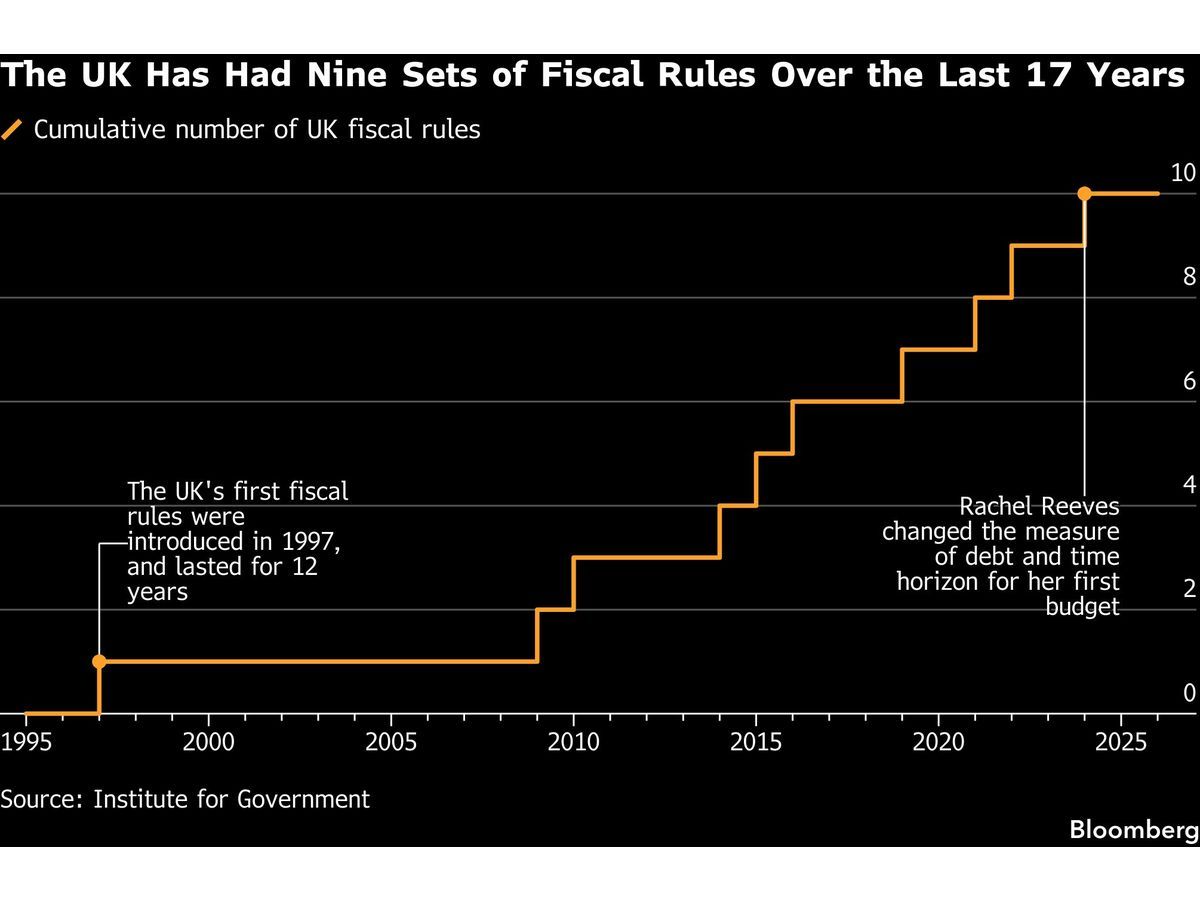
Andy Burnham's jump toward becoming the UK's next prime minister has shifted attention to the team he's assembling and how they might reshape fiscal policy. The incoming MP for Makerfield has moved to reassure bond investors after a comment last year that the country should stop being “in hock” to them rattled markets. A person familiar with his thinking said he is aware of the fragility of the bond markets. Burnham has committed to Chancellor Rachel Reeves' self-imposed constraints: covering day-to-day spending with tax receipts and having debt fall as a share of the economy. He also pledged not to make an exception for defense spending, weeks after floating the idea in a Bloomberg interview.
Several economists, MPs and policy wonks Burnham has gathered have argued those rules are too short-termist. The team includes former Bank of England Chief Economist Andy Haldane, ex-Goldman Sachs Chief Economist Jim O’Neill, former Institute for Public Policy Research Executive Director Carys Roberts, and Richard Hughes, who chaired the Office for Budget Responsibility until December, Bloomberg reported Thursday.
Rupert Harrison, a senior adviser at PIMCO who worked for Conservative Chancellor George Osborne, called the group “all extremely credible.” Still, he noted that Haldane and O’Neill “have been calling for looser fiscal rules for some time.” He posted on X: “Don’t think this fiscal rules debate is settled.”
O’Neill has described the UK’s fiscal constraints as “petty and arbitrary.” Haldane said the case for changing them is “overwhelming,” arguing for more government investment to drive growth. Hughes told lawmakers in January that Reeves' rules do little to control borrowing and mean “that righting the fiscal ship after a shock happens much more slowly.”
Louise Haigh, the former transport secretary who led Burnham’s campaign, has been a vocal critic. Writing this week, she said the framework pushes governments to “make short term decisions to hit some arbitrary target in the future,” creating a “misleading sense of precision.” She argued the Treasury’s debt target should stretch from the current three- and five-year rolling windows to a longer horizon of about 10 years. That could create more room for investment without formally abandoning the rubric.
No decision has been made on changing the rules. The bond market is watching closely for any shift in Burnham's position once he takes office.