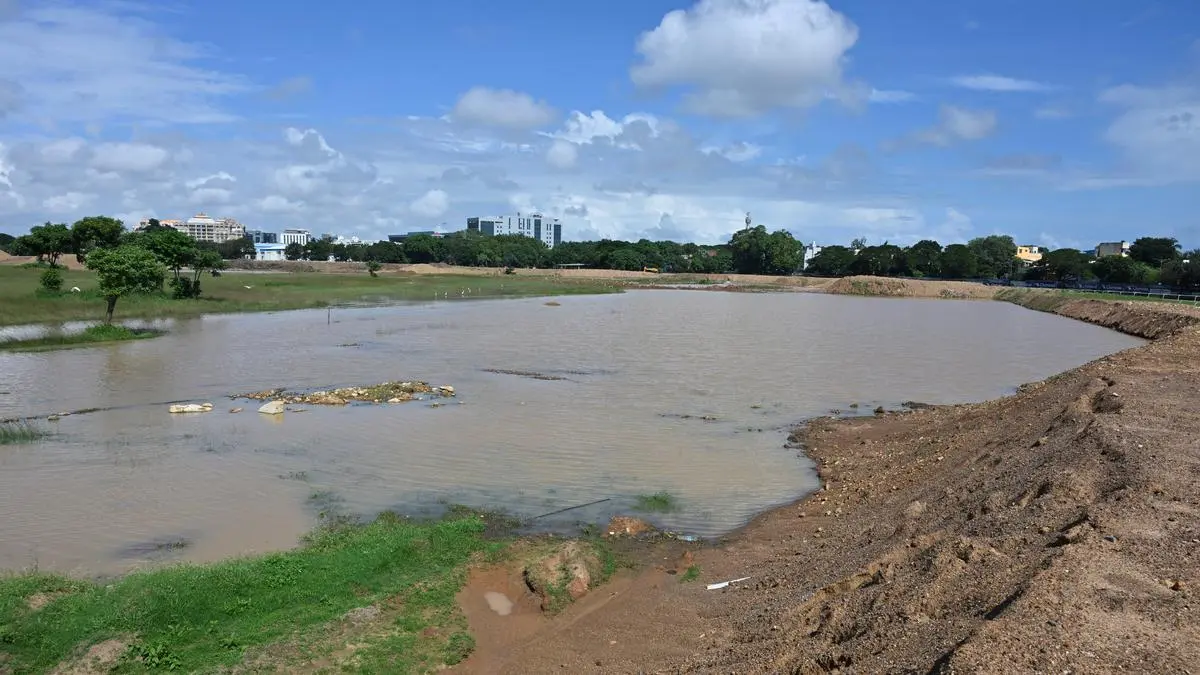
A three-year pilot in Bundelkhand involving 1,700 farmers shows silt from rejuvenated ponds cuts purchased input use, offering a template for India's water and natural farming missions.
A three-year pilot in Bundelkhand involving 1,700 farmers has shown that silt from rejuvenated waterbodies can reduce dependence on purchased agricultural inputs, offering a template for two of India's largest rural programs. The findings come from an opinion piece in The Hindu BusinessLine by Ashok Mishra, founder of grassroots organisation Arunoday Sansthan, and A.T.E. Chandra Foundation staffers Manu Maru and Kasturi Rangan.
The farmers transported silt excavated during machine-led desilting of traditional ponds, known locally as Chandelkalein and Bundelkalein talabs, to their fields. They described the material as "black gold." Adding it improved soil quality. Farmers also applied Jeevamrut and Beejamrut made by women-led Bio-Input Resource Centres and used indigenous seeds from local seed banks. Together, the interventions raised productivity and strengthened resilience against erratic rainfall, the authors said.
The region receives nearly 1,000 mm of annual rainfall but remains among India's most water-stressed areas. Erratic rainfall, prolonged dry spells and neglect of traditional water structures have reduced the resilience of smallholder farmers, many of whom depend on rainfed agriculture and struggle to take a second crop, the authors wrote.
The scale of the opportunity is large. India has more than 24 lakh waterbodies according to the Ministry of Jal Shakti's census. Many have suffered years of neglect and periodic siltation. At the same time, Indian agriculture remains heavily dependent on purchased inputs. The cost to the exchequer is projected at ₹3.5 lakh crore this year alone, the piece noted.
Rather than treat water conservation and sustainable agriculture as separate problems, the authors argued for integrated solutions. "There is an opportunity to understand their interconnected nature and create solutions that integrate waterbody rejuvenation with soil restoration and natural farming," they wrote.
India operates two major missions with overlapping objectives. Mission Amrit Sarovar aims to restore and improve water resources nationally. The National Mission on Natural Farming seeks to increase adoption of sustainable practices. The Bundelkhand experience suggests they could be far more powerful when designed together, the authors said.
The model is also fiscally relevant. Many states face pressure to strengthen rural resilience with limited resources. Farmers voluntarily transport silt because it improves their fields, reducing the recurring public cost of desilting. Rural entrepreneurs can revitalize local economies while cutting dependence on distant supply chains. Rejuvenating existing ponds brings twin benefits: increased water availability in surface and groundwater aquifers, and resilient incomes from sustainable agriculture without requiring entirely new infrastructure. "The asset base already exists; what is needed is convergence and local ownership," the authors concluded.
Prepared with AlphaScala editorial tooling from the source reporting linked above. Indexable analysis may include a cited Alpha Score value. Publishing checks screen each story before release. Educational coverage, not personalized advice.