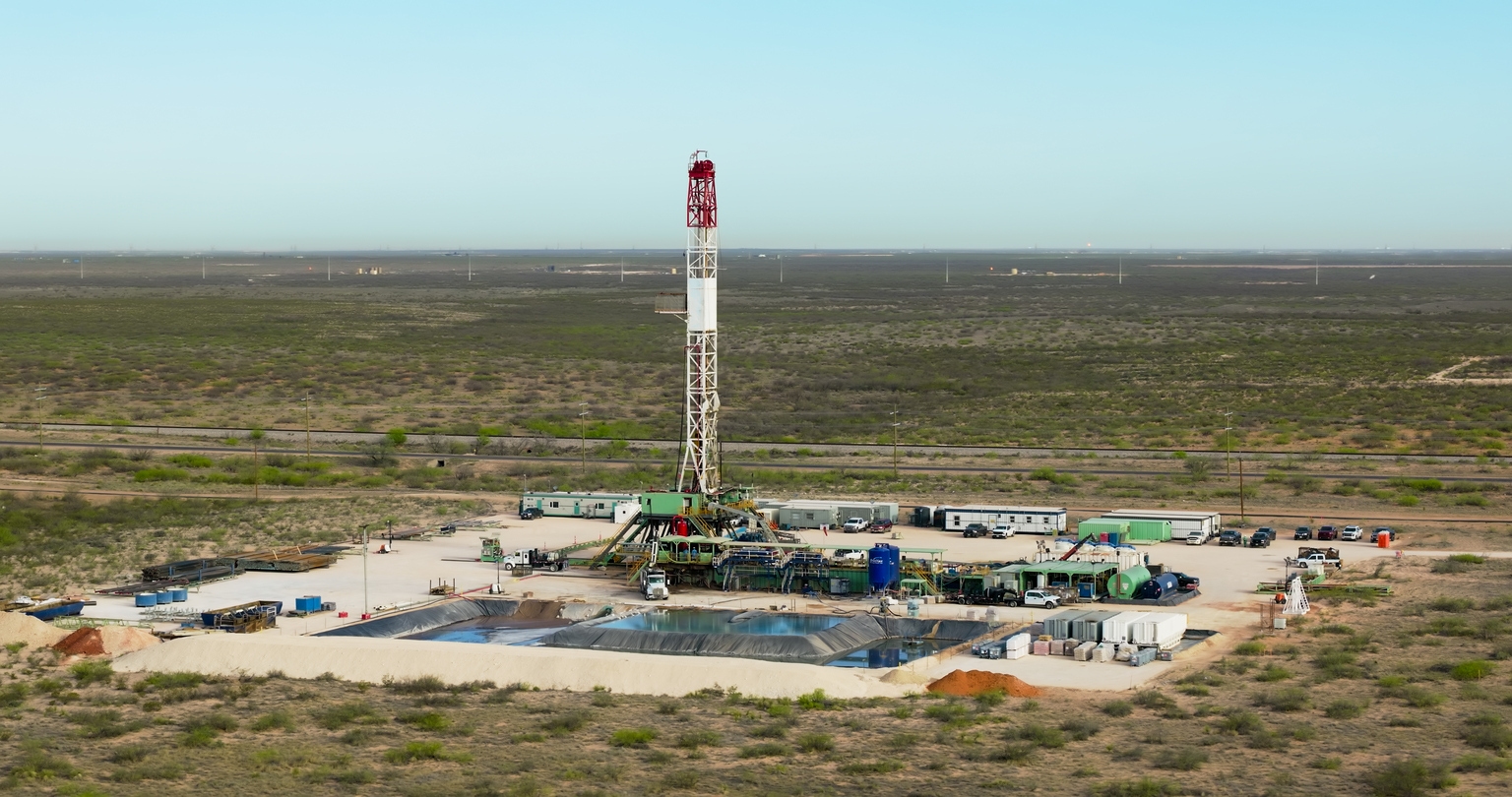
Black Stone Minerals reported its first quarterly production increase in several quarters, the initial payoff from three multi-year drilling agreements signed last year. The company collects royalty payments from operators who drill on its acreage, covering roughly 30,000 net royalty acres in the Permian Basin and the Haynesville Shale.
The agreements with Adamas Energy, Revenant Energy, and Caturus Energy give the operators fixed royalty rates in exchange for drilling commitments. Black Stone does not pay for the wells. It also does not control the drilling pace. That decision sits with the operators.
Production turned up in the most recent quarter after several quarters of decline. The increase is small but marks a directional change. Whether the operators maintain the pace through the next two quarters will determine if the trend holds.
Black Stone's revenue is roughly 60% weighted to natural gas and natural gas liquids. Gas prices have been weak for most of the past two years, slowing drilling across the Haynesville. The operators under these agreements have kept rigs running. The broader basin activity remains depressed. That limits the upside from the gas side of the portfolio.
The oil side carries a different risk. The Permian Basin is pumping at record volumes. Black Stone's mineral acres there are seeing steady activity. The threat is that rising Permian supply pushes oil prices lower, which would reduce the dollar value of the royalty checks the company collects per barrel. Black Stone receives a fixed percentage of revenue, not a fixed dollar amount. When prices fall, its income falls. The operators bear the drilling costs, so Black Stone does not lose money on uneconomic wells. That structure protects it from outright losses.
The distribution is tied directly to cash flow. Black Stone cut the payout last year when cash flow declined. If production continues to rise, the distribution could stabilize or increase. If Permian volumes push oil prices down further, the distribution could face another cut.
The balance sheet is clean, with minimal debt. The company can wait out a downturn. The stock is a bet on operator execution and commodity prices, two variables Black Stone does not control.
The first quarter of production growth is a positive data point. One quarter does not make a trend. The next two quarters will show whether the drilling agreements deliver enough volume to offset the drag from weak gas prices and rising Permian supply.