Stocks● Neutral
Bryan Johnson and the Quantified Self: Hacking Biological Aging
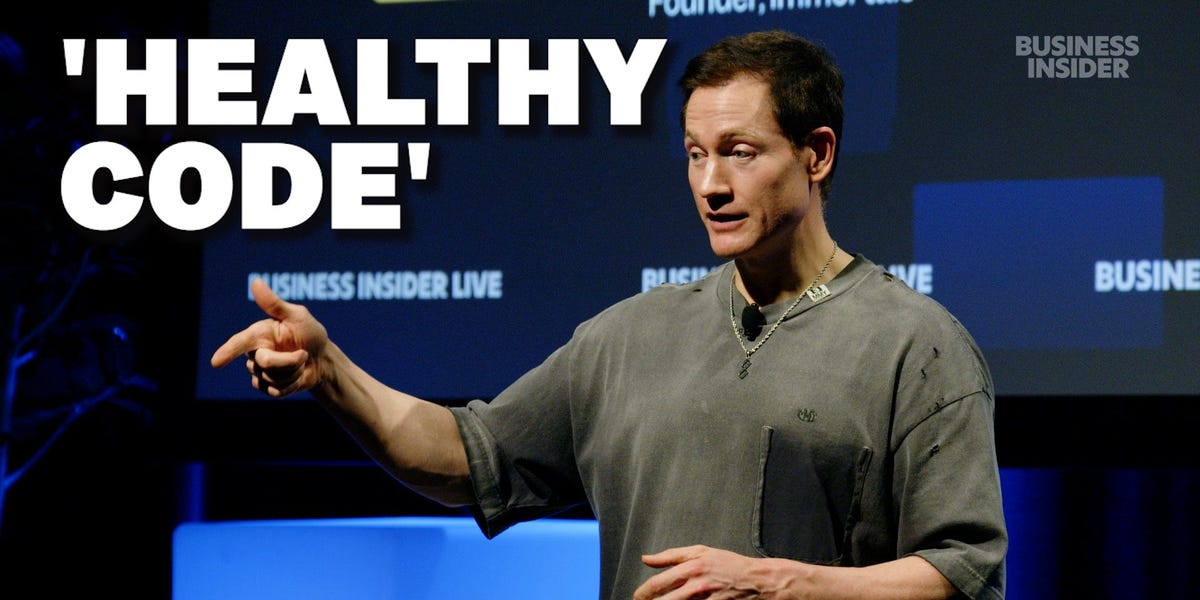
Treating the body like a high-frequency trading platform, Johnson shifts longevity from wellness to data-driven engineering to capture new market share.
Continue with
The Data-Driven Approach to Longevity
Tech entrepreneur Bryan Johnson is shifting the focus of human performance from traditional wellness to data-driven biological optimization. Johnson, who rose to prominence through his work in payments and his subsequent deep dive into extreme longevity, argues that aging is a solvable engineering problem rather than an inevitable biological decline. His regimen focuses on rigorous, data-backed interventions designed to reverse biological age markers, a process he frames as writing better 'code' for the human body.
For Johnson, the objective is to move away from subjective health metrics and toward objective, quantifiable biomarkers. He tracks everything from sleep architecture to blood chemistry, treating his own body as a high-frequency trading platform where every input is measured for its impact on overall efficiency. This philosophy mirrors the systematic approach seen in stock market analysis, where traders rely on quantitative signals to strip emotion out of decision-making.
The Founder’s Dilemma: Performance vs. Burnout
Johnson emphasizes that the high-pressure environment of startup culture often conflicts with the biological requirements for longevity. He suggests that founders who sacrifice sleep, nutrition, and recovery for short-term output are essentially 'drawing down' their biological capital. In his view, a founder's most valuable asset is not their equity stake or their cap table, but the cognitive clarity and physical endurance required to manage a company over a multi-decade horizon.
His advice for entrepreneurs is to treat their personal health with the same rigor they apply to their business operations. Just as a firm monitors its balance sheet to avoid insolvency, an individual must monitor their cellular health to avoid premature aging. This requires a shift in priorities where self-optimization is viewed as a prerequisite for professional success rather than a secondary activity.