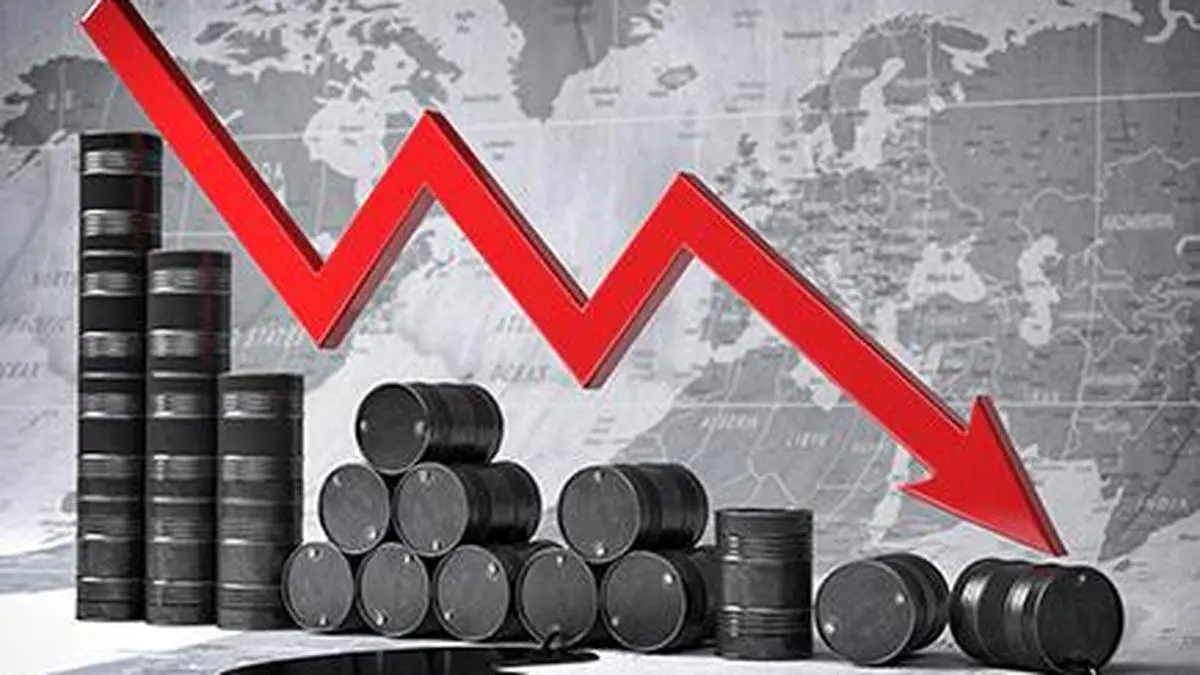
Brent crude oil futures slipped Tuesday morning. The reason is not a shortage of headlines about a US-Iran peace deal. It is a shortage of documentation.
August Brent on ICE traded at $82.92 a barrel, down 0.30%. July WTI crude sat at $80.65, down 0.12%. On India's Multi Commodity Exchange, June crude futures opened at ₹7,633, up 0.20% from the previous close of ₹7,618. July futures traded at ₹7,540, up 0.24%.
The market's muted reaction reflects a simple problem. Neither Washington nor Tehran has released the memorandum of understanding that both sides say exists.
President Donald Trump posted on Truth Social that "ships are starting to move, many loaded up with Oil, out of the Strait of Hormuz" along a "totally safe, secure, and pristine" southern route. He also said Iran had agreed never to pursue a nuclear weapon. Those are claims. They are not the text of an agreement.
Iran's President Masoud Pezeshkian offered more detail but no document. In a series of posts on X, he said "nearly all members of the Supreme Council agreed with the memorandum of understanding" and called it "an important step toward stopping the war and beginning negotiations." He added that "a final agreement has not yet been reached."
That gap between announcement and documentation is what keeps the risk premium in the barrel. A deal that opens the Strait of Hormuz to full Iranian exports would add roughly 1.5 million barrels a day of supply to a market already watching OPEC+ production plans. Without the terms – verification mechanisms, sanctions relief timelines, enforcement clauses – traders have no basis to price the shift.
The crude market's next move depends on whether the MOU appears this week or gets buried in procedural talks. Until then, the bid-ask spread on the peace premium is wide.
Other commodities showed their own moves. June aluminium on the MCX fell 0.84% to ₹353.80. On the NCDEX, June turmeric (farmer polished) rose 1.23% to ₹16,330. June jeera gained 1.04% to ₹19,945.
For traders watching the crude space, the question is not whether the deal is real. It is whether the deal is detailed enough to change tanker routing and OPEC+ quotas. A vague MOU keeps the Strait of Hormuz risk alive. A specific one resets the supply outlook. The market is waiting for the difference.