Brent crude settled at $75.99 a barrel on Friday, down 0.41%, after diplomatic talks between the United States and Iran resumed, easing some of the supply fear that had pushed prices higher earlier in the week. The retreat followed President Donald Trump's statement that the June agreement to halt military action was "over," though technical discussions continued. Washington wants a public declaration from Tehran that ship traffic through the Strait of Hormuz has been fully restored, the Associated Press reported. Meanwhile, a Qatari delegation arrived in Iran for the next round of discussions, according to Tehran's semi-official Tasnim news agency.
Ship-tracking data showed traffic in the Strait of Hormuz remained thin on Friday after appearing to nearly halt on July 9. "Overall, the price action is consistent with the narrative that the market doesn't think the hostilities are going to last," said Scott Shelton, an energy specialist at TP ICAP Group Plc, as reported by Bloomberg. "On the flip side, oil flows out of the Strait of Hormuz are down significantly from last week while there are signs that China may be increasing runs."
The recent flare-up in hostilities had deterred tanker traffic through the strait and disrupted global energy trade. The Persian Gulf waterway remains a key chokepoint for crude shipments. The price of Brent, the international benchmark, reflects the market's assessment of supply risk.
Indian fuel prices hold steady
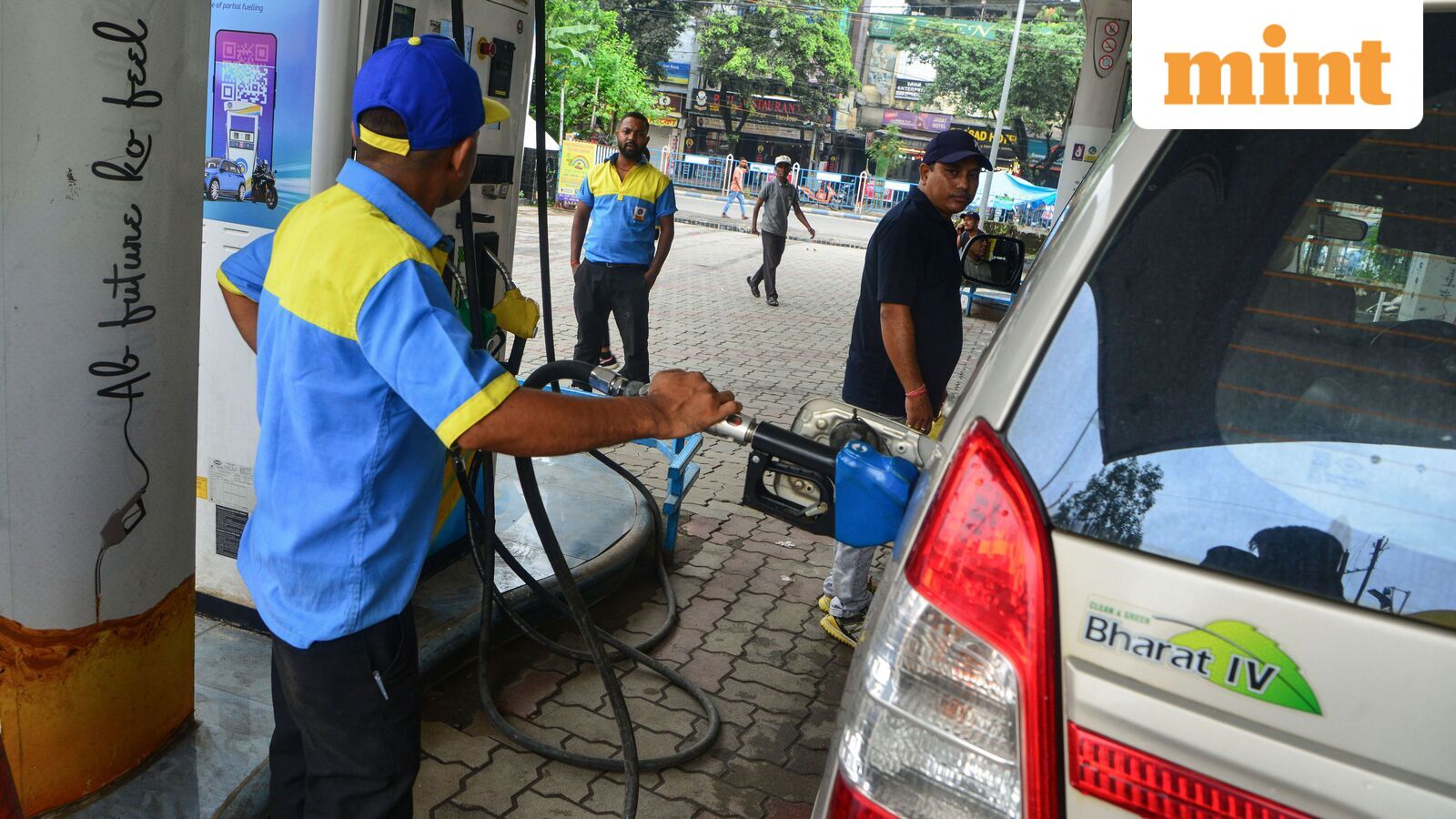
Despite the softening of crude prices, Indian fuel rates remained unchanged on Saturday. State-run oil marketing companies (OMCs) set retail prices, which last changed on May 25. Petrol and diesel prices in Delhi, Mumbai, Bengaluru, and Kolkata were steady. The Indian fuel market typically adjusts with a lag, and OMCs keep domestic prices stable even as global crude fluctuates.
Ethanol blending clarification
The Ministry of Petroleum and Natural Gas issued a clarification defending India's ethanol blending programme. The ministry rejected claims that the country moved too quickly compared to nations like Brazil, emphasizing that the transition to ethanol-blended petrol has been a gradual process spanning more than two decades. The ethanol blending pilot programme was launched in 2001, with the biofuel project formally announced in 2004 and E5 (5% ethanol blending) introduced across several states by 2006.
In the early days, "ethanol production depended largely on sugarcane, a seasonal crop, with annual production capacity of around 400 crore litres, which was insufficient to meet higher blending targets," the ministry statement noted. A breakthrough came after the launch of the National Policy on Biofuels in May 2018, which focused on creating an ecosystem for large-scale ethanol production.
For crude oil markets, the key catalyst remains the Iran negotiations and the return of normal traffic through the Strait of Hormuz. Traders will watch next week's diplomatic meetings and any further shift in tanker flows. Crude oil remains sensitive to both supply-side disruptions and demand signals from China.