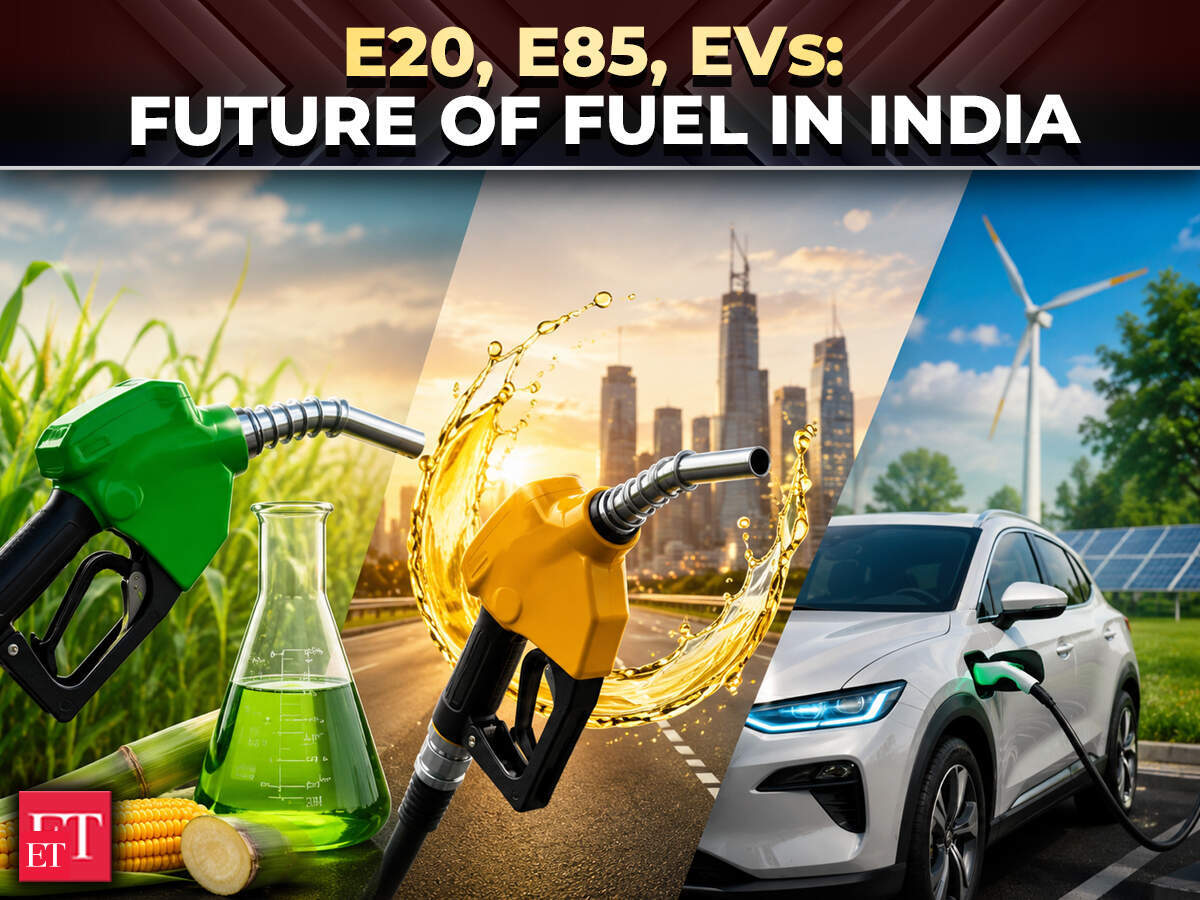
BPCL's executive director for biofuels, Anurag Saraogi, sees ethanol blending as the fastest way to cut India's oil import dependence. In a recent interview, he outlined the company's plan to move from E20 (20% ethanol) to E85 (85% ethanol) over the next few years. He dismissed concerns over mileage loss and argued that biofuels and electric vehicles address different parts of the transport system.
The risk event is not just about BPCL. It is about a national policy bet that involves sugar mills, automakers, water resources, and India's $100 billion-plus annual crude import bill. A successful ramp to E85 would displace roughly 15-20% of petrol demand at current consumption rates, based on industry estimates. A delay or failure would leave the country more exposed to the next oil price spike.
The E20 target was met ahead of schedule, encouraging the government to aim for 25% blending by 2030. E85 would require roughly double the current ethanol output, Saraogi said. That means either more land under sugarcane or a breakthrough in second-generation (2G) ethanol from crop residue. Saraogi pointed to 2G plants as the long-term answer. Commercial-scale output remains limited.
On the vehicle side, E85 demands flex-fuel engines – a technology most Indian car makers have yet to offer in local models. Saraogi said BPCL is working with automakers to expand flex-fuel options. The timeline depends on supply of compatible vehicles and dedicated retail outlets. BPCL plans to have 50 flex-fuel retail points operational by March 2027, up from a handful today. That is a small fraction of its 20,000-plus outlets. A successful pilot would show whether the E85 ecosystem can scale.
The main beneficiaries of a blending expansion are sugar companies such as Balrampur Chini, Shree Renuka, and Dwarikesh, which already supply molasses-based ethanol to oil marketing companies. A sustained increase in blending locks in their revenue stream and reduces the cyclicality of sugar prices. For the government, higher domestic ethanol means lower foreign exchange outflows and reduced exposure to volatile crude prices.
The losers, in relative terms, are crude importers and refiners that process imported crude. For BPCL itself, more domestic ethanol means lower imports and tighter margins on petrol sales. The company can pass on costs to consumers.
Auto manufacturers face a choice: invest in flex-fuel engine R&D or risk losing market share to rivals that do. Maruti Suzuki and Hyundai have shown flex-fuel prototypes. Mass adoption is still two to three years away, analysts cited in the interview said.
The most cited risk is the food-versus-fuel trade-off. India's sugarcane water footprint is high. The monsoon remains erratic. A drought year that cuts cane output would pit ethanol blending against domestic sugar consumption. The government would almost certainly prioritise food, pausing blending targets.
Another risk is policy inconsistency. India has flip-flopped on ethanol pricing and cane subsidy formulas before. Blending mandates are not legally binding; they are government targets. A change in the political landscape or a fiscal crunch could slow the rollout.
The coexistence with EVs has a real limit. The government's EV push targets 30% of new vehicle sales by 2030. That overlaps with the same petrol demand pool E85 is meant to displace. If EV adoption overshoots, the economics of ethanol infrastructure (pipelines, blending depots, flex-fuel pumps) may not justify the investment.
The immediate catalyst is the upcoming crop year (October 2026–September 2027). Normal monsoon rainfall will support higher cane output and ethanol production. BPCL plans to commission its second 2G ethanol plant in Madhya Pradesh by mid-2027. Saraogi said the company expects to have 50 flex-fuel points operational by March 2027.
The timeline is tight, and the dependencies are many. For a near-term read, track sugar inventories, policy announcements on blending mandates, and EV adoption rates.
For broader context on commodity trends and how ethanol fits into India's energy mix, see our commodities analysis.