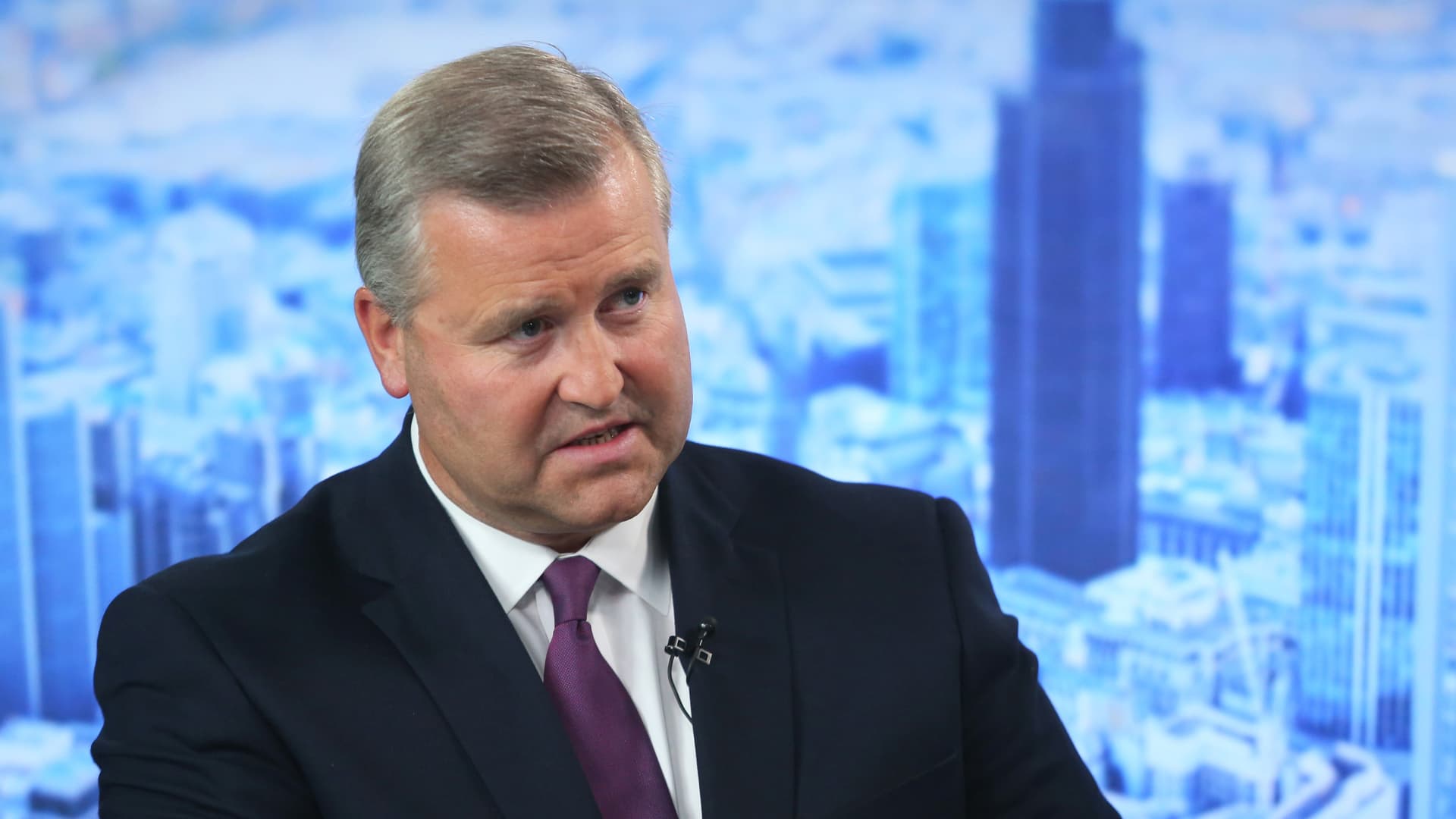
BP’s board removed chairman Albert Manifold on Tuesday, citing serious concerns over governance standards, oversight, and conduct. Manifold, who spent eight months in the role after leading Irish building materials group CRH, rejected what he called “lies” about his behaviour. In a written response, he accepted the board’s decision but denied any misconduct, adding that no BP colleague had raised issues with him directly. He insisted he “pushed hard and challenged people directly” in service of priorities such as simplifying the business, driving cost cuts, and strengthening the balance sheet.
The immediate consequence for BP is a leadership vacuum at a critical moment. Manifold’s stated agenda may now face a reset. The board did not elaborate on whether his removal reflects a strategic disagreement or purely a conduct issue. That ambiguity leaves investors guessing about the direction the next chairman will take.
Governance Risk as a Sector Filter
For the broader oil sector, the BP episode is a reminder that boardroom alignment matters as much as commodity prices. Supermajors such as Shell and Exxon Mobil also face pressure to deliver returns while navigating the energy transition. Investors should treat governance controversies as a risk factor similar to regulatory or geopolitical exposure. A board that removes its chairman over conduct after only eight months signals either unusual dysfunction or a low tolerance for abrasive leadership. Neither outcome is neutral for valuation.
The simple read is that BP has a governance problem. The better market read is that the dispute may spill into capital allocation. Manifold’s emphasis on cost discipline and a leaner balance sheet mirrors the approach he used at CRH, where he oversaw a decade of margin improvement. If the board sidelined him partly because his style clashed with the executive team, the next chairman could tilt back toward the status quo. That would matter for BP’s upstream spending, dividend policy, and renewable investment plans.
CRH Connection: Value-Oriented Leadership Context
Manifold’s tenure at CRH gives the departure a sector-adjacent read-through. CRH operates in basic materials, a capital-intensive industry where cost control is a direct driver of returns. AlphaScala’s data assigns CRH an Alpha Score of 50/100, labeled Mixed, reflecting its current positioning. The company’s stock page is available here. Manifold’s push for simplification at BP – a far more complex organisation with refinery, retail, and energy-trading units – may have underestimated the cultural resistance.
For investors tracking CRH, the ouster does not change the company’s own fundamentals. It highlights the type of leadership that large-cap materials firms reward. CRH shares have rallied on its post-Manifold strategy, and the Alpha Score suggests the market is still weighing the outlook. The broader lesson is that governance standards in energy are under increasing scrutiny, particularly when a chairman’s conduct becomes public.
Next Decision Point for BP
BP now needs a new chairman to lead the search for a permanent replacement for CEO Meg O’Neill, who took over in early 2024. The board’s next move will come under close scrutiny. A candidate with a similar cost-focused mandate would reassure investors who favoured Manifold’s agenda. A more consensus-driven pick could signal a shift toward slower restructuring. Either way, the oil sector will watch BP’s governance trajectory as a benchmark for how much change a supermajor board will tolerate.
For clients building a watchlist, the episode reinforces a practical rule: when a chairman is removed for conduct rather than performance, the probability of strategic drift rises. Track BP’s capital expenditure guidance at the next quarterly update, and compare it with Manifold’s stated goals. A divergence would confirm that the board’s concerns were not just about behaviour.