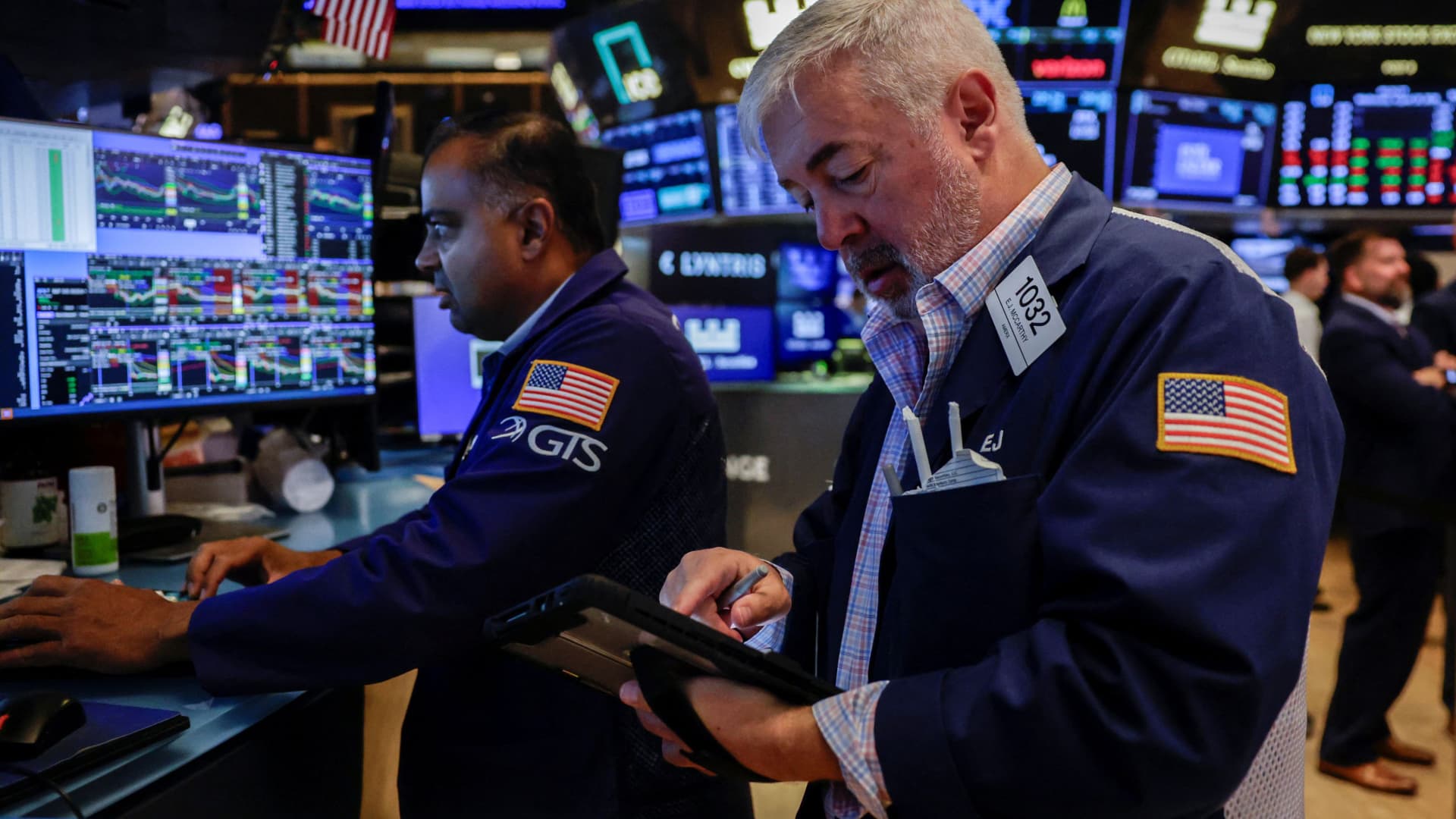
Rising bond yields and higher oil prices knocked the S&P 500 and Nasdaq off their three-week winning streak. The S&P 500 fell roughly 1.4% for the week. The Nasdaq dropped 2.1%. The Dow slipped 0.85%. Long-term Treasury yields surged to levels not seen in nearly two decades after tensions with Iran pushed crude higher, reviving inflation fears.
The Treasury Department stepped in Wednesday with an unusual announcement. It said it would more than double the size of its buybacks of longer-dated government debt. Yields initially fell and stocks rallied. Jim Cramer, the CNBC Investing Club portfolio manager, called it an effort to preserve the stock market rally. The relief proved short-lived. Yields climbed again Thursday and Friday because higher oil prices kept inflation worries alive.
The AI trade also had a rocky week. Pennsylvania Gov. Josh Shapiro issued an executive order Tuesday that imposes tough standards on data center developments in the state. Cramer questioned whether the restrictions would materially slow the buildout or amount mostly to election-year rhetoric. The uncertainty hit infrastructure names hard. GE Vernova fell 10% for the week. Eaton lost 7.2%. The club used the weakness to buy more GE Vernova on Tuesday, though shares continued to drift lower from there.
Broadcom shares dropped 4% Wednesday after Marvell Technology announced an expansive partnership with Alphabet's Google, Broadcom's longtime custom-chip customer. Marvell now has a deal to supply technology tied to Google's TPU ecosystem. The deal validated concerns that Google will diversify suppliers. Cramer said he would have preferred Broadcom to win the business. He is not abandoning the stock. The event reinforced why he ranked Nvidia, Intel, and Micron ahead of Broadcom among the club's chip holdings at last month's meeting. Broadcom was in the news again Friday. Bloomberg reported the company is in talks to raise more than $60 billion in debt for an AI financing deal. The arrangement would involve a special-purpose vehicle that buys Broadcom chips and leases them to a tenant like Anthropic. The reliance on debt financing warrants scrutiny. The sum also speaks to demand for AI infrastructure. Broadcom shares recovered somewhat Friday. They were on track for a roughly 6.2% weekly decline.
Cramer added Cadence Design Systems to the Bullpen on Thursday after CEO Anirudh Devgan appeared on 'Mad Money.' Cadence provides software and tools for chip design. It works closely with Nvidia and Broadcom. Its relationship with Intel is expanding under CEO Lip-Bu Tan, who previously led Cadence. In June, Cadence and Intel Foundry announced a multiyear agreement combining Cadence's AI-powered design tools with Intel's manufacturing technology. Cadence shares have fallen roughly 23% from their early June high, partly on concerns that AI could disrupt traditional chip-design software. Cadence sees the opposite: agentic AI could increase demand by driving greater use of its tools. Whether AI ultimately disrupts or accelerates Cadence's business is a key reason the stock is in the Bullpen.
Memory stocks sold off sharply Tuesday, continuing a stretch of volatile trading for some of the biggest AI winners this year. Cramer initiated Micron in August, and the stock remains one of the club's highest-conviction AI plays. He got a firsthand look at the opportunity Thursday during a visit to Micron's new semiconductor fab site in Boise, Idaho. CEO Sanjay Mehrotra reinforced Cramer's view that this memory cycle could be different from the boom-and-bust periods that historically defined the industry. AI is making memory increasingly critical to overall system performance, meaning customers are working with suppliers earlier in the design process rather than buying from the lowest bidder. Long-term agreements with customers are giving Micron greater visibility into future demand, including 16 deals disclosed in June and more signed since.
Retail earnings delivered a mixed picture. Home Depot kicked off the week with what Cramer called its 'best quarter in five years.' Earnings and revenue topped estimates. Same-store sales rose 1.7%, nearly double expectations. Cramer called the quarter especially 'terrific' given that management described the U.S. housing market as 'frozen.' Elevated Treasury yields are keeping mortgage rates high and housing activity subdued. Home Depot continues to execute on what it can control.
TJX Companies reported a more complicated quarter. Overall revenue and same-store sales beat expectations. Comps at Marmaxx, its largest division home to T.J. Maxx and Marshalls, rose just 1% versus the 3% expected. CEO Ernie Herrman called the merchandising problems 'self-inflicted and within our control' and said trends are already improving. Cramer said the issue is fixable rather than structural. The club used Friday's weakness to add to its position, citing Herrman's strong track record. TJX, carrying an Alpha Score of 45 (Mixed), saw its shares dip further Friday. (View TJX profile)
Walmart plunged 9% Thursday after U.S. comparable sales and earnings guidance disappointed. Cramer argued that higher gasoline prices and the company's decision to prioritize low prices and market-share gains made the quarter more nuanced than the headline numbers suggested. Target's results highlighted pressure on discretionary spending, though the turnaround under CEO Michael Fiddelke showed progress. There were bright spots. Ross Stores rallied after beating expectations and issuing strong guidance. BJ's Wholesale topped estimates and raised its full-year earnings outlook.
Nvidia, with an Alpha Score of 73 (Moderate), closed at $214.72, down 0.98% on the day. (View NVDA profile) The stock remains central to the AI theme with earnings season approaching for the broader chip sector.