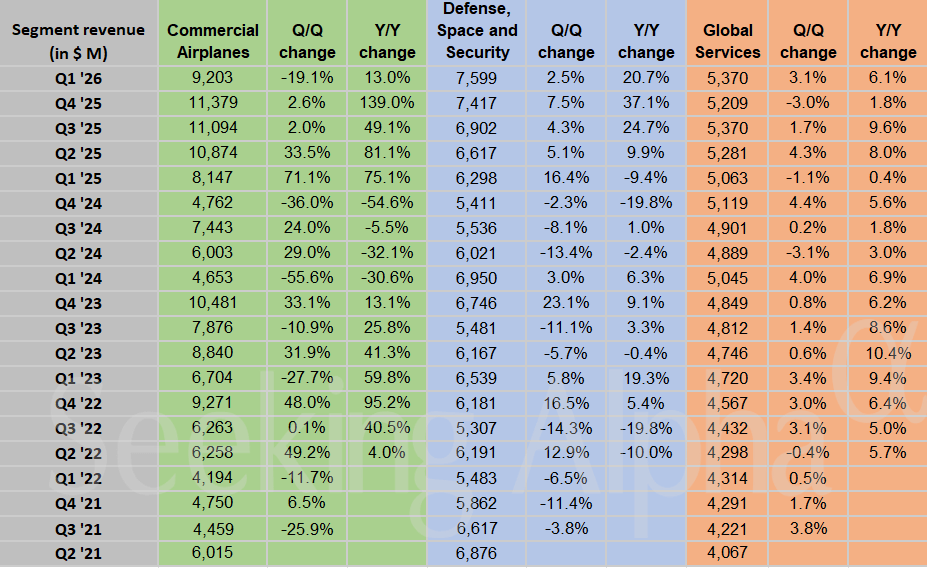
Boeing’s recent performance reflects a dual reality where commercial delivery volume is expanding even as the broader industrial sector grapples with persistent supply chain bottlenecks. The 13% year-over-year revenue increase in the Commercial Airplanes segment, supported by a 10% rise in aircraft deliveries, indicates a robust appetite for fleet modernization among global carriers. This growth trajectory remains tethered to the company's ability to maintain production cadence despite ongoing logistical hurdles.
Production Throughput and Delivery Velocity
The acceleration in delivery figures serves as the primary indicator of Boeing's operational recovery. Increasing output by 10% requires a synchronized flow of components from a vast network of tier-one and tier-two suppliers. Any disruption in this chain, whether from raw material shortages or localized labor constraints, directly impacts the final assembly line throughput. The current delivery pace suggests that the company is successfully navigating the initial stages of its production ramp-up, though the sustainability of this rate remains the central question for the coming quarters.
Jet Fuel Price Sensitivity and Airline Demand
Commercial aircraft demand is intrinsically linked to the operating environment of the airline industry. Rising jet fuel costs often act as a catalyst for fleet renewal, as carriers prioritize newer, more fuel-efficient models to offset higher variable operating expenses. While high fuel prices can dampen airline profitability in the short term, they simultaneously reinforce the long-term business case for Boeing's current order book. The interplay between fuel-driven demand and the company's delivery schedule creates a specific tension where the need for new aircraft is high, but the ability to supply them is constrained by industrial capacity.
AlphaScala Data and Market Context
Boeing currently holds an Alpha Score of 44/100, reflecting a mixed outlook as the company balances delivery growth against operational challenges. Detailed performance metrics for the firm can be found on the BA stock page. In the wider industrial landscape, companies like IBM, which maintains a mixed Alpha Score of 47/100, are also navigating complex supply chains, as seen on the IBM stock page. The broader commodities analysis indicates that industrial inputs remain volatile, further complicating the cost-side management for large-scale manufacturers.
Future updates will focus on the company's ability to sustain this 10% delivery growth rate through the next fiscal period. The primary marker for investors will be the upcoming production guidance updates, which will clarify whether the current supply chain throughput can support further scaling or if the company will face a plateau in delivery volumes. Any deviation from the established delivery cadence will serve as a leading indicator of deeper structural constraints within the aerospace manufacturing ecosystem.