Macro● Neutral
Bessent Signals Iran Sanctions Relief Could Be Gradual
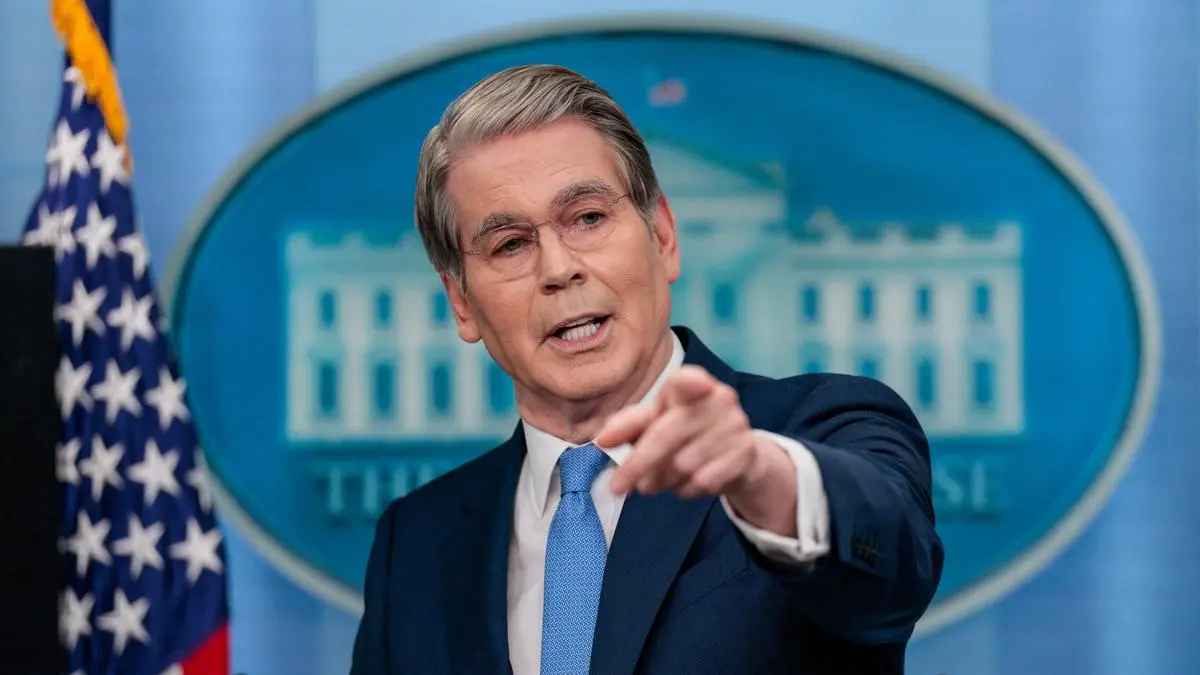
Bessent says Iran relief is possible with milestones, tying oil supply, dollar, and Fed policy into one macro marker. The phased relief path matters more than the headline.
Continue with
Sanctions Relief Path Now a Macro Variable
Treasury Secretary Scott Bessent introduced a conditional element into the US sanctions posture on Iran during a question-and-answer session at the Reagan National Economic Forum in Simi Valley, California. Asked whether the US would maintain its financial and economic embargo, Bessent responded with a phrase that carries implications for oil markets, the dollar, and risk appetite: "we'll see."
The readthrough for investors is straightforward in the abstract but complex in execution. The US holds a sanctions lever that, if partially released, could alter the supply calculus for crude and reshape a geopolitical risk premium that has supported energy equities and the broader commodity complex. Bessent explicitly tied any relief to Iranian compliance milestones.
"Anything that's taken off will be taken off slowly," Bessent said. There will be "milestones that the Iranian regime would have to meet" as part of any deal that includes sanctions relief. He also noted that the administration could ramp up sanctions if a deal is not imminent.
The Crude Oil Supply Mechanism
Iran's Return to Market Would Test OPEC+ Discipline
Iran has been under heavy sanctions since President Donald Trump exited the Joint Comprehensive Plan of Action in his first term. The country's crude exports, which fell sharply after the reimposition of US sanctions, have been partially sustained through opaque channels to customers in Asia. A formal sanctions relief program would allow for transparent, verifiable lifting of Iranian crude onto global markets.
The immediate impact would be felt in the crude oil market. Iran holds some of the world's largest proved oil reserves. Even a modest 300,000 to 500,000 barrel-per-day increase in Iranian exports, if phased in over 12 to 18 months, would add supply to a market that the International Energy Agency projects to be in surplus through 2026.
What a Gradual Relief Timeline Looks Like
Bessent's framework contains three distinct transmission channels for oil traders.
- The initial period: No sanctions relief occurs while the US monitors Iranian compliance. Oil prices retain their current geopolitical premium.
- The first milestone trigger: A small tranche of relief is granted. The market prices in further supply increases, and the forward curve flattens or shifts into contango.
- Acceleration or reversion: If milestones are met, more relief follows. If talks break down, the administration has signaled willingness to escalate. "We put more sanctions on yesterday," Bessent said, citing airlines and other financial targets. "There's a lot more we can do if we have to."
The Trump Ceiling on Expectations
President Trump has publicly downplayed the possibility of Iranian sanctions relief. Earlier this week, Trump said "we're not talking about any easing of sanctions, no money, no nothing." Trump also said he is making a "final determination" on a preliminary deal to extend a ceasefire with Iran.
The gap between Trump's stated position and Bessent's conditional openness creates an execution risk for any crude oil trade premised on an imminent supply increase. Traders pricing in a flood of Iranian barrels are likely premature. Traders ignoring the possibility entirely are ignoring a stated administration official's willingness to consider the lever.
Dollar and Yield Transmission Path
The Second-Round Effects on Rates and Risk Assets
A negotiated reduction in geopolitical tension does not stop at oil. The transmission path runs through the dollar and the Treasury yield curve.