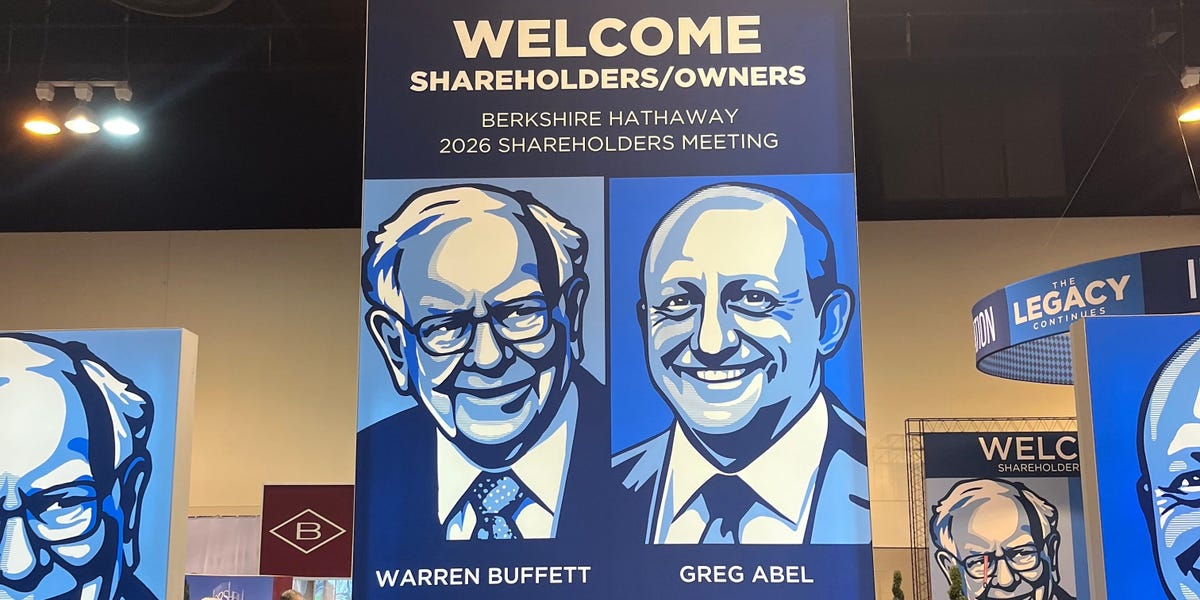
Warren Buffett spent his final decade as Berkshire Hathaway CEO hoarding cash. The pile now stands at $325 billion. Greg Abel took over at the turn of the year. Michael Burry, the "Big Short" investor and a longtime Buffett follower, said in a Substack note on Sunday that his "biggest fear" is Abel cannot resist spending it.
Buffett waited through record highs for bargains that never came. He sat out the 2021 SPAC frenzy, the 2023 AI rally, and the 2024 bitcoin surge. His discipline built Berkshire's cash fortress. Abel now faces a different test. The S&P 500 trades at 22 times forward earnings. Private equity sellers still demand pandemic-era multiples. A $325 billion war chest earns roughly 4.5% in Treasury bills, or about $14.6 billion a year. Every quarter Abel leaves that money in bills, the opportunity cost of not deploying it grows.
Burry's worry is not new. Analysts have asked for years whether Berkshire can ever put its cash to work at Buffett-like returns. The difference now is the person making the call. Abel built his reputation at Berkshire's energy and utility arm, where he executed large, regulated deals with predictable returns. He has never had to decide whether to write a $50 billion check for a whole company. Buffett had that luxury because he built the credibility over six decades. Abel starts day one with a $325 billion target on his back.
Berkshire's own stock buyback offers one outlet. The company repurchased $2.9 billion of its own shares in the third quarter, down from $7.6 billion a year earlier. Buffett slowed buybacks as the stock climbed above $700,000 per Class A share. Abel could restart them aggressively if the stock pulls back. A 10% correction would make Berkshire's own equity cheaper than most acquisition targets.
Insurance float gives Abel another cushion. Berkshire's insurance operations hold roughly $170 billion in float, money collected as premiums that is paid out later as claims. That float is essentially an interest-free loan. Abel can invest it in stocks, bonds, or acquisitions without borrowing. The float grows about 5% annually, giving him more firepower each year.
The real test comes when a large, distressed seller appears. Buffett's best deals -- buying Geico in 1996, Burlington Northern Santa Fe in 2009, Precision Castparts in 2016 -- all came during periods of market stress. Abel has not yet faced a crisis of that scale. A recession would create opportunities. A bear market would test his nerve. Burry's fear is that Abel, eager to prove himself, overpays for a mediocre business rather than waiting for a great one at a fair price.
Berkshire's BRK.B stock page shows a 52/100 Alpha Score, labeled Mixed. The market is pricing in uncertainty about the transition. Abel can change that perception with one disciplined deal. He can also confirm Burry's fear with one impulsive one.