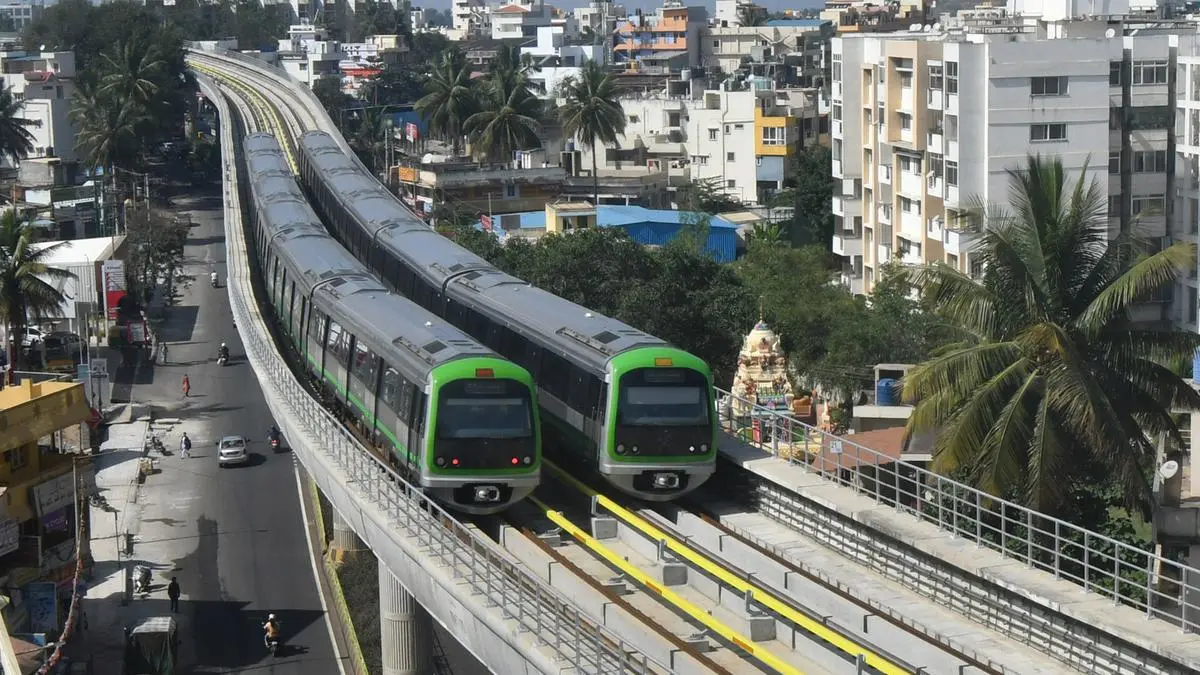
The expansion of Bengaluru’s metro rail network has emerged as the primary catalyst for the city’s next phase of real estate development. By bridging the gap between peripheral residential hubs and established commercial districts, the transit infrastructure is fundamentally altering property valuation models and land use patterns across the metropolitan area.
Transit-Oriented Development and Commercial Demand
The extension of metro lines is shifting the focus of commercial real estate away from traditional, congested tech corridors toward emerging nodes. As connectivity improves, companies are increasingly evaluating office locations based on employee commute efficiency rather than proximity to legacy business parks. This shift is creating a premium for properties situated within walking distance of transit hubs, effectively decentralizing the office market.
Industrial and logistics sectors are also seeing a ripple effect. Improved transit infrastructure facilitates better labor mobility, allowing industrial parks to operate more efficiently in areas that were previously considered too remote for consistent staffing. The integration of these transit lines into the urban fabric is compressing the timeline for infrastructure development in these outer zones, turning previously speculative land into high-demand commercial assets.
Residential Valuation and Infrastructure Integration
Residential demand is following the path of the metro expansion, with developers prioritizing projects that offer direct access to transit corridors. The ability to bypass Bengaluru’s notorious surface traffic is now a primary driver for residential pricing, often outweighing traditional factors like square footage or interior amenities. This trend is forcing a recalibration of residential inventory, as developers pivot toward high-density projects near stations to capture the value generated by the transit investment.
Investors and developers are now monitoring the phasing of these metro projects as a leading indicator for land acquisition and project launches. The predictability of government-backed transit timelines provides a clearer roadmap for long-term capital allocation compared to the more volatile shifts in the broader stock market analysis. As these lines reach completion, the resulting increase in foot traffic and accessibility is expected to sustain upward pressure on property values in previously underserved neighborhoods.
AlphaScala Market Perspective
While infrastructure-led growth provides a structural tailwind for the region, individual equity performance remains tied to broader sector dynamics. For instance, companies like Bloom Energy Corp BE stock page currently hold an Alpha Score of 46/100, reflecting a mixed outlook within the Industrials sector. Similarly, Amer Sports, Inc. AS stock page maintains an Alpha Score of 47/100, indicating that while regional real estate trends provide a supportive environment, specific operational execution remains the primary determinant of value.
The next concrete marker for this trend will be the commissioning of upcoming metro phases and the subsequent release of updated land-use zoning regulations. These milestones will dictate the pace at which commercial and residential developments can scale, providing a definitive signal for the next wave of institutional investment in the region.