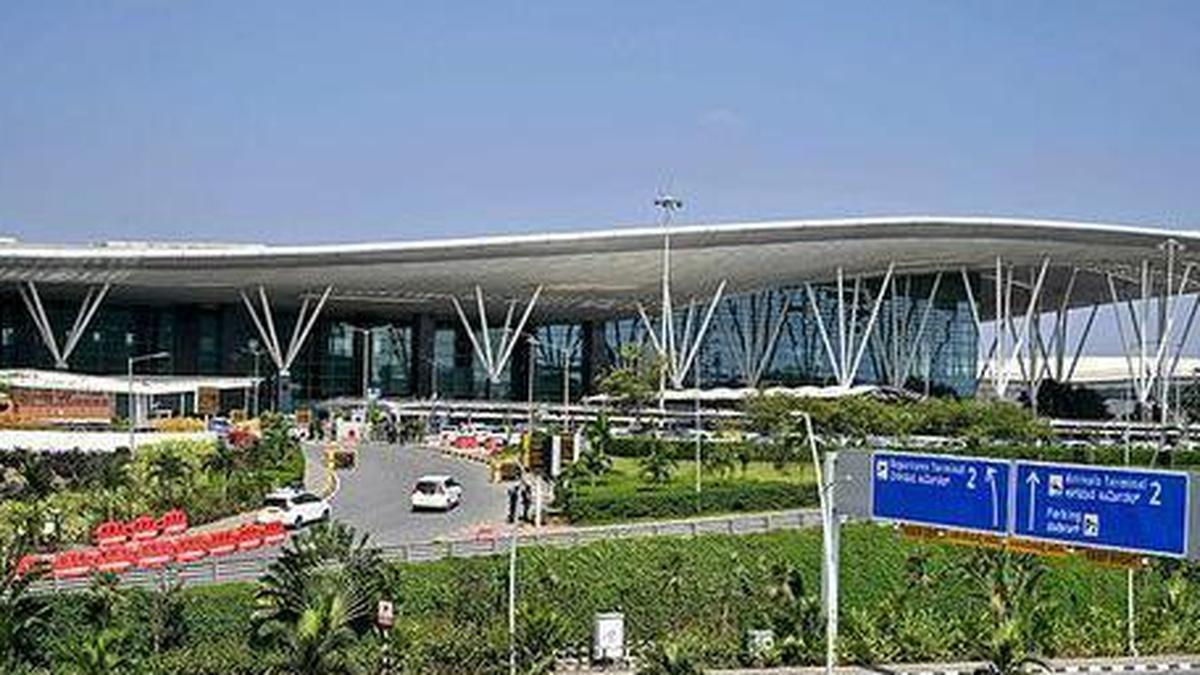
The Karnataka government has not shortlisted a location for Bengaluru’s second international airport. Land prices along the city’s southern and western outskirts have risen sharply anyway. Ram Chandnani, Managing Director – Leasing at CBRE India, said prices along Kanakapura Road have doubled in the last six to eight months. The rush mirrors the early Devanahalli boom that preceded Kempegowda International Airport (KIA). Consultants caution the momentum is sentiment-driven, with most activity in farmland deals and land banking rather than residential launches.
Kanakapura Road: Prices Double as Residential Corridor Takes Lead
The Kanakapura Road–Harohalli belt has recorded the sharpest land price increases. Stronger residential infrastructure, metro connectivity, and proximity to established catchments give that corridor a head start. Areas such as Chudahalli, Somanahalli, and Kaggalipura are drawing strong investor interest because of lower entry prices and the availability of larger parcels. NRIs and HNIs are actively buying land, viewing it as a long-term infrastructure-led investment.
“In the last six to eight months, land prices along Kanakapura Road have effectively doubled,” said Ram Chandnani, Managing Director – Leasing, CBRE India.
Plotted developments and farmland conversions dominate active transactions. Developers are quietly building land banks through acquisitions and joint development agreements–a pattern similar to North Bengaluru during KIA’s early years. Villa and weekend-home projects are simultaneously gaining traction across the Kanakapura–Ramanagara belt, leveraging both the airport narrative and the region’s natural landscape.
The divergence with Nelamangala
Nelamangala–Kunigal, by contrast, is seeing a more measured rise. Its historical appeal ties to logistics and warehousing, not residential demand. Industrial land demand has strengthened as the Satellite Town Ring Road (STRR) improves access to freight corridors. Institutional buyers are evaluating industrial and logistics opportunities around Harohalli and Nelamangala because of existing manufacturing clusters and KIADB industrial zones. The divergence between the two corridors reflects differing investment theses. Kanakapura is increasingly viewed as a near- to medium-term residential growth corridor. Nelamangala-Kunigal is seen as a longer-gestation infrastructure and logistics play with potentially higher upside if the airport eventually materialises there.
Valuation: Seven-to-Ten-Year Window Without Site Selection
The second airport remains a long-term proposition. The site has not been finalised. Approvals will take years. Consultants advise investors to treat the purchase as a seven-to-10-year holding opportunity. A speculative land purchase that already doubled is discounting approval outcomes that may not materialise within a comfortable holding period.
ANAROCK Group reports that the Kanakapura Road micro-market recorded about 3,400 new residential launches since Q1 2024. That is real capital commitment, not just option buying. The Nelamangala market has seen minimal launches so far, confirming its later-stage positioning.
The market is pricing the two corridors with different time horizons. Kanakapura is already absorbing residential supply, while Nelamangala trades on infrastructure hope with a wider discount and a longer horizon.
Sector Readthrough: Land Banks, Residential Launches, and Industrial Demand
The airport speculation affects multiple parts of the real estate sector. Three segments stand out:
- Land banking and plotted development – The most active segment today. Investors buying farmland and converting it to plots are effectively writing covered calls on the airport decision. Returns depend entirely on site selection and timing.
- Residential launches – Already underway in Kanakapura Road. Developers launching villa and weekend-home projects bet on medium-term demand. If the airport site lands elsewhere, these projects lose their pricing rationale.
- Industrial and logistics – Nelamangala-Kunigal and Harohalli are seeing institutional interest in warehousing and industrial zones. This demand has independent support from the STRR and freight corridors, making it less binary than the residential land speculation.
Real estate investment trusts (REITs) and developers with exposure to these corridors face asymmetric risk. A positive site decision could compress cap rates and boost land valuations materially. A negative decision–or a long delay–could strand capital in overpriced parcels with no infrastructure catalyst.
Risk: The Devanahalli Comparison That Misleads
The comparison to Devanahalli is the most dangerous shortcut for investors. Industry estimates suggest land values in North Bengaluru appreciated 40–86 percent during the first decade after the KIA announcement in 2005. That cycle happened in a different regulatory, financing, and competitive environment.
The current cycle has structural differences. South and West Bengaluru’s corridors are more fragmented and lack equally mature social infrastructure. The organised broker ecosystem has accelerated price discovery, removing the informational advantage early investors once had. Social infrastructure–schools, hospitals, retail–is thinner in the southern and western corridors than it was in North Bengaluru at the same stage.
Bottom line for traders: Land speculation without a government site selection is a binary bet on outcome risk. The seven-to-10-year holding window means liquidity is zero for that duration. Anyone who cannot hold through a negative decision or a regulatory stall is buying optionality at a premium that has already doubled.
AlphaScala’s proprietary metrics assign CBRE (the firm whose executive provided the price-doubling quote) an Alpha Score of 32/100, with a Weak label in the Real Estate sector. That score suggests that even the established commercial real estate intermediaries face headwinds that complicate the bull case for the underlying land market. The read-through: speculation has outpaced fundamentals before the government even acts. See the CBRE stock page for details.
Investors should track three concrete markers: (1) the Karnataka government’s site selection announcement, (2) land transaction volumes in each corridor, and (3) residential launch absorption rates in Kanakapura Road. Until the first marker is hit, the market is trading on hopes, not facts.
For broader real estate risk context, review REIT Risk Watch: Tenant Payment Threatens MPT and ACRE Dividends. For the general market backdrop, see stock market analysis.